

U.S. equity index fund is one of the most popular investment options for people wanting simple, low-cost exposure to the American stock market. If you’ve come across this term while researching pensions, ISAs, or general investing, this guide breaks down exactly what it means, how it works, and what to consider before investing.
Whether you’re a beginner investor or simply comparing fund options, understanding the basics can help you decide whether this type of fund fits your financial goals.
What Is a U.S. Equity Index Fund?
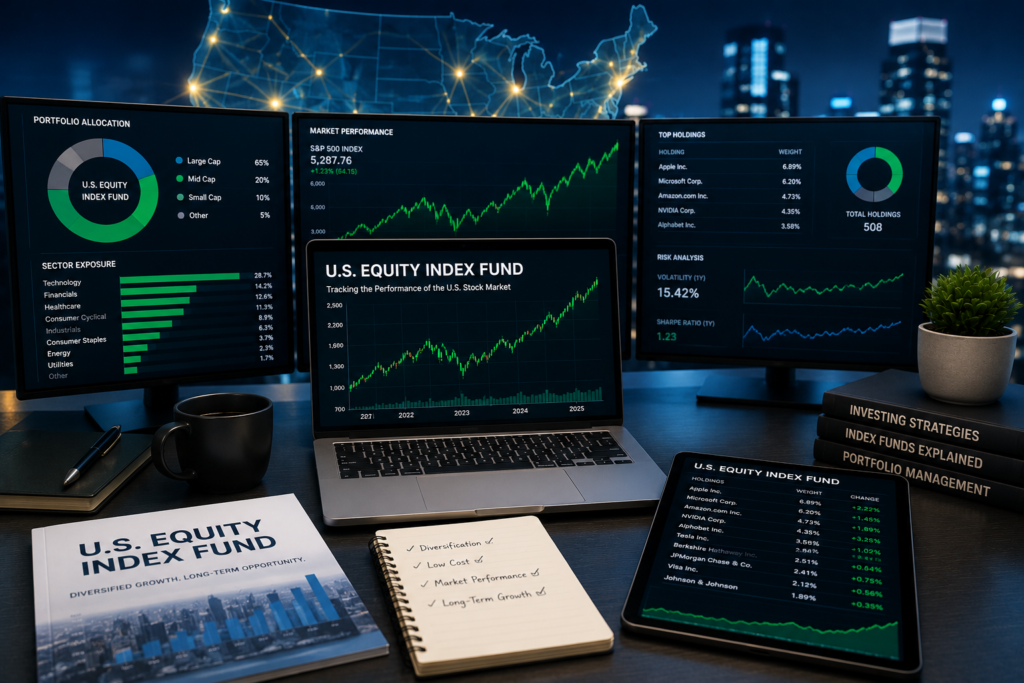
A U.S. equity index fund is a type of investment fund designed to track the performance of a specific US stock market benchmark, rather than having a fund manager actively choose individual shares. Instead of trying to beat the market, this kind of fund simply aims to mirror it as closely as possible.
Because it follows a set index, a U.S. equity index fund typically holds a broad mix of American companies, often spanning sectors like technology, healthcare, finance, and consumer goods.
How Does a U.S. Equity Index Fund Work?
Rather than picking stocks individually, a U.S. equity index fund holds the same companies, in roughly the same proportions, as the index it tracks. As the index rises or falls, the fund’s value moves in a similar direction. This passive approach is one of the main reasons these funds tend to carry lower fees than actively managed alternatives.
Why Investors Choose This Type of Fund
1. Low-Cost Diversification
One of the biggest advantages of this option is the ability to gain exposure to hundreds of companies through a single investment, without paying the higher fees typically associated with active fund management.
2. Broad Market Exposure
Since these funds track a wide index, investors benefit from diversification across multiple industries, rather than depending on the performance of just a few individual stocks.
3. Simplicity
For investors who don’t want to research and select individual companies, this option offers a straightforward way to invest in the broader American economy.
4. Long-Term Growth Potential
Historically, US markets have delivered strong long-term growth, making this type of fund appealing to investors with a long-term outlook.
Types of U.S. Equity Index Funds
Not every fund of this kind tracks the same benchmark. Common variations include:
- Total Market Funds – Covering the broadest possible range of US companies, from large to small.
- Large-Cap Funds – Focusing specifically on the largest, most established US companies.
- Growth or Value Funds – Filtering companies based on growth potential or perceived undervaluation.
- Sector-Specific Funds – Tracking a particular industry, such as technology or healthcare, within the US market.
Risks to Understand Before Investing
1. Market Volatility
Like any equity investment, this fund can rise and fall in value depending on overall market conditions, sometimes significantly over short periods.
2. Currency Risk for UK Investors
Since these funds invest in US-listed companies, UK-based investors are exposed to fluctuations between the pound and the US dollar, which can affect overall returns.
3. Lack of Downside Protection
Because this type of fund simply tracks the market, it will also fall when the market declines, with no active management to reduce losses during downturns.
4. Sector Concentration
Depending on the specific index tracked, some funds may be heavily weighted toward a small number of large companies or industries, particularly technology.
How to Invest in a U.S. Equity Index Fund From the UK
- Stocks and Shares ISA – A tax-efficient way to hold this type of fund for UK investors.
- Pension Platforms – Many workplace and personal pensions include a fund option like this as part of their investment choices.
- General Investment Accounts – Available through most major UK investment platforms and brokers.
- Robo-Advisors – Several UK robo-advisory services include US market exposure as part of a diversified portfolio.
For official fund data and current factsheets, resources like S&P Dow Jones Indices provide details on the benchmarks many of these funds are built to track.
Active Funds vs. Passive Index Funds
A common question is why choose a passive fund over an actively managed one. According to general investing research from Investopedia, low-cost index funds have historically outperformed many actively managed funds over the long run, largely due to lower fees and consistent market tracking.
That said, some investors prefer combining both approaches, using a low-cost index option as a core holding while adding actively managed funds for specific goals.
Is This Type of Fund Right for You?
Before adding a U.S. equity index fund to your portfolio, consider asking yourself:
- Am I comfortable with market volatility and potential short-term losses?
- Do I already have exposure to US markets, or would this add useful diversification?
- Am I investing with a long-term time horizon?
- Does this fit within my broader investment strategy?
If you’re unsure whether it’s the right fit, speaking with a licensed financial advisor can help you make a decision based on your personal goals and risk tolerance.
Frequently Asked Questions
Q1: What does a U.S. equity index fund actually invest in?
It invests in a broad range of American companies, aiming to mirror the performance of a specific US stock market benchmark.
Q2: Are these funds risky?
Like all equity investments, they carry market risk, and their value can fall as well as rise depending on economic and market conditions.
Q3: Can UK investors buy into a U.S. equity index fund?
Yes, many UK platforms, ISAs, and pensions offer access to funds that track major US market indexes.
Q4: How is this different from an actively managed fund?
Rather than a manager picking individual stocks, this type of fund passively tracks an index, which usually means lower fees.
Q5: Is currency risk a concern?
Yes, since these funds hold US-listed companies, UK investors are exposed to fluctuations between the pound and the US dollar.
Final Thoughts
This type of fund offers a simple, low-cost way to gain broad exposure to the American stock market, making it a popular choice among long-term investors. However, like any equity investment, it carries risks, including market volatility and currency exposure for UK-based investors.
Before investing, take time to compare available options, review current fund factsheets, and consider how this type of fund fits within your overall financial plan.