
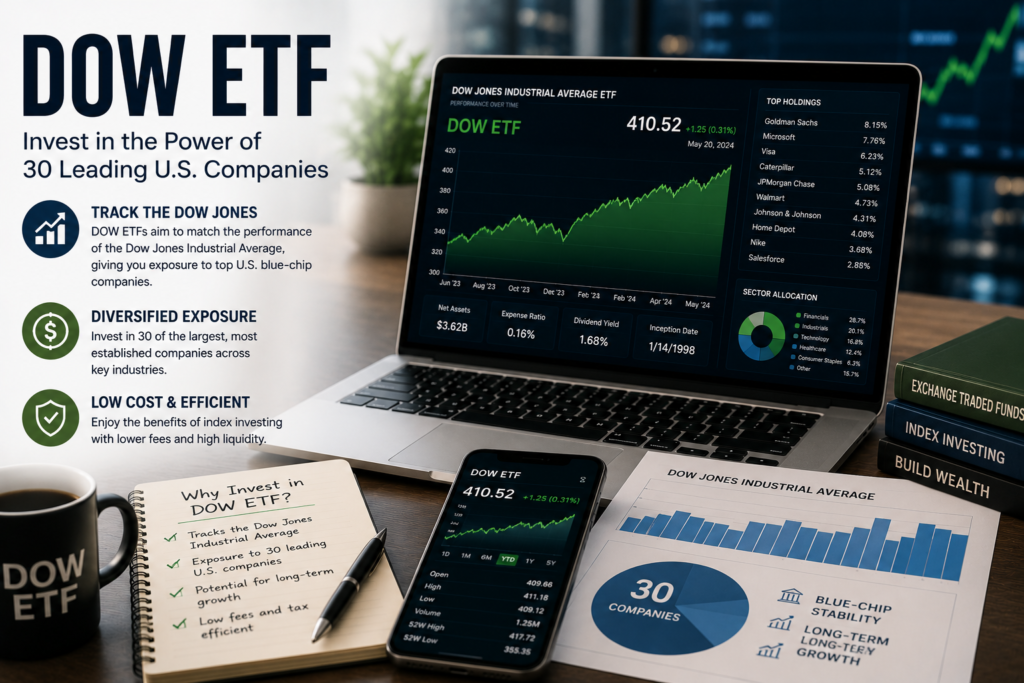
A Dow ETF is one of the simplest ways for everyday investors to gain exposure to some of the largest and most established companies in the United States. If you’ve heard the term while researching investment options and wondered exactly what it means, this guide explains it clearly, without unnecessary jargon.
Whether you’re new to investing or comparing different ways to access US markets, understanding how this type of fund works can help you decide if it fits your portfolio.
What Is a Dow ETF?
A Dow ETF is an exchange-traded fund designed to track the performance of the Dow Jones Industrial Average, one of the oldest and most widely followed stock market indexes in the world. Rather than buying shares of all 30 companies individually, investors can buy a single ETF that mirrors the index’s overall performance.
Because it trades on an exchange just like an individual stock, a Dow ETF can be bought or sold throughout the trading day, offering flexibility that traditional mutual funds don’t always provide.
How Does a Dow ETF Work?
The fund holds shares in the same 30 large, well-established US companies that make up the Dow Jones Industrial Average, in proportions designed to closely mirror the index. As those companies rise or fall in value, the ETF’s price moves in a similar direction, giving investors a simple way to track the index without managing individual holdings themselves.
Why Investors Consider This Type of Fund
1. Instant Diversification
Rather than researching and buying shares in 30 separate companies, a single purchase gives investors exposure to a broad mix of major US industries, from technology to healthcare and finance.
2. Lower Costs Than Active Funds
Since it simply tracks an index rather than relying on active stock-picking, ongoing charges tend to be lower than actively managed alternatives.
3. Easy to Buy and Sell
Because it trades like a stock, investors can buy or sell throughout market hours, unlike traditional mutual funds that only price once per day.
4. Exposure to Established, Blue-Chip Companies
The Dow Jones Industrial Average is made up of large, well-known companies, meaning this type of fund offers exposure to some of the most established businesses in the US economy.
Risks to Understand Before Investing
1. Limited Number of Holdings
Unlike broader market indexes that include hundreds or thousands of companies, the Dow Jones Industrial Average only includes 30, meaning this fund is less diversified than some other index-tracking options.
2. Price-Weighted Index Structure
The index this fund tracks is price-weighted rather than market-cap weighted, meaning companies with higher share prices can have a disproportionate impact on performance, regardless of their overall size.
3. Market Volatility
Like any equity investment, value can rise and fall depending on broader economic and market conditions, and there’s no guarantee of positive returns.
4. Currency Risk for UK Investors
Since the underlying companies are US-listed, UK-based investors are exposed to fluctuations between the pound and the US dollar, which can affect overall returns.
Dow ETF vs. Broader US Market ETFs
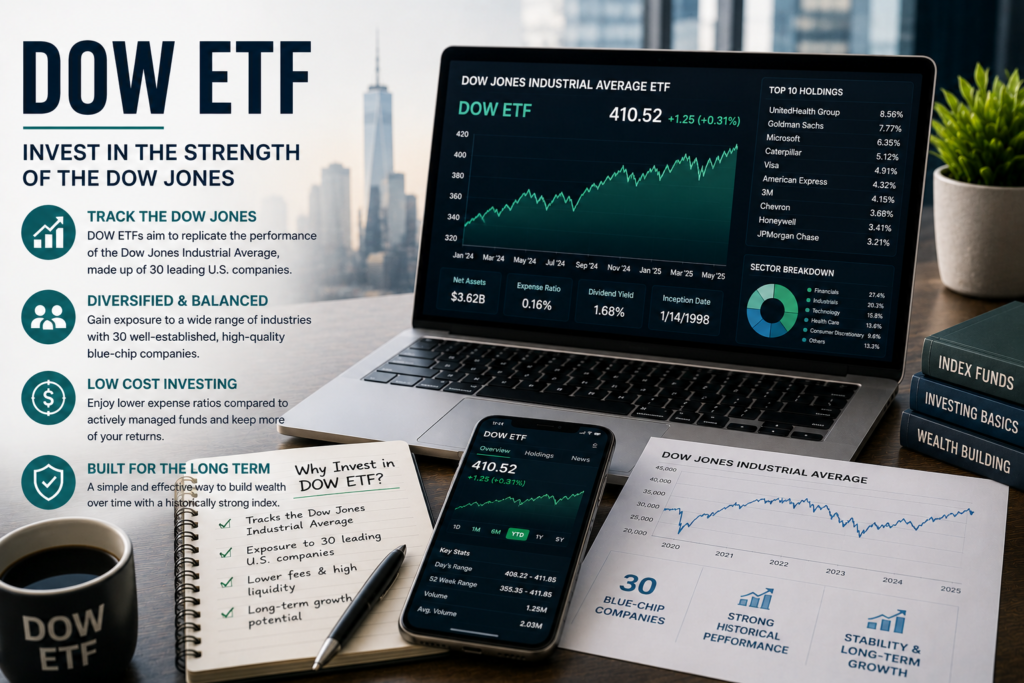
A common question is how this compares to ETFs tracking broader indexes, such as the S&P 500 or total US market indexes. The key difference comes down to scope: while a Dow ETF focuses on just 30 large, established companies, broader market ETFs typically include hundreds or thousands of businesses across various sizes and sectors.
According to general guidance from Investopedia, the Dow Jones Industrial Average is often used as a general barometer of US market health, though it represents a much narrower slice of the economy compared to broader benchmarks.
How to Invest in a Dow ETF From the UK
- Stocks and Shares ISA – A tax-efficient way for UK investors to hold this type of fund.
- General Investment Accounts – Available through most major UK brokers and trading platforms.
- Pension Platforms – Some workplace and personal pensions offer access to US index-tracking funds.
- Robo-Advisors – Several UK robo-advisory services include US blue-chip exposure as part of a diversified portfolio.
For official index data and methodology, resources like S&P Dow Jones Indices provide detailed information on how the Dow Jones Industrial Average is constructed and maintained.
Is This Fund Right for You?
Before adding this type of fund to your portfolio, it’s worth asking yourself:
- Am I comfortable with the concentration of just 30 companies rather than broader diversification?
- Do I already have exposure to US markets, or would this add something new to my portfolio?
- Am I investing with a long-term outlook, allowing time to ride out market volatility?
- Does this fit within my broader investment strategy?
If you’re unsure whether this fund suits your goals, speaking with a licensed financial advisor can help you decide based on your personal circumstances and risk tolerance.
Frequently Asked Questions
Q1: What does a Dow ETF actually track?
It tracks the Dow Jones Industrial Average, an index made up of 30 large, established US companies.
Q2: Is this type of fund risky?
Like all equity investments, it carries market risk, and its value can rise or fall depending on economic conditions.
Q3: Can UK investors buy a Dow ETF?
Yes, many UK brokers, ISAs, and investment platforms offer access to ETFs tracking the Dow Jones Industrial Average.
Q4: How is this different from an S&P 500 ETF?
A Dow ETF tracks just 30 companies, while an S&P 500 ETF tracks 500, offering broader diversification.
Q5: Are there currency risks involved?
Yes, since the underlying companies are US-listed, UK investors are exposed to fluctuations between the pound and the US dollar.
Final Thoughts
This type of fund offers a simple, low-cost way to gain exposure to some of the largest and most established companies in the US economy. However, with only 30 holdings, it’s less diversified than broader market alternatives, and like any equity investment, it carries market and currency risk for UK-based investors.
Before investing, take time to compare this option against broader market ETFs, review current fund factsheets, and consider how it fits within your overall long-term financial plan.