Selling Shares With a Share Certificate
Selling shares with a share certificate is something many UK investors still need to do, especially if they inherited paper shares, hold older investments, or never converted their holdings into an electronic account. If you’re holding a physical certificate and wondering how to sell it, this guide walks you through the process in simple, easy-to-follow steps.
Unlike shares held electronically through a brokerage app, paper certificates require a slightly different process, and understanding each step can help you avoid delays or complications.
What Is a Share Certificate?
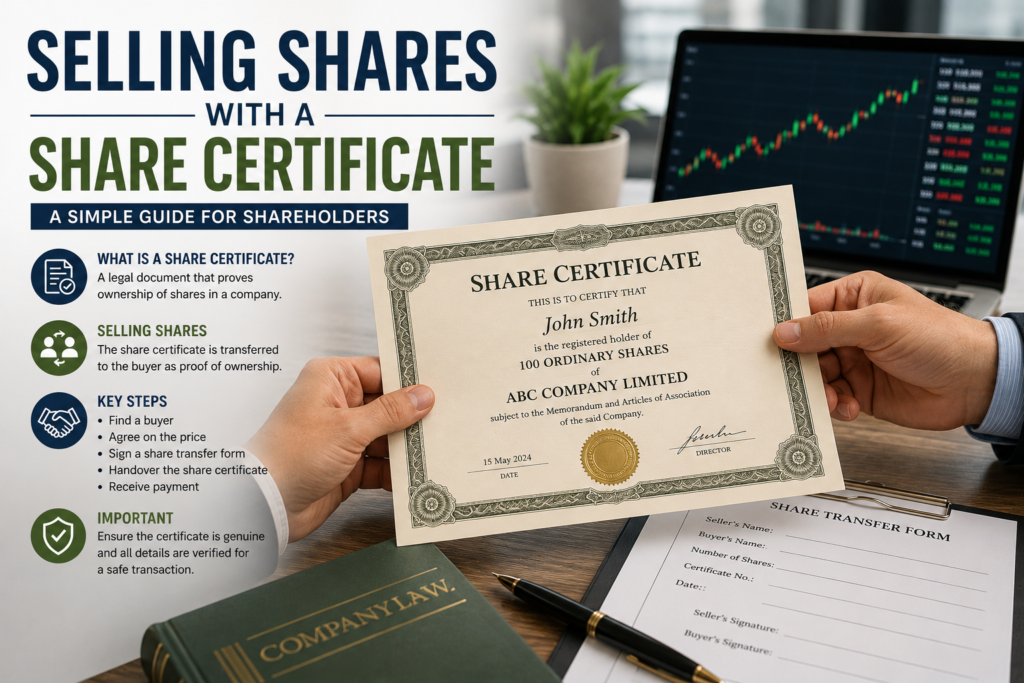
A share certificate is a physical document proving ownership of shares in a company. Before electronic trading became standard, these paper certificates were the main way shareholders held proof of their investment. Today, many people are still selling shares with a share certificate that were passed down through inheritance or purchased years ago before online trading platforms became common.
Can You Sell Shares Directly From a Paper Certificate?
Not directly. Most modern stock exchanges and trading platforms require shares to be held electronically before they can be traded. This means selling shares with a share certificate usually involves converting the paper holding into an electronic format first, through a process often called dematerialisation.
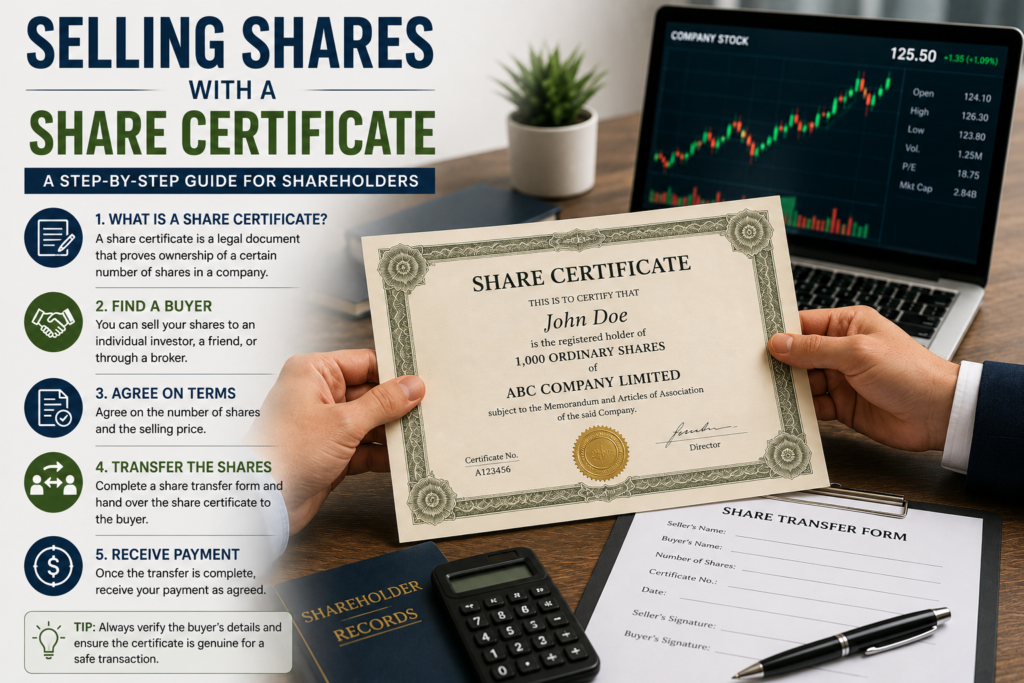
Step-by-Step: Selling Shares With a Share Certificate
Step 1: Locate the Original Certificate
Before anything else, you’ll need the original paper certificate. If it’s been lost, you may need to request a replacement from the company’s registrar before proceeding.
Step 2: Confirm the Registrar
Every publicly listed company uses a share registrar to maintain shareholder records. Contacting the correct registrar is a key early step, since they handle the paperwork required for converting and eventually selling the shares.
Step 3: Choose a Broker or Dealing Service
Several UK stockbrokers and specialist share-dealing services offer certificated share sales, allowing you to sell without first opening a full trading account. Some brokers specialise specifically in handling paper certificates.
Step 4: Complete a Stock Transfer Form
To move ownership, you’ll typically need to complete a stock transfer form, along with the original certificate, when selling shares with a share certificate through a broker or registrar-approved service.
Step 5: Verify Identity and Ownership
Brokers and registrars will usually require proof of identity and address, along with documentation confirming you’re the rightful owner, especially important when dealing with inherited shares.
Step 6: Submit for Sale
Once verified, the broker or registrar will process the sale, and proceeds are typically sent to you by cheque or bank transfer within a set number of business days.
Why the Process Takes Longer Than Electronic Trading
Selling shares with a share certificate generally takes longer than a standard online trade because it involves manual verification, postal handling of physical documents, and registrar processing time. While an electronic trade might settle within a day or two, certificated sales can take one to several weeks depending on the registrar and broker involved.
What If You’ve Inherited Shares With a Certificate?
Inheriting shares is one of the most common reasons people find themselves selling shares with a share certificate for the first time. In this situation, you’ll usually also need:
- A copy of the grant of probate or letters of administration
- Proof of your relationship to the deceased shareholder, where required
- Confirmation from the registrar that the shares have been transferred into your name, or authorisation to sell on behalf of the estate
Registrars can guide you through this process, though it often takes longer due to the additional legal documentation involved.
Costs to Expect
When selling shares with a share certificate, be prepared for a few possible costs:
- Dealing fees charged by the broker or share-dealing service
- Registrar administration charges, particularly for lost certificates or replacement requests
- Stamp Duty, which may apply depending on the transaction, though this typically applies to buyers rather than sellers
You can check current guidance on share transactions and tax obligations through GOV.UK, since rules around Capital Gains Tax may apply to any profit made.
Tips for a Smoother Sale
- Keep the original certificate safe and avoid folding or damaging it before submission.
- Contact the registrar early to confirm exactly which documents are required.
- Compare fees across different share-dealing services before committing to one.
- Allow extra time in your planning, since certificated sales rarely move as quickly as electronic trades.
For a general overview of how share certificates and dematerialisation work, resources like Investopedia offer helpful background information.
Should You Convert to Electronic Holdings Instead?
If you plan on holding shares long-term or trading frequently in the future, it may be worth converting your paper certificate into an electronic account rather than repeating the certificated process each time. This can make future transactions faster and simpler. A licensed financial advisor can help you weigh this decision as part of your broader investment strategy.
Frequently Asked Questions
Q1: Can I sell shares immediately with just a paper certificate?
Not immediately. Selling shares with a share certificate usually requires converting the holding electronically first, or using a broker that specialises in certificated sales.
Q2: What happens if I’ve lost my share certificate?
You’ll need to contact the company’s registrar to request a replacement before you can proceed with the sale.
Q3: How long does it take to sell shares this way?
It can take anywhere from a week to several weeks, depending on the registrar, broker, and any additional documentation required.
Q4: Do I need special documents to sell inherited shares?
Yes, typically a grant of probate or letters of administration, along with proof of your relationship to the original shareholder.
Q5: Are there fees involved?
Yes, expect possible dealing fees, registrar administration charges, and potential tax obligations depending on any profit made.
Final Thoughts
Selling shares with a share certificate involves a few extra steps compared to electronic trading, but the process is manageable once you understand what’s required. From locating the original certificate to working with a registrar or specialist broker, careful preparation can help the sale go smoothly.
If you’re dealing with an inherited certificate or simply want to convert an old paper holding into cash, taking the time to follow each step correctly will help you avoid unnecessary delays.