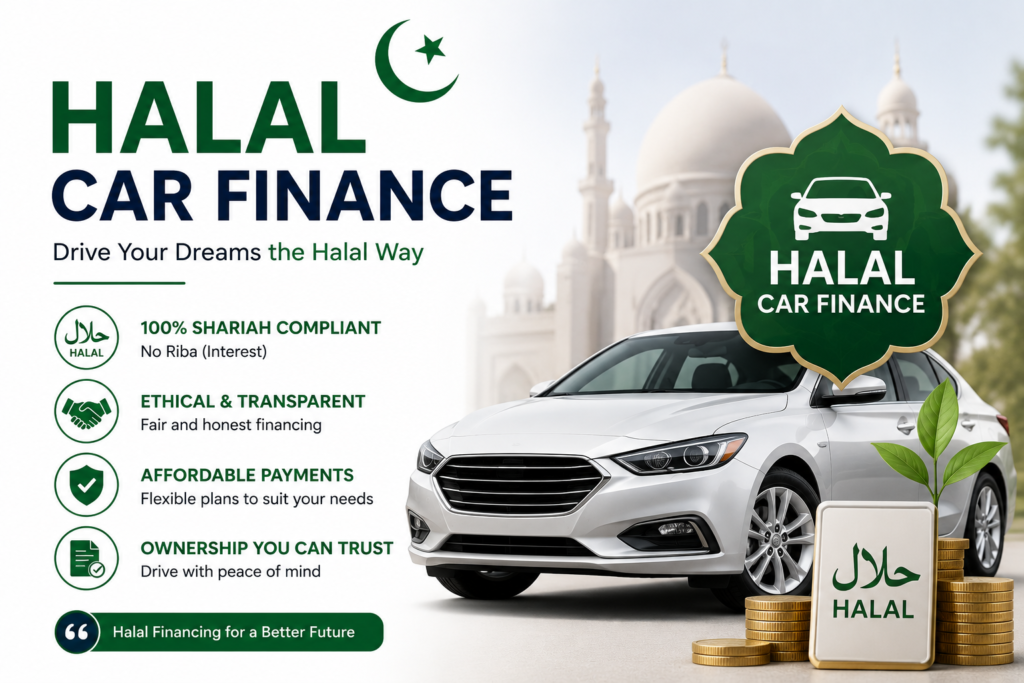
Buying a car is stressful enough without adding a layer of financial confusion on top. For Muslim buyers who want their finance agreement to align with their faith, that confusion often gets worse — the finance world isn’t always great at explaining what’s actually Sharia-compliant and what just looks like it.
Halal car finance exists specifically to solve that problem. It’s built around Islamic principles that prohibit interest, or riba, and instead structure the transaction as an asset purchase rather than a straightforward loan.
Here’s the thing — halal car finance isn’t automatically cheaper, and it isn’t always simple to compare against conventional deals. This guide breaks down exactly how it works, the main structures you’ll encounter, and the facts that catch a lot of first-time buyers off guard.
What Is Halal Car Finance, Exactly?
Halal car finance refers to financing products structured to comply with Islamic Sharia law, which prohibits the payment or receipt of interest. Instead of a conventional loan that accrues interest over time, the lender purchases the vehicle and then sells or leases it to the buyer under an agreed structure.
Because the price and profit margin are agreed upfront rather than accruing as ongoing interest, the arrangement avoids riba entirely. That said, the lender still needs to make money on the transaction — it just does so through a disclosed markup or rental payment rather than a variable interest rate.
Quick takeaway: Before assuming any deal is automatically halal, ask exactly how the profit is generated. A fixed, upfront markup is very different from an interest rate dressed up in different language.
1. Murabaha Is the Most Common Structure
The most widely used form of halal car finance is Murabaha, a cost-plus financing model offered by many Islamic banks and finance providers.
- The bank or lender buys the car, either from a dealership or private seller, on the buyer’s behalf
- It then sells the car to the buyer at a pre-agreed price, covering the original cost plus a disclosed profit margin
- The buyer repays that total price through fixed installments over an agreed term
Takeaway: Because Murabaha discloses the full markup upfront, it’s genuinely one of the more transparent financing structures available — ask for that breakdown in writing before comparing offers from different providers.
2. Ijara Works More Like a Lease
If outright ownership from day one isn’t a priority, Ijara offers a Sharia-compliant alternative that functions more like a lease than a purchase.
- The bank buys the vehicle and retains ownership throughout the lease period
- The buyer makes rental payments that cover the vehicle’s cost plus the bank’s profit margin
- At the end of the term, the buyer often has the option to purchase the car at an agreed price
Takeaway: If you’re not sure how long you’ll want to keep a particular car, Ijara can offer more flexibility than Murabaha — just read the contract closely for mileage limits or wear-and-tear charges, similar to conventional leasing.
3. Musharakah Offers a Gradual Ownership Path
Less common than Murabaha or Ijara, Musharakah is a partnership-based structure where the buyer and the bank jointly own the vehicle from the start.
- The buyer typically makes an initial payment that establishes partial ownership
- Ongoing payments gradually buy out the bank’s remaining stake in the vehicle
- Full ownership transfers to the buyer once all payments are complete
Takeaway: If you like the idea of building ownership incrementally rather than all at once, ask specifically which providers offer Musharakah — it’s less widely advertised than other halal structures.
4. Not Every Deal Labeled “Interest-Free” Is Automatically Halal
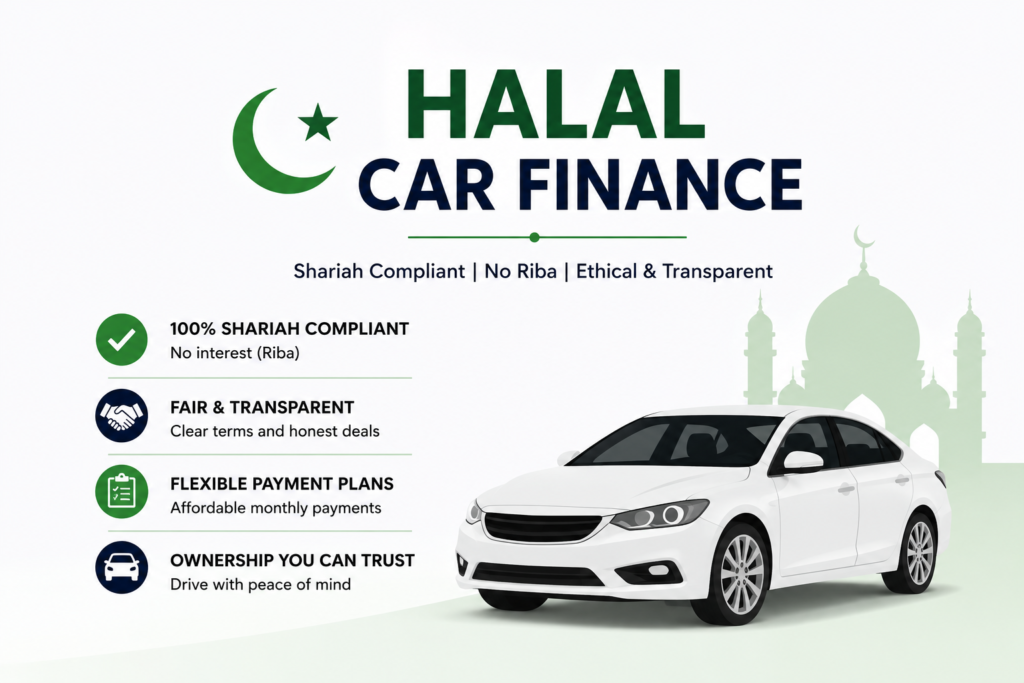
This is where a lot of buyers get tripped up. A deal can be technically interest-free in name while still not meeting Sharia requirements, and the reverse can also be true — a contract using the word “interest” isn’t automatically non-compliant either.
- Sharia scholars generally look at the substance of an agreement, not just its terminology
- Standard PCP (Personal Contract Purchase) deals are generally not considered halal, since they typically rely on accruing interest as part of how the lender profits
- Interest-free Hire Purchase agreements can sometimes qualify, since the cost of lending is built into the price rather than charged as ongoing interest
Takeaway: If you’re uncertain whether a specific deal qualifies, bring the actual contract to a qualified Islamic finance scholar or advisor rather than relying on marketing language like “0% APR” or “interest-free” alone.
5. Halal Car Finance Often Costs More Upfront
One of the most surprising facts for new buyers is that halal car finance isn’t necessarily cheaper than conventional financing, and it frequently requires a larger deposit.
- The cost of lending is built into the vehicle’s price rather than charged separately as interest
- Minimum deposit requirements are often a set proportion of the car’s value, and can be higher than conventional deals
- Total cost over the life of the agreement can sometimes work out more expensive than a comparable conventional loan
Takeaway: Budget for a potentially larger deposit from the outset, and compare the full repayment total — not just the headline structure — against conventional alternatives before deciding.
6. Provider Availability Varies Significantly by Location
This type of financing isn’t equally available everywhere, and eligibility rules differ meaningfully between providers, especially for used vehicles.
- Some providers restrict financing to dealership purchases rather than private-party sales, since the lender needs to be able to acquire the car before reselling it
- Vehicle age and mileage limits are common, particularly for used car financing
- In markets where Islamic finance options remain limited, comparing multiple providers is often necessary to find a workable deal
Takeaway: Start your research early, especially if you’re financing a used vehicle — availability and eligibility criteria can narrow your options more than buyers typically expect going in.
Comparing Halal Car Finance to Conventional Options
Once you understand the core structures behind halal car finance, comparing it against conventional financing becomes a lot more straightforward. The key isn’t just checking whether interest is charged — it’s understanding how the total cost, deposit requirement, and ownership timeline compare across your realistic options.
Takaful, or Islamic insurance, is also worth researching alongside your financing choice. Many providers recommend or require Takaful coverage, since conventional insurance can involve elements considered impermissible under Sharia principles.
Takeaway: Treat your financing structure and your insurance choice as connected decisions, not separate ones — many halal finance providers will point you toward Takaful coverage as part of the overall package.

Final Thoughts
Halal car finance gives Muslim buyers a genuine path to car ownership that aligns with their faith, built primarily around Murabaha, Ijara, and, less commonly, Musharakah structures. Each avoids riba by structuring the transaction as an asset purchase or lease rather than an interest-bearing loan.
That said, halal doesn’t automatically mean cheaper or simpler. Larger deposits, limited provider availability, and the need to carefully verify that a specific deal is genuinely Sharia-compliant all matter just as much as the underlying principle. Taking the time to compare structures, ask direct questions about how profit is generated, and consult a qualified advisor when in doubt will serve you far better than assuming any “interest-free” label tells the whole story.
5. FAQs Section
1. What is halal car finance? Halal car finance is a Sharia-compliant way to finance a vehicle that avoids charging interest (riba), typically structured as an asset purchase or lease, such as Murabaha or Ijara, rather than a conventional loan.
2. Is halal car finance cheaper than conventional car finance? Not necessarily. It often requires a larger upfront deposit and can sometimes work out more expensive overall, even though it avoids charging traditional interest.
3. What’s the difference between Murabaha and Ijara car finance? Murabaha involves the lender buying the car and reselling it to you at a fixed markup, building toward ownership immediately. Ijara works more like a lease, with the lender retaining ownership until an optional purchase at the end of the term.
4. Is PCP considered halal car finance? Generally, no. Standard PCP deals typically rely on accruing interest as part of how the lender profits, which most Sharia scholars consider incompatible with Islamic finance principles.
5. Do you have to be Muslim to use halal car finance? No. These products are designed with Muslim consumers in mind, but they’re generally available to any buyer who wants an interest-free financing structure.
6. Can you get halal car finance for a used car? Often, yes, though eligibility rules vary by provider. Many halal car finance programs place limits on vehicle age, mileage, and whether the purchase is from a dealership versus a private seller.