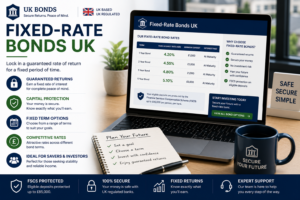
If you’ve got savings sitting in an account earning next to nothing, you’ve probably come across fixed rate bonds UK banks and building societies advertise with tempting-looking interest rates. They can genuinely be a smart way to grow your savings — but only if you understand exactly what you’re signing up for.
Here’s the thing: a fixed rate bond isn’t the same as a regular savings account, and treating it like one is where most people run into trouble. The higher rate comes with a trade-off, and that trade-off matters more than the headline number ever suggests.
It’s easy to see an attractive rate advertised somewhere and deposit funds without reading the small print closely. Most of the time that works out fine — but every year, savers get caught out by a term they didn’t fully understand, usually right when they suddenly need access to their money.
This guide breaks down exactly how fixed rate bonds work, what to check before locking your money away, and the common mistakes that catch savers out.
Why Fixed Rate Bonds Exist in the First Place
Banks use fixed rate bonds to secure deposits for a known period, which helps them plan lending and manage risk more predictably. In exchange for that certainty, they offer savers a better interest rate than they’d typically get from an instant access account.
It’s a genuinely fair trade for the right saver — someone with a lump sum they know they won’t need for a while. The problem arises when people commit funds they might actually need sooner, only to find early withdrawal isn’t straightforward.
Think of it less as a typical savings account and more as a short-term commitment, similar in spirit to a fixed-term contract. You know exactly what you’re getting — a set rate for a set period — but that certainty only benefits you if your own plans stay equally certain.
Takeaway: Fixed rate bonds reward patience and certainty — they’re not designed for money you might need unexpectedly.

Fact #1: Your Money Is Locked Away for the Full Term
Once you deposit funds into a fixed rate bond, they’re typically inaccessible until the term ends. Terms commonly range from one to five years, and some providers offer even longer options for higher rates.
This is the single most important thing to understand before committing. If there’s any realistic chance you’ll need that money before the term ends, a fixed rate bond likely isn’t the right fit for that particular sum, no matter how attractive the rate looks on paper.
Takeaway: Only commit funds you’re confident you won’t need until the bond matures.
Fact #2: Early Withdrawal Usually Comes With Penalties
Some providers allow early access, but almost always at a cost — either a reduced interest rate or a fixed penalty deducted from your balance. A few providers don’t allow early withdrawal under any circumstances.
Reading the terms carefully before committing tells you exactly what your options are if your circumstances change unexpectedly.
Takeaway: Always check the specific early withdrawal terms before signing up, not after you need the money.
Fact #3: Longer Terms Usually Mean Higher Rates
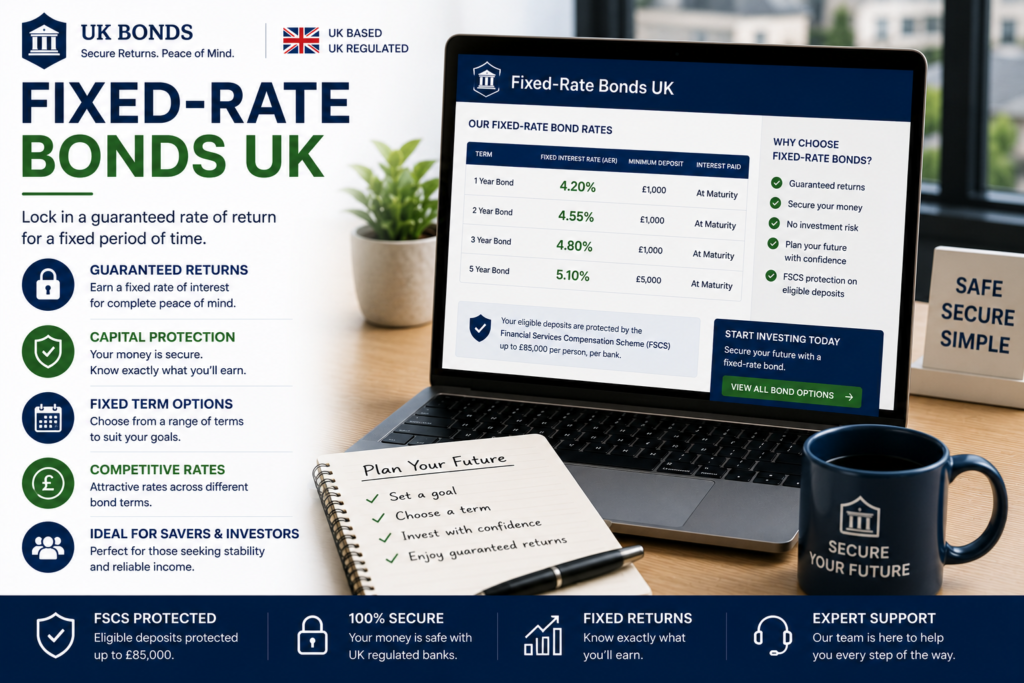
Generally speaking, the longer you’re willing to lock your money away, the higher the interest rate on offer. A five-year bond typically pays more than a one-year bond from the same provider.
That said, longer terms also mean more exposure to changing interest rate environments — if rates rise significantly elsewhere during your term, you’re stuck with the rate you locked in. This works both ways, of course: if rates fall after you’ve committed, you’ll be glad you locked in when you did.
Takeaway: Balance the appeal of a higher rate against the risk of missing out on better rates elsewhere during a long term.
Fact #4: Interest Payment Frequency Varies by Provider
Some fixed rate bonds pay interest monthly, which can be useful if you want a regular income stream from your savings. Others pay annually, or only at maturity, sometimes with a marginally better overall rate as a result.
Choosing between these options depends on whether you need regular access to the interest itself, or you’re happy to let it compound until the bond matures.
Takeaway: Match the payment frequency to whether you need income now or want maximum growth by the end of the term.

Fact #5: FSCS Protection Has a Limit
Fixed rate bonds from FSCS-protected UK institutions are covered up to £85,000 per banking group. If you’re depositing more than this, spreading funds across multiple providers keeps your entire balance protected.
This becomes especially relevant for savers consolidating larger lump sums, such as from an inheritance or property sale.
Takeaway: Don’t assume unlimited protection — check the FSCS limit and split larger deposits accordingly.
Fact #6: Rates Can Vary Significantly Between Providers
It’s easy to assume all fixed rate bonds offer roughly similar rates, but in practice, there can be a meaningful gap between the best and worst offers on the market at any given time. Smaller or newer providers sometimes offer notably higher rates to attract deposits.
Comparing multiple providers before committing — rather than simply choosing your existing bank — can make a real difference to your overall return.
Takeaway: Always compare rates across several providers rather than defaulting to your current bank out of convenience.
Fact #7: Timing Your Bond Matters More Than You’d Think
Because rates are locked in for the full term, the timing of when you open a fixed rate bond can significantly affect your overall return. Opening one just before rates rise elsewhere means missing out on better deals, while opening one during a high-rate period locks in strong returns for years.
While nobody can perfectly predict rate movements, keeping an eye on the broader interest rate environment before committing is a worthwhile habit. Financial news, base rate announcements, and comparison sites can all give you a rough sense of whether rates are trending upward, downward, or holding steady before you commit your funds.
Takeaway: Consider the current rate environment before locking in a long-term bond, rather than treating timing as irrelevant.
Fixed Rate Bonds vs Other Savings Options
It’s worth briefly comparing fixed rate bonds against alternatives before committing, since none of these products exist in isolation:
- Easy access savings accounts — more flexible, but typically lower interest rates
- Notice accounts — a middle ground, requiring advance notice for withdrawals in exchange for better rates than instant access
- Cash ISAs — offer tax-free interest, which may suit savers closer to their Personal Savings Allowance limit
Takeaway: Fixed rate bonds work best as part of a wider savings strategy, not necessarily as the only place for all your money.

Who Fixed Rate Bonds Actually Suit Best
Fixed rate bonds tend to work well for a fairly specific type of saver — someone who has a lump sum they’re confident they won’t need during the term, and who values a guaranteed return over the flexibility of easier access.
This often includes people who’ve recently received an inheritance, sold a property, or built up savings beyond their emergency fund. It suits those who already have a separate pot of easily accessible cash for genuine emergencies, so the bonded funds are genuinely surplus, rather than money that quietly does double duty as a safety net.
On the other hand, if your only savings are your emergency fund, or your income and expenses fluctuate unpredictably month to month, a fixed rate bond is usually the wrong tool — no matter how attractive the advertised rate looks. In that situation, an easy access account or a notice account is almost always the more sensible starting point.
Takeaway: Fixed rate bonds suit surplus savings, not your only safety net.
Frequently Asked Questions
1. What are fixed rate bonds in the UK? Fixed rate bonds are savings products where you deposit a lump sum for a set period, typically one to five years, in exchange for a guaranteed interest rate that won’t change during that term.
2. Can I withdraw money early from a fixed rate bond? Usually not, or only with a significant penalty. Most fixed rate bonds require you to leave your money untouched for the full term to receive the agreed interest rate.
3. Are fixed rate bonds safe in the UK? Yes, provided the provider is FCA-regulated and covered by the Financial Services Compensation Scheme (FSCS), which protects deposits up to £85,000 per institution.
4. Do fixed rate bonds pay interest monthly or annually? It depends on the provider. Some pay interest monthly, which can supplement income, while others pay annually or at full maturity, often at a slightly higher overall rate.
5. Are fixed rate bonds better than easy access savings accounts? They typically offer higher interest rates in exchange for reduced flexibility. If you’re confident you won’t need the money during the term, a fixed rate bond is often the better return.
6. Do I pay tax on fixed rate bond interest? Yes, interest earned counts toward your Personal Savings Allowance, and any amount above that threshold is taxable, depending on your overall income and tax band.
Final Thoughts
Fixed rate bonds UK savers use effectively can be a genuinely smart way to grow a lump sum, provided you’re comfortable with the trade-off: a better rate in exchange for reduced access during the term. The key is being honest with yourself about whether you’ll actually need that money before the bond matures.
It’s worth remembering that a fixed rate bond isn’t an all-or-nothing decision either. Many savers use them alongside an easy access account and a Cash ISA, splitting their money across different products based on how soon they might need each portion.
Compare providers properly, check the FSCS protection limits, and time your decision with the broader rate environment in mind, and a fixed rate bond can quietly do a lot of the work of growing your savings for you.