
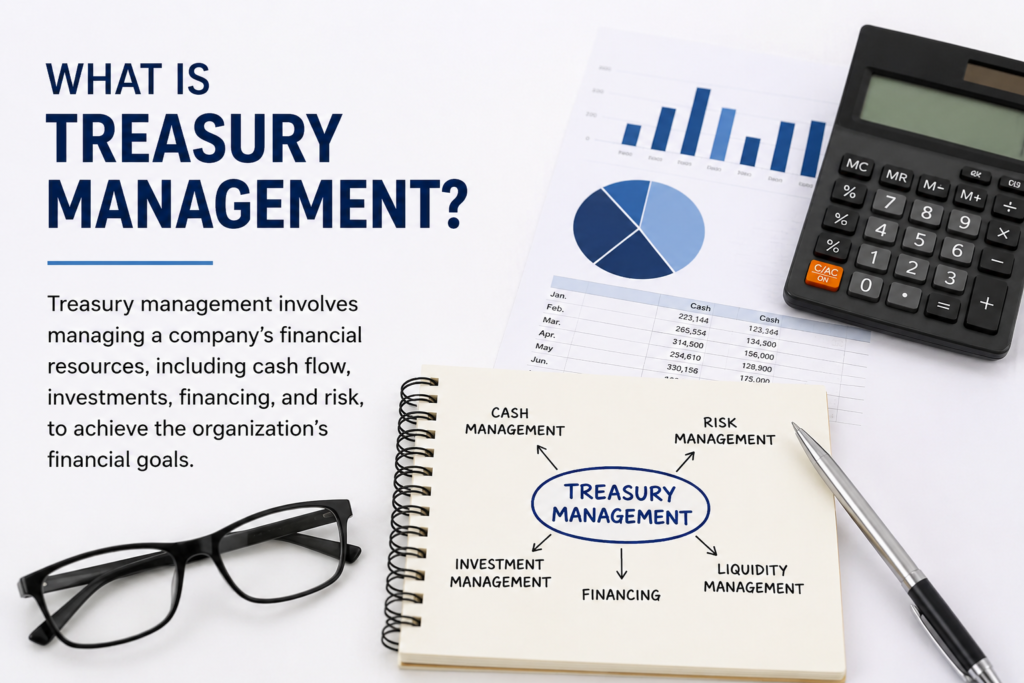
Ask someone outside of finance what is treasury management, and you’ll often get a vague answer involving the word “cash.” That’s not entirely wrong, but it barely scratches the surface. Treasury management is actually one of the most strategic functions inside a company, quietly responsible for making sure the business always has the right amount of money, in the right place, at the right time.
Here’s the thing worth knowing upfront: treasury management isn’t just about watching a bank balance. It covers liquidity, risk, banking relationships, investments, and funding decisions, all working together to keep a business financially stable and able to seize opportunities when they arise.
What Is Treasury Management, Exactly?
At its core, treasury management is the process of planning, monitoring, and controlling a company’s cash, investments, and financial risk to ensure it can meet its obligations and support its strategic goals.
It typically covers four main areas:
- Cash and liquidity management — ensuring enough cash is available to meet day-to-day obligations
- Risk management — managing exposure to currency fluctuations, interest rate changes, and credit risk
- Funding and capital structure — deciding how the business raises money, through debt, equity, or internal cash flow
- Banking and financial relationships — managing accounts, credit facilities, and payment systems across banking partners
Quick takeaway: If you’re trying to understand what treasury management actually does day to day, think of it as the function responsible for making sure money is never a surprise, whether there’s too little of it or too much sitting idle.
Why This Function Matters More Than It Gets Credit For
It’s easy to overlook this function until something goes wrong, a payment gets missed, a currency swing eats into profit margins, or a business misses an investment opportunity because cash wasn’t positioned correctly.
A well-run treasury function delivers real, measurable value:
- Preventing liquidity crises, ensuring the business can always meet payroll, supplier payments, and debt obligations
- Reducing financial risk, through hedging strategies that protect against currency and interest rate volatility
- Optimizing returns on idle cash, rather than letting surplus funds sit earning nothing
- Supporting strategic decisions, giving leadership accurate, timely information about the company’s financial capacity
Quick takeaway: A profitable company can still fail if it runs out of cash at the wrong moment. This function exists specifically to prevent that gap between paper profit and actual available funds.
The Core Responsibilities of a Treasury Function
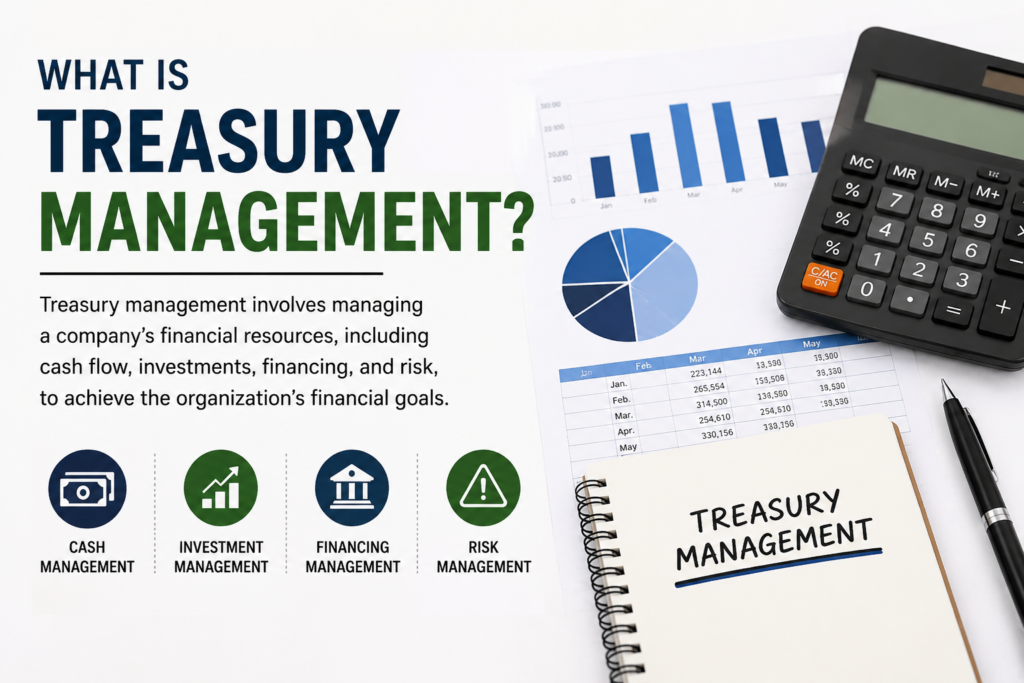
Beyond the broad categories, day-to-day treasury work involves a specific set of recurring responsibilities.
- Cash flow forecasting, projecting when money will move in and out over coming weeks and months
- Working capital management, balancing receivables, payables, and inventory to optimize available cash
- Debt management, overseeing loan agreements, covenants, and repayment schedules
- Investment of surplus funds, placing excess cash into short-term, low-risk instruments to generate returns
- Foreign exchange management, for businesses operating across multiple currencies
- Bank relationship management, negotiating terms, fees, and credit facilities across banking partners
Quick takeaway: Cash flow forecasting sits at the center of nearly every other treasury responsibility. Get that forecast wrong, and every downstream decision, from investing surplus cash to negotiating credit terms, becomes harder to get right.
How This Differs From Accounting
This is a genuinely common point of confusion, so it’s worth clarifying directly. Accounting focuses primarily on recording and reporting what has already happened financially. Treasury management focuses on what happens next, planning and managing future cash positions and financial risk.
- Accounting produces financial statements, tracks historical transactions, and ensures regulatory compliance
- Treasury forecasts future cash needs, manages financial risk, and makes decisions about funding and investment
Quick takeaway: Accounting tells you where the business has been financially. This function is concerned with where it’s headed, and making sure it gets there without running short on cash along the way.
Common Financial Risks This Function Helps Control
A significant part of this function involves identifying and managing specific financial risks before they become genuine problems.
- Liquidity risk — the danger of not having enough accessible cash to meet short-term obligations
- Interest rate risk — exposure to rising borrowing costs on variable-rate debt
- Foreign exchange risk — losses caused by currency fluctuations for businesses trading internationally
- Credit risk — the possibility that customers or counterparties fail to pay what they owe
Quick takeaway: Most of these risks can be reduced, though rarely eliminated entirely, through hedging strategies, diversified banking relationships, and disciplined cash forecasting.
Who Handles This Function in a Business?
The scale of this function varies significantly depending on company size.
- Small businesses often handle treasury informally, with the owner or finance manager monitoring cash flow directly alongside other responsibilities
- Mid-sized companies typically have a dedicated treasury or finance manager overseeing cash, risk, and banking relationships
- Large corporations often maintain a full treasury department, sometimes led by a dedicated Treasurer reporting to the CFO, with specialized teams covering risk, funding, and cash operations
Quick takeaway: Regardless of company size, the underlying principles stay the same. Only the formality and dedicated resourcing behind the function changes as a business grows.
Tools and Technology Used in Modern Treasury Management
Technology has changed this function considerably in recent years, reducing manual work and improving visibility.
- Treasury management systems (TMS), providing centralized visibility into cash positions across multiple accounts and currencies
- Cash flow forecasting software, often integrating directly with accounting platforms for real-time updates
- Automated bank connectivity, allowing treasury teams to monitor balances and initiate payments without manual bank portal logins
- Risk management platforms, supporting hedging decisions with real-time market data
Quick takeaway: Even with strong technology, treasury decisions still require human judgment, particularly around risk tolerance and strategic funding choices that pure data can’t fully determine on its own.
5. FAQs
Q1: What is treasury management in simple terms? It’s the process of planning, monitoring, and controlling a company’s cash, investments, and financial risk to make sure the business can meet its obligations and pursue its strategic goals.
Q2: What’s the difference between treasury management and accounting? Accounting records and reports past financial activity, while treasury management focuses on forecasting future cash needs and managing financial risk going forward.
Q3: Why is treasury management important for small businesses? Even without a dedicated department, small businesses benefit from the same core principles, accurate cash forecasting and risk awareness, to avoid running short on funds during slower periods.
Q4: What risks does treasury management help control? Key risks include liquidity risk, interest rate risk, foreign exchange risk, and credit risk, all of which can disrupt a business’s financial stability if left unmanaged.
Q5: Does treasury management only apply to large corporations? No, the underlying principles apply to businesses of any size. Larger companies typically formalize the function with dedicated staff, while smaller businesses often manage it informally.
Q6: What tools are used in modern treasury management? Common tools include treasury management systems, cash flow forecasting software, automated bank connectivity platforms, and risk management systems supporting hedging decisions.
Final Thoughts
What is treasury management, in plain terms? It’s the function responsible for making sure a business always has the right cash in the right place, while actively managing the financial risks that could disrupt that position. It’s far more strategic than simply watching a bank balance, touching everything from funding decisions to currency risk to banking relationships.
Whether it’s handled informally by a small business owner or by a dedicated department at a large corporation, the same core discipline applies: plan ahead, manage risk deliberately, and never let cash become an unwelcome surprise.
For official guidance on treasury and cash management standards, the Association of Corporate Treasurers offers detailed, professional resources on the field.