Here’s the thing: unlike limited companies, sole traders aren’t legally required to have a separate business account. Many people use their personal account out of convenience — but that convenience often comes at the cost of messy bookkeeping and a much harder time come tax return season.
Starting out as a sole trader means wearing a lot of hats, and figuring out the best sole trader bank account UK providers actually offer probably isn’t the part you were most excited about. But getting this right early on saves genuine hassle later, especially once invoices, expenses, and tax season start piling up.
It’s a decision that’s easy to put off. When you’re focused on landing clients and getting your business off the ground, comparing bank accounts understandably feels like a low priority. But the sole traders who sort this out early almost always say it was worth the small amount of upfront effort, once they see how much time it saves at tax time and how much smoother their bookkeeping becomes as a result.
This guide walks through what actually matters when comparing sole trader accounts, the providers worth considering, and a few mistakes that catch new sole traders out.
Why the Right Sole Trader Account Actually Matters
Mixing personal and business transactions might feel harmless at first, but it quickly becomes a bookkeeping headache. Separating income and expenses cleanly makes tax returns faster, reduces the risk of errors, and gives you a much clearer picture of how your business is actually performing.
It also looks more professional to clients, particularly if you’re invoicing regularly and want payments to arrive under a recognisable business name rather than your personal one. A dedicated account can quietly reinforce trust with clients, especially newer ones who haven’t worked with you before and are forming their first impression of how seriously you take your business and its finances.
Takeaway: A dedicated account isn’t legally required, but it makes running your business noticeably smoother.

What to Look for When Comparing Sole Trader Accounts
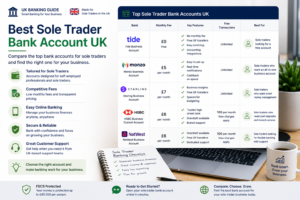
Before comparing specific providers, it helps to know what actually matters for your situation, since the “best” account genuinely depends on how your business operates day to day:
- Monthly fees — some accounts are free, others charge after an introductory period
- Transaction fees — particularly relevant if you handle frequent payments or international clients
- Accounting software integration — Xero, QuickBooks, or FreeAgent compatibility saves real time
- Cash and cheque deposit options — important if your business isn’t purely digital
- Mobile app quality — since most sole traders manage finances on the go
- Customer support channels — phone, live chat, or in-branch, depending on your preference
Takeaway: Match the account to how your specific business actually operates, not just to brand recognition.
What You’ll Typically Need to Open One
Most sole trader accounts require a fairly light set of documents compared to limited company accounts, which typically demand more extensive verification:
- Proof of identity (passport or driving licence)
- Proof of address (recent utility bill or bank statement)
- Details of your business activity or trade
- Your Unique Taxpayer Reference (UTR), if already registered as self-employed with HMRC
- An estimate of expected turnover, for some providers
Digital-only providers typically process this within minutes using in-app photo verification, while traditional banks may take a few days longer to complete their checks, particularly if additional identity verification is required.
Takeaway: Having your documents ready in advance means you could have an account up and running the same day.
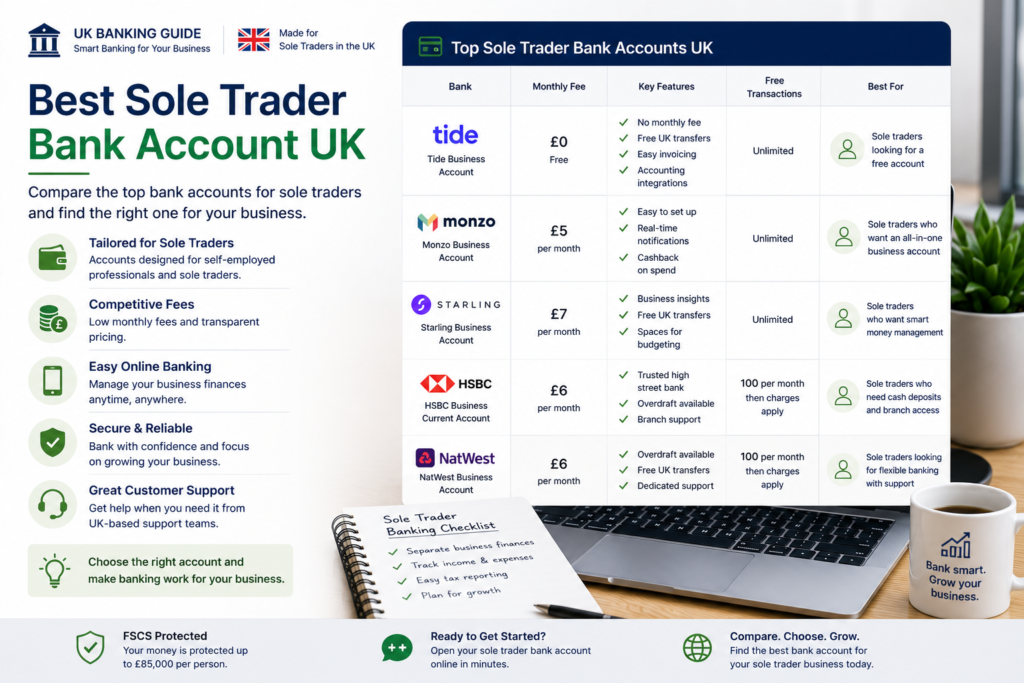
Pick #1: Starling Bank
Starling has become a popular choice among sole traders for its free account tier, strong app design, and built-in expense categorisation tools. It integrates well with major accounting software, making it a solid fit for freelancers who want simplicity without sacrificing useful features.
Many sole traders also appreciate Starling’s real-time spending notifications, which make it easier to keep track of business expenses as they happen rather than reconciling everything at the end of the month.
Takeaway: A strong all-rounder for digitally-minded sole traders who want a free, feature-rich account.
Pick #2: Tide
Tide is built specifically with small businesses and sole traders in mind, offering fast account opening and helpful built-in invoicing tools. It’s particularly popular among freelancers who want to send professional invoices directly from their banking app.
Tide also offers a range of optional paid plans with extra features, such as accounting software discounts and additional expense management tools, which can be worth exploring as your business grows.
Takeaway: Worth considering if invoicing clients directly through your banking app appeals to you.
Pick #3: Monzo Business
Monzo Business offers a clean, intuitive app experience with solid budgeting tools, making it a good fit for sole traders who value simplicity and clear spending insights over more advanced features.
Its spending categorisation and simple visual breakdowns make it particularly approachable for sole traders who are newer to managing business finances and want something that doesn’t feel overly complicated.
Takeaway: A good option for sole traders who want an easy-to-use app above all else.

Pick #4: NatWest
For sole traders who prefer the reassurance of a traditional high street bank, NatWest offers business banking with in-branch support and a well-established reputation, though account opening can take longer than digital-only alternatives.
This can suit sole traders who occasionally handle cash payments, or who simply feel more comfortable knowing a physical branch is available if something goes wrong or a query needs sorting out in person.
Takeaway: Suits sole traders who value in-person support over the fastest possible onboarding.
Pick #5: Barclays
Barclays offers dedicated sole trader accounts with strong integration into wider financial services, useful if you anticipate needing business loans or overdraft facilities as your business grows.
Its established presence also means a wide branch network, which can be genuinely convenient for sole traders who need to deposit cash or cheques regularly as part of their day-to-day business activity.
Takeaway: A solid choice if you expect to need additional lending products down the line.
Pick #6: Revolut Business
Revolut Business appeals to sole traders dealing with international clients, offering competitive currency exchange rates and multi-currency account options that many traditional banks don’t match.
This makes it particularly useful for freelancers working with overseas clients, since holding and receiving multiple currencies can avoid unnecessary conversion fees that would otherwise eat into your earnings over the course of the year.
Takeaway: Particularly useful if your work involves regular international payments or clients.
Pick #7: Metro Bank
Metro Bank stands out for its extended opening hours and strong in-branch customer service, appealing to sole traders who value being able to speak to someone in person when needed.
Its longer opening hours, including weekends in many branches, make it a practical option for sole traders whose working hours don’t always align with typical banking hours elsewhere, particularly those juggling client work during the standard nine-to-five.
Takeaway: A good fit if accessible, human customer support matters more to you than app-first features.
Common Mistakes New Sole Traders Make
- Continuing to use a personal account well after starting to trade, making tax time far more complicated and increasing the risk of accidentally missing deductible expenses along the way
- Choosing an account based purely on brand recognition rather than actual features needed for how the business operates day to day
- Overlooking transaction fees that quietly add up with frequent client payments, especially for businesses handling a high volume of smaller transactions
- Not checking accounting software compatibility before committing, only to discover manual data entry is needed later
- Ignoring customer support quality until an issue actually arises, when it’s too late to easily switch without disruption
Takeaway: A little research upfront avoids switching accounts later once these issues become frustrating.
Frequently Asked Questions
1. Do sole traders need a separate business bank account in the UK? Legally, no — sole traders can use a personal account. However, most accountants and HMRC guidance strongly recommend a separate account to keep business and personal finances cleanly separated, which makes both bookkeeping and tax filing considerably easier.
2. What’s the best sole trader bank account UK freelancers typically choose? Popular options include Starling, Tide, Monzo Business, and traditional banks like NatWest or Barclays, with the right choice depending on your need for cash handling, app features, and fees.
3. How much does a sole trader bank account cost? Many digital providers offer free accounts with optional paid tiers for extra features, while some traditional banks charge a monthly fee after an introductory free period.
4. Can I switch from a personal account to a sole trader account later? Yes, switching is straightforward and doesn’t affect your business operations, though it’s simpler to separate accounts from the start to avoid untangling mixed transactions later.
5. Do I need my UTR number to open a sole trader account? Some providers ask for it during onboarding, particularly if you’ve already registered as self-employed with HMRC, though it’s not always a strict requirement for every bank.
6. Is a sole trader account the same as a limited company account? No. Sole trader accounts are typically simpler to open and often cheaper, since sole traders have fewer legal reporting requirements than limited companies.
Final Thoughts
There’s no single best sole trader bank account UK freelancers should universally choose — the right one depends on whether you value app simplicity, in-branch support, invoicing tools, or international payment features most. Comparing a shortlist against your actual working style, rather than picking the most advertised option, leads to a far better long-term fit for your specific business.
It’s also worth remembering that switching later isn’t the end of the world if your needs change — but starting with the right account for your current situation avoids unnecessary disruption while you’re busy building your business.
Take the time to compare properly now, and you’ll spend far less time untangling finances later when tax season arrives