Meta description: Discover how a personal finance lab can help you budget smarter, save faster, and build lasting money habits — even if you’re a complete beginner.
Managing money can feel overwhelming, especially when there are so many apps, spreadsheets, and “experts” telling you what to do. That’s exactly why the idea of a personal finance lab has become so popular. Think of it as a hands-on space — whether it’s an app, a course, or a simple system you build yourself — where you can test, track, and improve your financial habits without judgment.
In this article, we’ll break down what a personal finance lab really is, why it works better than traditional budgeting advice, and how you can set one up for yourself, even if you’ve never tracked a single expense before.
What Is a Personal Finance Lab?
A personal finance lab is basically a practical, experiment-based approach to managing your money. Instead of following one rigid budgeting rule and hoping it works, you treat your finances like a science project. You try something, measure the results, adjust, and try again.
This is different from a normal budgeting app because a personal finance lab focuses on testing what actually fits your lifestyle. Some people save more with the 50/30/20 rule. Others do better with a zero-based budget. A personal finance lab lets you experiment with different methods until you find the one that sticks.
Why More People Are Turning to a Personal Finance Lab
Traditional financial advice often assumes everyone has the same income, expenses, and goals. In reality, that’s rarely true. A personal finance lab flips that idea on its head by putting you in charge of your own experiments.
Here’s why this approach is gaining traction:
- It’s personalised. You’re not forcing your life into someone else’s spreadsheet.
- It removes shame. Mistakes are just data points, not failures.
- It builds long-term habits. Small, repeated tests lead to changes that actually last.
- It’s flexible. A personal finance lab can grow with you — from paying off debt to investing for retirement.
If you’ve tried budgeting apps before and given up after a few weeks, a personal finance lab mindset might be exactly what you need.

How to Set Up Your Own Personal Finance Lab
You don’t need fancy software to start. Here’s a simple step-by-step process anyone can follow.
1. Track Everything for 30 Days
Before you change anything, you need real data. Write down every expense — coffee, subscriptions, rent, everything — for one full month. This is the foundation of your personal finance lab.
2. Set One Clear Goal
Instead of trying to fix everything at once, pick a single goal. It could be:
- Saving £500 in three months
- Paying off a credit card
- Cutting food delivery spending in half
A focused goal makes your personal finance lab experiments easier to measure.
3. Run Small Experiments
This is where the “lab” part comes in. Try one change at a time, such as:
- Switching to a cash envelope system for groceries
- Automating savings the day you get paid
- Cancelling one unused subscription
Give each experiment two to four weeks before judging the results.
4. Measure and Adjust
At the end of each experiment, ask yourself: Did this actually work? Did it feel sustainable? If yes, keep it. If not, tweak it or try something else. This cycle of testing and adjusting is what makes a personal finance lab so effective compared to a one-size-fits-all budget.
5. Build a Simple Dashboard
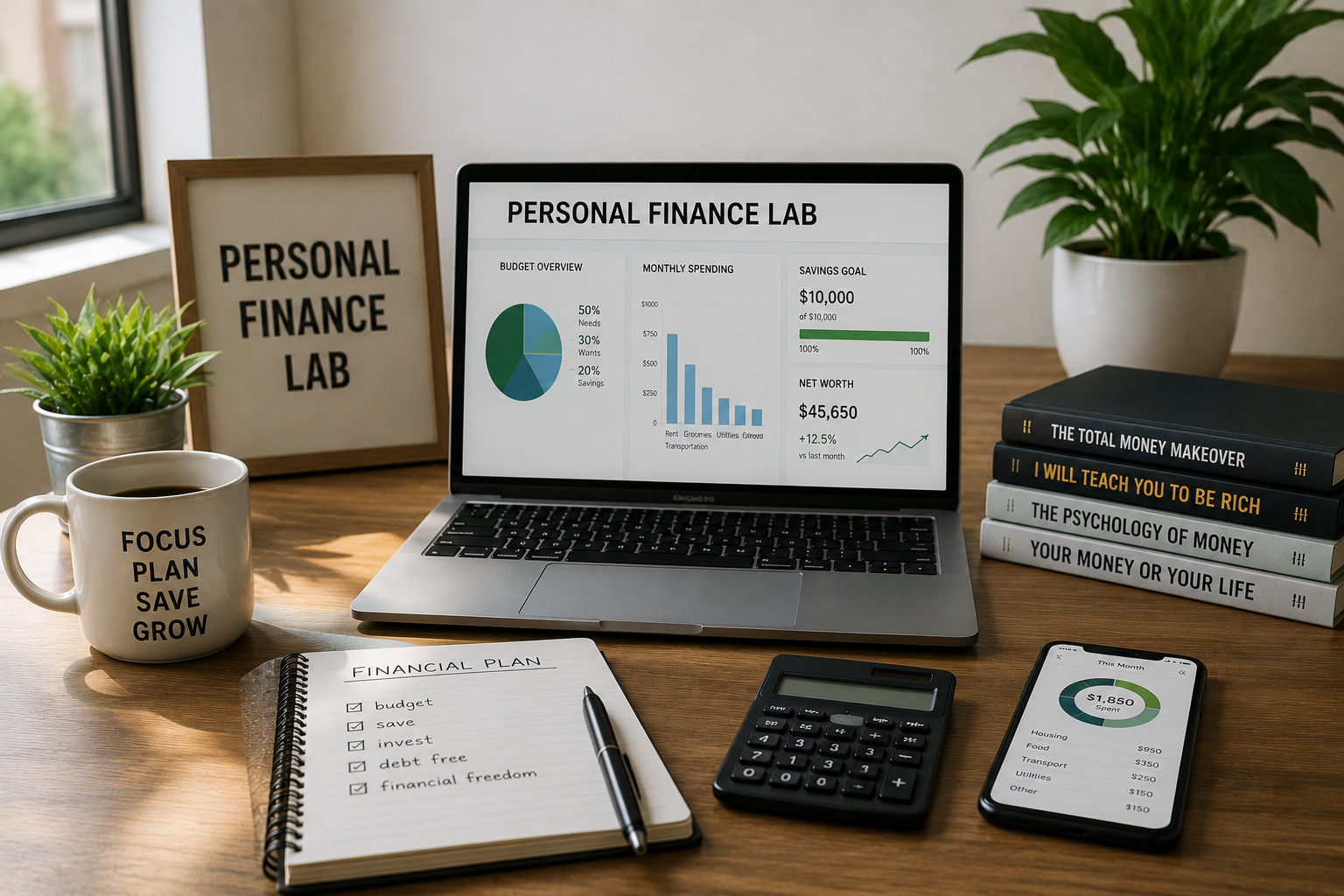
You don’t need anything complicated. A basic spreadsheet with columns for income, expenses, savings, and notes is enough to run your own personal finance lab. Review it weekly, not daily — daily checking often leads to stress rather than progress.
Tools That Can Support Your Personal Finance Lab
While you can absolutely run a personal finance lab with pen and paper, a few tools make the process smoother:
- Budgeting apps like YNAB or Monzo for automatic expense tracking
- Spreadsheet templates for a more hands-on, customisable approach
- Savings calculators to test different saving scenarios before committing
- Debt payoff planners to compare the snowball versus avalanche methods
The tool itself isn’t the important part — it’s the habit of testing and reviewing that turns any of these into a genuine personal finance lab.
Common Mistakes to Avoid
Even with the best intentions, a few habits can slow down your progress:
Trying to change too much at once. A personal finance lab works best with one variable at a time. Changing your entire budget overnight usually leads to burnout.
Skipping the review step. Without measuring results, you’re just guessing. Set a recurring reminder to check your numbers.
Comparing yourself to others. Your personal finance lab is about your situation, not your friend’s salary or your neighbour’s savings account.
Giving up too early. Some experiments take a full pay cycle to show results. Be patient before deciding something isn’t working.
Who Benefits Most From a Personal Finance Lab Approach?
This method works well for almost anyone, but it’s especially useful for:
- Beginners who feel lost with traditional budgeting advice
- Freelancers with irregular income who need flexible systems
- Couples trying to align on shared financial goals
- Anyone recovering from debt who wants a judgment-free way to rebuild habits
Because a personal finance lab is built around testing rather than perfection, it removes a lot of the pressure that usually makes people quit their financial goals within weeks.
Final Thoughts
Money management doesn’t have to be complicated or stressful. By treating your finances like a personal finance lab — testing small changes, tracking real results, and adjusting as you go — you build habits that actually fit your life instead of forcing your life to fit someone else’s system.
Start small. Pick one goal, run one experiment, and see what the data tells you. Over time, these small tests add up to real financial confidence, and that’s the whole point of running your own personal finance lab.
Frequently Asked Questions
Is a personal finance lab the same as budgeting? Not exactly. Budgeting usually follows a fixed rule, while a personal finance lab focuses on testing different methods to find what works best for you.
Do I need an app to start a personal finance lab? No. A notebook or a simple spreadsheet is enough to get started.
How long should each experiment run? Two to four weeks is usually enough time to see meaningful results before adjusting.