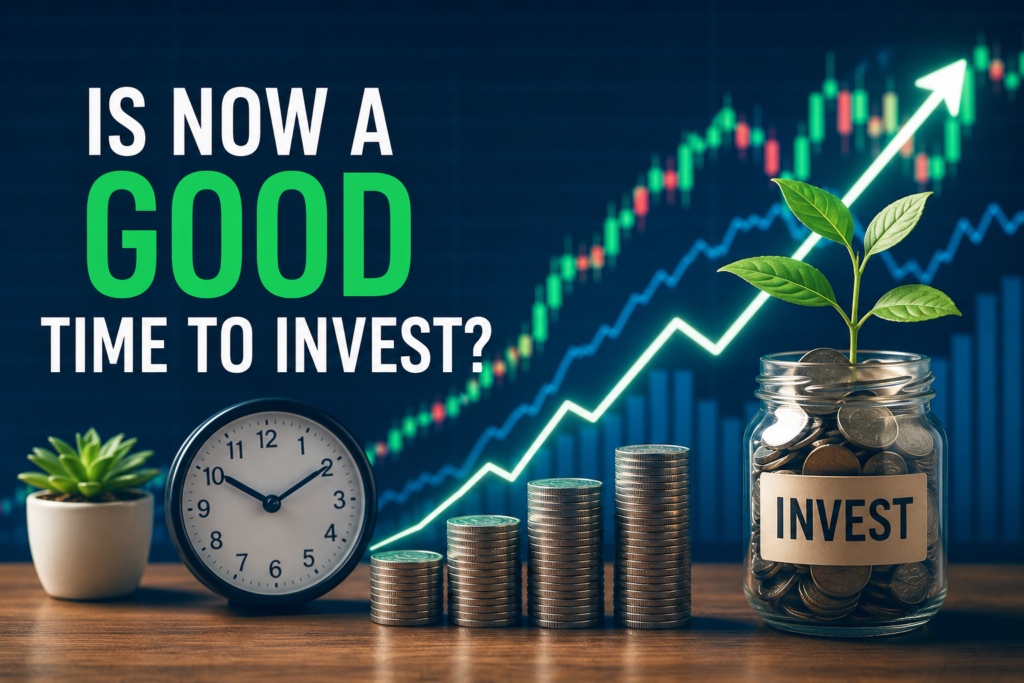
Is Now a Is Now a Good Time to Invest
“Is now a good time to invest in the stock market?” is one of those questions that never really goes away, but the honest answer changes depending on exactly when you’re asking it. Right now, in July 2026, the answer comes with more nuance than usual. The market is near record highs, AI-driven earnings are genuinely strong, but a handful of specific risks are sitting closer to the surface than they have in a while.
Here’s the thing worth saying upfront: this isn’t financial advice, and nobody, including seasoned analysts at major firms, can reliably predict short-term market moves. What follows is a clear-eyed look at where things actually stand this month, so you can make a more informed decision for your own situation.
Where the Market Actually Stands Right Now
As of early July 2026, the S&P 500 has climbed roughly 7.7% year-to-date, and major indices remain near all-time highs. The rally has been driven largely by continued strength in AI-related capital spending, with S&P 500 consensus earnings growth for 2026 sitting at a notably strong 24%.
That said, a few specific factors are shaping the picture right now:
- Inflation hit 4.2% in May, its highest level in three years
- Oil prices spiked sharply following the Iran conflict earlier in the year, though they’ve since pulled back from their peak
- A new Federal Reserve Chair, Kevin Warsh, is emphasizing a commitment to controlling inflation, and markets are watching closely for signals on rate policy
- CME FedWatch data from early July showed meaningfully elevated odds of at least one rate hike by the Fed’s December meeting
Quick takeaway: A market near record highs isn’t automatically a reason to avoid investing, but it does mean valuations leave less room for error if earnings or inflation data disappoint.
Why Some Analysts Remain Bullish
Several major firms have stayed cautiously optimistic heading into the second half of 2026. The reasoning tends to center on a few consistent points:
- Corporate earnings have generally kept pace with, or exceeded, analyst expectations
- The AI capital expenditure cycle continues to drive strong results in specific sectors, including power infrastructure, memory chips, and cooling systems
- Historical patterns suggest markets often continue climbing a “wall of worry” even amid geopolitical uncertainty
- Forward price-to-earnings ratios have actually eased slightly this year, even as earnings estimates have risen
Quick takeaway: Strong earnings growth is the main pillar supporting current valuations. If that growth continues through upcoming earnings season, it gives the market more room to justify current price levels.
Why Other Analysts Are More Cautious
At the same time, a meaningful number of strategists are flagging specific concerns worth understanding before you invest new money right now.
- Investor positioning is stretched. One widely referenced sentiment gauge recently sat in the 99th percentile of readings going back to 1991, a level historically associated with below-average forward returns over the following 12 months
- Market gains remain narrowly concentrated in a relatively small group of mega-cap AI-related stocks, meaning broader market health depends heavily on a handful of companies continuing to perform
- Rising Treasury yields could make bonds more competitive with stocks and pressure valuations, particularly for high-growth companies
- The equity risk premium is historically thin, meaning stocks currently offer only a small return advantage over safer government bonds
Quick takeaway: When positioning gets this stretched, it doesn’t necessarily mean a downturn is imminent, but it does mean upside surprises may be harder to come by than downside ones.
The Fed and Interest Rates: What to Watch
Interest rate policy is arguably the single biggest swing factor for the rest of 2026. Coming into the year, many investors expected further rate cuts. That expectation has shifted considerably under the new Fed leadership, with officials placing renewed emphasis on inflation control.
If the Fed does raise rates later this year:
- Borrowing costs would rise, potentially slowing the pace of AI-related capital spending, much of which is being financed with debt
- Bond yields could climb further, making fixed income more attractive relative to stocks
- Growth stock valuations, which are more sensitive to interest rates, could face renewed pressure
Quick takeaway: Keep an eye on upcoming Fed meetings and inflation data releases specifically. These are likely to move markets more than most other single events for the remainder of the year.

What This Means If You’re a Long-Term Investor
Here’s a distinction that often gets lost in short-term market commentary: the answer to “is now a good time to invest” looks very different for a long-term investor than for someone trying to time a short-term move.
For long-term, buy-and-hold investors:
- Historical data consistently shows that investors who stay invested through volatility tend to outperform those who try to time entries and exits
- Dollar-cost averaging, investing a fixed amount on a regular schedule, reduces the risk of putting a large lump sum in right before a pullback
- Diversification across sectors matters more right now specifically, given how concentrated recent gains have been in AI-related names
Quick takeaway: If your investment horizon is measured in years or decades rather than months, short-term valuation concerns matter less than maintaining a consistent, diversified strategy.
What This Means If You’re Considering a Lump Sum Right Now
If you’re sitting on a larger amount of cash and wondering whether to invest it all at once, current conditions add a layer of extra consideration.
- Stretched valuations and concentrated gains mean a near-term pullback is a real possibility, though its timing is unpredictable
- Spreading a lump sum investment over several months can reduce the risk of investing everything right before a downturn, at the cost of potentially missing some upside if markets keep climbing
- Keeping a portion in cash or short-term bonds currently offers a genuinely competitive yield, unlike in past low-rate environments
Quick takeaway: There’s no universally “correct” answer here. It depends on your personal risk tolerance, timeline, and how much the possibility of a near-term dip would actually affect your financial plans.
Practical Steps Before You Invest Right Now

Regardless of which camp you fall into, a few steps are worth taking before committing new money in the current environment.
- Review your existing portfolio’s concentration, particularly exposure to mega-cap AI-related stocks
- Confirm your emergency fund is solid before investing additional cash, especially given elevated market valuations
- Set a clear time horizon for any new investment, since that materially changes how much short-term volatility should matter to you
- Watch upcoming earnings season and Fed communications closely, since both are likely to move markets meaningfully in the coming months
- Avoid making decisions based purely on headlines, whether they’re overly optimistic or overly alarming
Quick takeaway: A rules-based approach, based on your own goals and timeline, tends to hold up better than reacting to whichever narrative is dominating financial headlines this week.
5. FAQs
Q1: Is now a good time to invest in the stock market in 2026? It depends on your time horizon. Long-term investors have historically benefited from staying consistently invested, while those considering a large lump sum face more nuance given current stretched valuations and concentrated market gains.
Q2: Why are stock valuations considered stretched right now? Investor positioning indicators have recently reached historically elevated levels, and market gains remain concentrated in a relatively small group of mega-cap AI-related stocks, both of which have historically preceded below-average near-term returns.
Q3: How does inflation affect whether I should invest now? Inflation recently hit its highest level in three years, raising the possibility of Fed rate hikes later in 2026. Higher rates can pressure stock valuations, particularly for growth-oriented companies.
Q4: Should I invest a lump sum now or spread it out over time? Spreading investments out over several months, known as dollar-cost averaging, can reduce the risk of investing right before a pullback, though it may mean missing some gains if markets continue climbing.
Q5: What’s driving the current stock market rally? Continued strength in AI-related capital spending, alongside resilient corporate earnings growth, has been the primary driver of gains in 2026, even amid geopolitical and inflation-related uncertainty.
Q6: What should I watch to know if the market outlook is changing? Keep an eye on Federal Reserve meetings, inflation data releases, and corporate earnings season, since these three factors are widely viewed as the most likely drivers of significant market moves for the rest of 2026.
Final Thoughts
Is now a good time to invest in the stock market? As of July 2026, the honest answer is: it depends heavily on your time horizon and how you plan to invest. Long-term, consistent investors have historically been rewarded for staying the course through periods like this one. Those considering a large lump sum right now face a genuinely more nuanced decision, given stretched valuations, concentrated gains, and real uncertainty around Fed policy for the rest of the year.
Whatever you decide, this isn’t a substitute for personalized financial advice. Your own goals, risk tolerance, and timeline matter more than any single market forecast, including the ones referenced here.
For balanced, official guidance on evaluating investment risk, the U.S. Securities and Exchange Commission’s investor education resources are a solid, non-commercial starting point.