
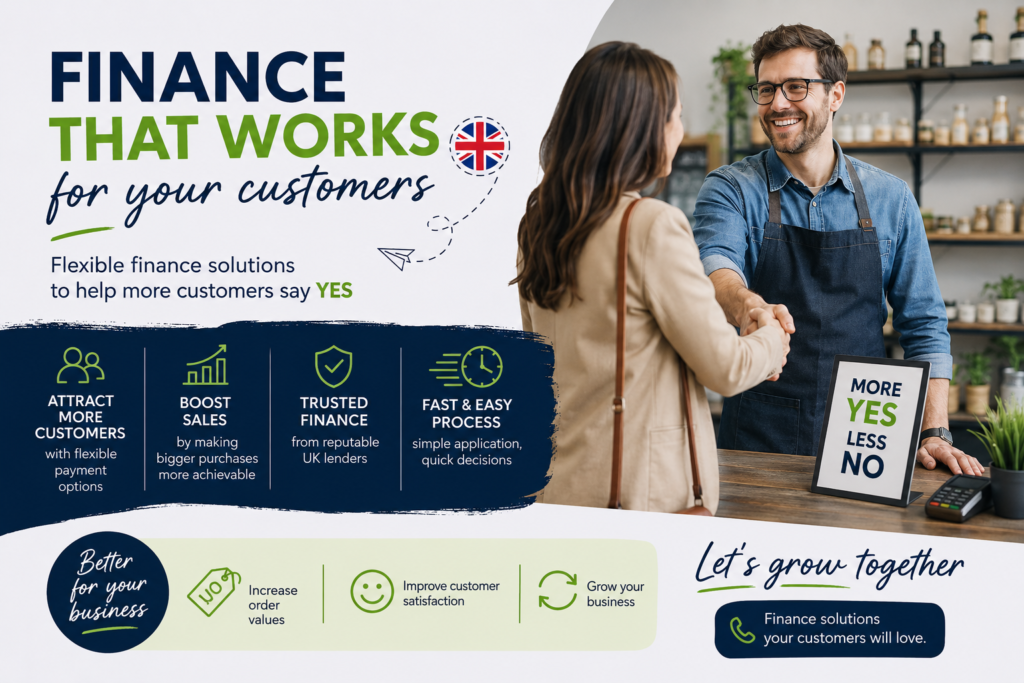
Offer finance to customers UK businesses increasingly want to do, since giving buyers the option to pay in instalments can boost sales and make higher-priced products more accessible. If you’re a business owner considering this option, this guide explains how it works, what’s legally required, and what to consider before getting started.
Whether you run a small retail shop or a larger service-based business, understanding the basics can help you decide whether providing payment options is the right move for your company.
What Does It Mean to Offer Finance to Customers UK-Wide?
Providing this option means allowing customers to pay for goods or services over time, rather than in a single upfront payment. This can include interest-free instalment plans, longer-term credit agreements, or partnerships with third-party lenders who manage the credit side of the transaction on the retailer’s behalf.
Why Businesses Choose to Offer Finance to Customers UK-Wide
1. Increasing Sales Conversion
Spreading the cost can make higher-priced items feel more affordable, encouraging customers to complete a purchase they might otherwise delay.
2. Increasing Average Order Value
When customers aren’t limited to what they can pay immediately, many choose higher-value products or add extra items to their order.
3. Standing Out From Competitors
In competitive markets, giving customers flexible payment options can be a meaningful point of difference compared to businesses that only accept full upfront payment.
4. Supporting Customer Loyalty
A smooth, manageable payment experience can encourage repeat business and stronger long-term customer relationships.
Legal and Regulatory Requirements in the UK
Before a business can offer finance to customers UK regulations require certain steps to be followed, since consumer credit is a regulated activity.
1. FCA Authorisation
In most cases, businesses need to be authorised by the Financial Conduct Authority (FCA) to offer credit directly, or they can work with an FCA-authorised lender or finance partner instead.
2. Clear and Fair Terms
Any credit agreement must clearly explain repayment terms, interest rates (if applicable), and any fees, in line with UK consumer credit regulations.
3. Affordability Checks
Responsible lending rules typically require some form of affordability assessment to ensure customers can reasonably manage repayments.
4. Right to Cancel
Depending on the type of agreement, customers may have a legal right to a cooling-off period during which they can cancel without penalty.
For official guidance on consumer credit rules, the Financial Conduct Authority provides detailed information for both businesses and consumers.
Common Ways Businesses Offer Finance to Customers in the UK
- In-House Payment Plans – The business manages instalments directly, often for smaller amounts.
- Third-Party Finance Partners – Specialist lenders handle credit checks, agreements, and repayments on the retailer’s behalf.
- Buy Now, Pay Later Services – Increasingly popular for online retail, allowing customers to split payments over short periods.
- Point-of-Sale Finance – Often used for larger purchases like furniture, vehicles, or home improvements, arranged at the time of sale.
Choosing a Finance Partner
Many businesses that offer finance to customers UK-wide prefer working with an established, FCA-regulated finance provider rather than managing credit directly. When comparing options, consider:
- Whether the provider is properly authorised and regulated
- Interest rates and fees charged to customers, and to your business
- How quickly customers are approved and funds are settled to your business
- The provider’s reputation for clear communication and fair treatment of customers
For general background on how consumer credit products work, resources like Investopedia offer a broader overview of how these arrangements typically function.
Risks to Consider
1. Regulatory Compliance
Failing to meet FCA requirements when providing credit directly can lead to significant penalties, making proper authorisation or partnership essential.
2. Customer Affordability
Encouraging customers to take on credit they can’t comfortably afford can damage trust and increase the risk of missed payments.
3. Cash Flow Considerations
If managing payment plans in-house, businesses need to plan carefully for delayed incoming payments compared to receiving full amounts upfront.
Is This the Right Move for Your Business?
Before deciding whether to offer finance to customers UK-wide, consider asking:
- Would flexible payment options genuinely increase sales for my products or services?
- Am I prepared to meet FCA requirements, or would partnering with a regulated lender make more sense?
- Can my business manage the cash flow impact of offering instalment-based payments?
- How does this fit within my broader business growth strategy?
Speaking with a licensed financial advisor or compliance specialist can help you weigh the benefits and legal responsibilities before rolling out a finance option to your customers.
Frequently Asked Questions
Q1: Do I need FCA authorisation to offer finance to customers?
In most cases, yes, unless you partner with an already-authorised third-party lender to manage the credit arrangement.
Q2: What’s the easiest way for a small business to offer finance to customers UK-wide?
Many small businesses partner with established finance providers or Buy Now, Pay Later services rather than managing credit directly.
Q3: Are affordability checks legally required?
Yes, responsible lending regulations generally require some form of affordability assessment before extending credit.
Q4: Can offering finance increase my sales?
Yes, many businesses see increased conversion rates and higher average order values when flexible payment options are available.
Q5: What happens if a customer can’t keep up with repayments?
This depends on the finance agreement and provider, though responsible lenders typically have processes in place to support customers in financial difficulty.
Final Thoughts
Offer finance to customers UK options can help businesses benefit through increased sales and improved customer experience, but it comes with important legal and regulatory responsibilities. Whether you manage credit directly or partner with an FCA-authorised provider, understanding the rules is essential before getting started.
Taking the time to compare finance partners, understand compliance requirements, and consider your cash flow needs will help you introduce this option responsibly and effectively.