
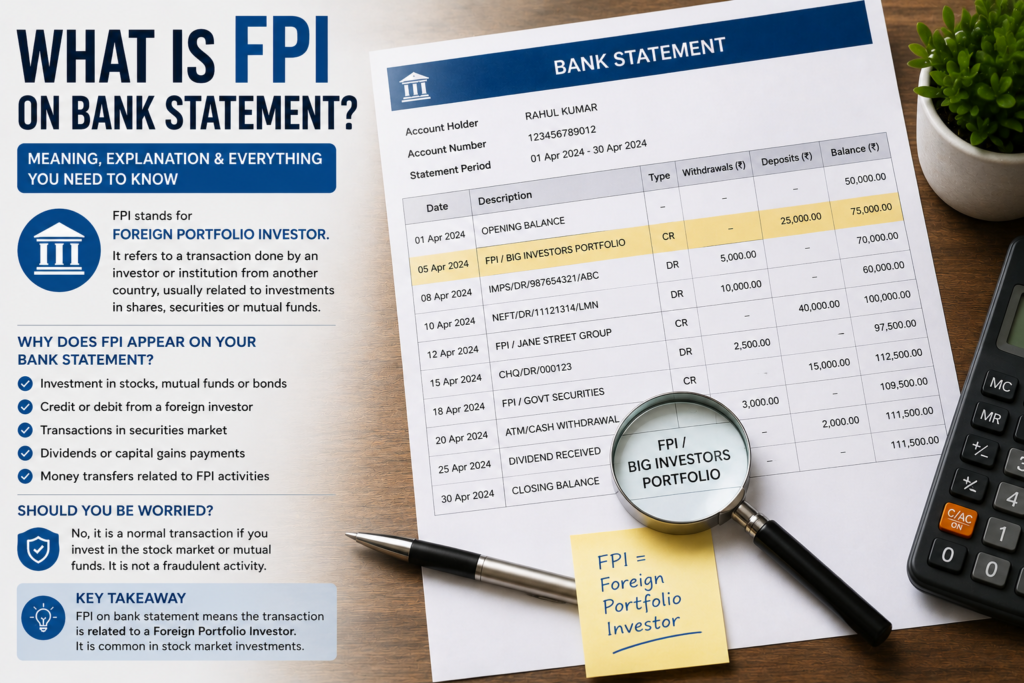
What is FPI on bank statement entries is one of the most common questions people ask when reviewing their online banking transactions in the UK. Spotting an unfamiliar code next to a payment can feel confusing, especially if the amount or sender isn’t immediately recognizable. This guide explains exactly what it means, in simple, everyday language.
Whether you’ve just noticed this code for the first time or want to double-check a recent transaction, understanding common bank statement abbreviations can help you manage your money with more confidence.
What Is FPI on Bank Statement Entries?
FPI stands for Faster Payment Inward, sometimes shown as Faster Payment Inwards or Faster Payment In depending on the bank. It simply means money has been sent to your account by someone else using the UK’s Faster Payments system, one of the main networks used for electronic bank transfers.
So, in short, what is FPI on bank statement pages usually comes down to one simple explanation: it’s a record of an incoming payment that’s been credited to your account electronically.
How the Faster Payments System Works
The Faster Payments Service was introduced to speed up electronic transfers between UK bank accounts, replacing the need to wait several working days for older systems like BACS. Most Faster Payments, including those marked FPI, are processed within seconds to a couple of hours, and the system operates 24 hours a day, including weekends and bank holidays.
Common Reasons What Is FPI on Bank Statement Entries Might Show
1. Salary or Wages
Many employers now pay staff using Faster Payments, meaning your salary may appear on your statement alongside this code.
2. Refunds
Retailers, service providers, or even government departments sometimes issue refunds electronically, which can show up this way on your account.
3. Personal Transfers
Money sent from friends or family, such as splitting a bill or paying back a loan, often arrives through this same payment network.
4. Business Payments
Freelancers and small business owners frequently receive client payments this way, since it’s one of the fastest ways to move money between UK accounts.

What to Do If You Don’t Recognise the Payment
If you’re still unsure what is FPI on bank statement details referring to after checking, here are a few practical steps:
- Check the Reference Field – The sender’s name or a payment reference is often included alongside the transaction.
- Review the Amount and Date – Compare it against invoices, expected refunds, or recent arrangements with friends or family.
- Consider the Sender’s Legal Name – Companies sometimes appear under their registered legal name rather than their trading name.
- Contact Your Bank – If you still can’t identify the payment, your bank can usually provide more detail or investigate further.
Is an Unrecognised Payment Ever a Cause for Concern?
In most cases, an incoming payment isn’t something to worry about, since it simply means money has been added to your account rather than taken from it. However, it’s still worth double-checking unfamiliar entries, particularly if you’re not expecting any payments, as part of good general account monitoring. For official guidance on staying safe from banking fraud, the Action Fraud website offers up-to-date advice for UK consumers.
Other Common Bank Statement Codes to Know
Since bank statements often use several abbreviations, it can help to understand a few related codes alongside what is FPI on bank statement pages:
- FPO – Faster Payment Outward, meaning money sent from your account to someone else.
- STO or S/O – Standing Order, a regular payment you’ve set up yourself.
- DDR or D/D – Direct Debit, a regular payment authorised for a company to collect.
- CHG – A bank charge or fee applied to your account.
For a fuller breakdown of common codes used across UK banks, MoneyHelper provides a clear, independent explanation of typical bank statement terminology.
Why Understanding Bank Statement Codes Matters
Knowing what is FPI on bank statement entries, along with other codes, helps you review your statement more confidently, spot genuine transactions quickly, and identify anything unusual sooner. This is particularly useful if you’re budgeting carefully, reconciling business income, or simply want peace of mind when checking your account regularly.
If you manage more complex finances, such as freelance income or multiple incoming payments, speaking with a licensed financial advisor can help you keep everything organised as part of a broader financial planning approach.
Frequently Asked Questions
Q1: What is FPI on bank statement pages exactly?
FPI stands for Faster Payment Inward, meaning an electronic payment has been received into your account via the UK’s Faster Payments system.
Q2: Is FPI the same as FPO?
No, FPI refers to money coming into your account, while FPO refers to money going out.
Q3: How quickly do FPI payments arrive?
Most arrive within seconds to a couple of hours, since the Faster Payments system operates around the clock.
Q4: What should I do if I don’t recognise an FPI payment?
Check the reference details and sender name first, and contact your bank if you’re still unable to identify it.
Q5: Can an FPI payment be reversed automatically?
No, once processed, the sender would need to request a recall through their bank, which typically requires your consent.
Final Thoughts
So, what is FPI on bank statement entries really telling you? In simple terms, it confirms that money has been received into your account through the UK’s Faster Payments system, whether that’s a salary, refund, personal transfer, or business payment.
Understanding this and other common bank statement codes can make reviewing your finances far less confusing, helping you feel more confident and in control of your money day to day.