

Vanguard US Equity Index Acc is a fund name that comes up often when UK investors search for low-cost ways to gain exposure to the US stock market. If you’ve seen this fund mentioned on your pension platform, ISA provider, or investment app and wondered exactly what it is, this guide explains it in simple, everyday language.
Whether you’re a beginner exploring index funds or comparing options for your portfolio, understanding what this fund offers can help you decide if it fits your investment goals.
What Is Vanguard US Equity Index Acc?
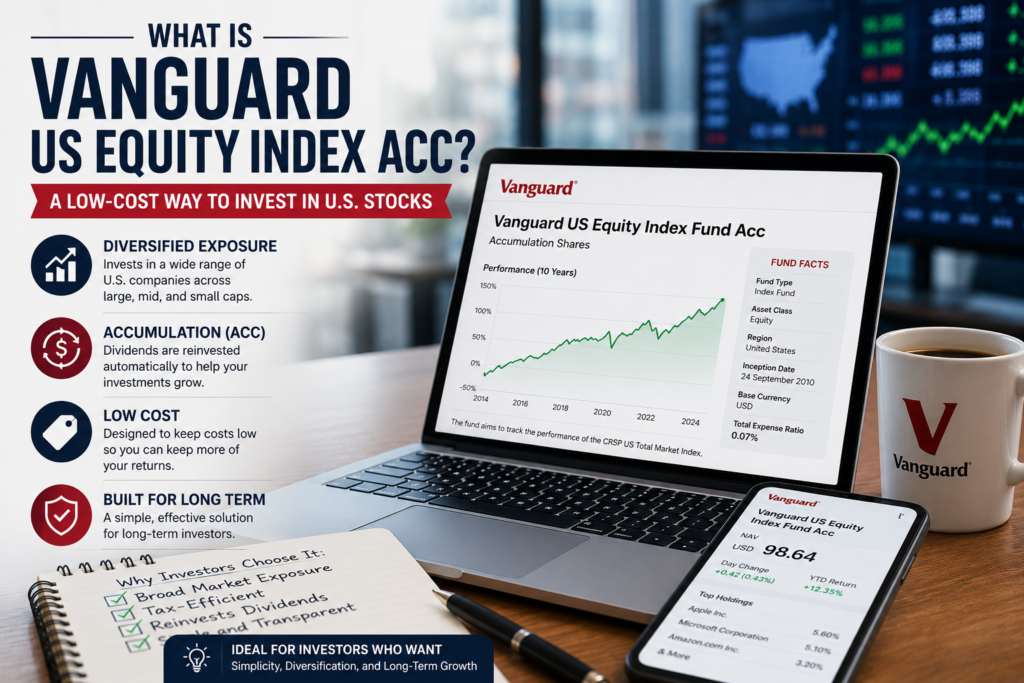
Vanguard US Equity Index Acc is a fund offered by Vanguard, one of the world’s largest and most well-known investment providers. It’s designed to track the performance of the US stock market by investing in a broad range of large, medium, and sometimes smaller US-listed companies.
The “Acc” in the fund’s name stands for “accumulation,” which means any income it generates, such as dividends, is automatically reinvested rather than paid out to investors as cash. This differs from an “Inc,” or income version of the same fund, which pays dividends directly to investors.
Breaking Down the Name
Vanguard
Vanguard is the fund provider, known globally for offering low-cost index funds and ETFs.
US Equity
This part of the name tells you the fund’s focus, which is equities, or shares, of companies based in the United States.
Index
The word “Index” means the fund is passively managed, aiming to track the performance of a specific market benchmark rather than having a manager actively pick individual stocks.
Acc
As mentioned, this means dividends are automatically reinvested, allowing your investment to potentially grow through compounding over time.
Why Investors Choose This Fund
1. Low-Cost Exposure to the US Market
One of the biggest appeals of Vanguard US Equity Index Acc is its typically low ongoing charges compared to actively managed funds, since it simply tracks an index rather than paying for active stock-picking research.
2. Broad Diversification
This fund usually holds hundreds of US companies within a single investment, giving investors instant diversification across sectors like technology, healthcare, finance, and consumer goods.
3. Automatic Reinvestment
Because it’s an accumulation fund, dividends are reinvested automatically, which can be convenient for long-term investors who don’t need immediate income.
4. Simplicity for Long-Term Investors
It offers a straightforward way to gain US market exposure without needing to research or select individual American companies yourself.
Things to Consider Before Investing
1. Currency Risk
Since Vanguard US Equity Index Acc invests in US-listed companies, UK investors are exposed to currency fluctuations between the pound and the US dollar, which can affect overall returns.
2. Market Concentration
US equity funds like this one can be heavily weighted toward large technology companies, meaning performance may be closely tied to how a handful of major firms perform.
3. No Guaranteed Returns
Like all equity investments, this fund carries risk, and the value of your investment can fall as well as rise depending on market conditions.
4. Long-Term Investment Horizon
It’s generally better suited to investors with a long-term outlook, since short-term market volatility can affect returns significantly over shorter periods.
How to Access Vanguard US Equity Index Acc
Most UK investors gain exposure to this fund through:
- Stocks and Shares ISAs – A tax-efficient way to hold it within an ISA wrapper.
- Pension Platforms – Many workplace and personal pensions include it as a fund option.
- General Investment Accounts – Available through most major UK investment platforms.
- Direct Vanguard Accounts – Investors can also buy it directly through Vanguard’s own investment platform.
For official, up-to-date fund information, factsheets, and current charges, it’s best to check directly on Vanguard’s official UK investor website, since fund details can change over time.
Accumulation vs. Income Version
Investors often compare the accumulation and income versions of this fund. The core difference is simple: the accumulation version reinvests dividends automatically, while the income version pays dividends out directly to investors. Choosing between the two usually comes down to whether you want automatic reinvestment or regular income payments.
For general guidance on how accumulation versus income funds work, resources like Investopedia explain the differences in more detail.
Is It Right for You?
Before investing in Vanguard US Equity Index Acc, it helps to ask yourself:
- Am I investing for the long term, allowing time to ride out market volatility?
- Do I already have exposure to US markets, or would this add helpful diversification?
- Am I comfortable with currency risk between the pound and US dollar?
- Does this fund fit within my broader investment strategy?
If you’re unsure whether it suits your goals, speaking with a licensed financial advisor can help you make a more informed decision based on your personal circumstances.
Frequently Asked Questions
Q1: What does “Acc” mean in Vanguard US Equity Index Acc?
“Acc” stands for accumulation, meaning dividends are automatically reinvested into the fund rather than paid out as cash.
Q2: Is it a good long-term investment?
It can suit long-term investors seeking low-cost, diversified exposure to the US stock market, though it carries market risk like any equity fund.
Q3: Can I hold this fund in an ISA?
Yes, many UK investors hold Vanguard US Equity Index Acc within a Stocks and Shares ISA for tax-efficient growth.
Q4: Does it pay dividends directly to investors?
No, since it’s an accumulation fund, dividends are reinvested automatically rather than paid out.
Q5: What risks come with this fund?
Risks include market volatility, currency fluctuations, and concentration in certain sectors, particularly US technology companies.
Final Thoughts
Vanguard US Equity Index Acc offers a simple, low-cost way for UK investors to gain broad exposure to the US stock market, with dividends automatically reinvested to support long-term growth. Like any equity investment, it carries risk, including market volatility and currency exposure.
Before adding this fund to your portfolio, take time to review current fund factsheets, understand the associated risks, and consider how it fits within your broader long-term financial plan.