
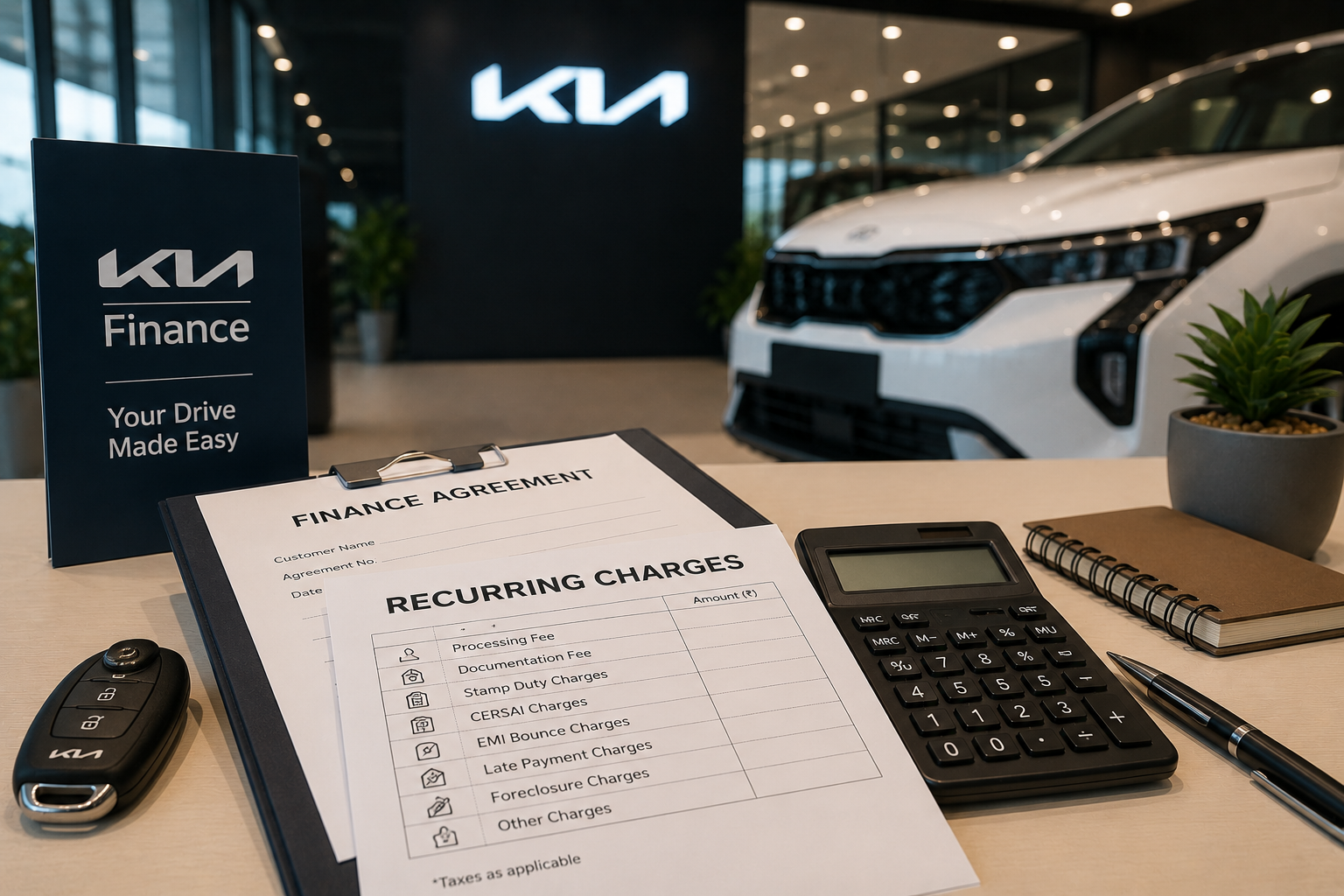
If you’re planning to finance a Kia, looking only at the monthly EMI is not enough. Most buyers focus on the installment amount and completely overlook the other costs attached to their car loan. In reality, Kia Motors finance recurring charges types are quite extensive, and understanding them properly can save you from financial surprises down the road. In this article, we’ll break down Kia Motors finance recurring charges types in simple language so you know exactly what you’re signing up for.
What Are Kia Motors Finance Recurring Charges Types?
When you finance a Kia through a dealership, bank, or NBFC, you’re not just paying back the principal amount with interest. There are several other charges that recur throughout the loan tenure. Understanding Kia Motors finance recurring charges types is essential because these charges can significantly increase your total cost of ownership over time.
Let’s go through each of these charges in detail so you have a clear picture before signing any agreement.
1. Monthly EMI (Equated Monthly Installment)
The most obvious recurring charge is the EMI itself. This is the fixed amount you pay every month, combining both principal and interest. While EMI is the most talked-about item among Kia Motors finance recurring charges types, buyers often forget that several other costs sit alongside it.
2. Interest Rate Charges
Interest is a recurring cost that applies throughout the entire loan period. Kia finance plans may offer either a fixed rate or a floating (reducing balance) rate. With floating rates, the interest amount can change over time, so it’s important to know exactly what type of rate you’ve been offered.
3. Insurance Premium (Annual Recurring Charge)
Comprehensive insurance is mandatory for a financed vehicle, and this is a cost that renews every year. Insurance premiums are a key part of Kia Motors finance recurring charges types because the amount can increase year after year, especially if you’ve made a claim.
4. Processing Fee (Recurring Across Loan Cycles)
Technically, the processing fee is a one-time charge. However, if you refinance your loan or restructure it, this fee applies again. That’s why many financial experts classify it as a recurring charge whenever a loan goes through multiple cycles.
5. Late Payment Penalty
If your EMI isn’t paid on time, a late payment penalty kicks in. This charge is recurring by nature — every missed deadline results in another penalty. Among Kia Motors finance recurring charges types, this is one that can easily be avoided simply by paying on time.
6. GAP Insurance Premium
GAP insurance (Guaranteed Asset Protection) is an optional but useful add-on that covers the difference between your car’s depreciated value and the outstanding loan amount. Since it’s renewed annually, it becomes a recurring charge in your overall finance plan.
7. Extended Warranty Charges
Many buyers opt for extended warranty plans that kick in once the manufacturer’s original warranty expires. These plans come with periodic renewal costs, adding another layer to your total expenses.
8. Service and Maintenance Contract Fee
Several Kia finance packages bundle in a service and maintenance contract. This recurring charge covers scheduled servicing, oil changes, and minor repairs, and is billed either monthly or annually depending on the plan you choose.
9. Road Tax and Registration Renewal
In many regions, road tax needs to be renewed annually or periodically. If your car is financed, this responsibility still falls on you. It’s an important part of Kia Motors finance recurring charges types that buyers often underestimate when budgeting.
10. Foreclosure or Prepayment Charges
If you decide to close your loan early, some lenders charge a foreclosure or prepayment fee. This is a conditional recurring charge that applies every time you make a partial or full prepayment.
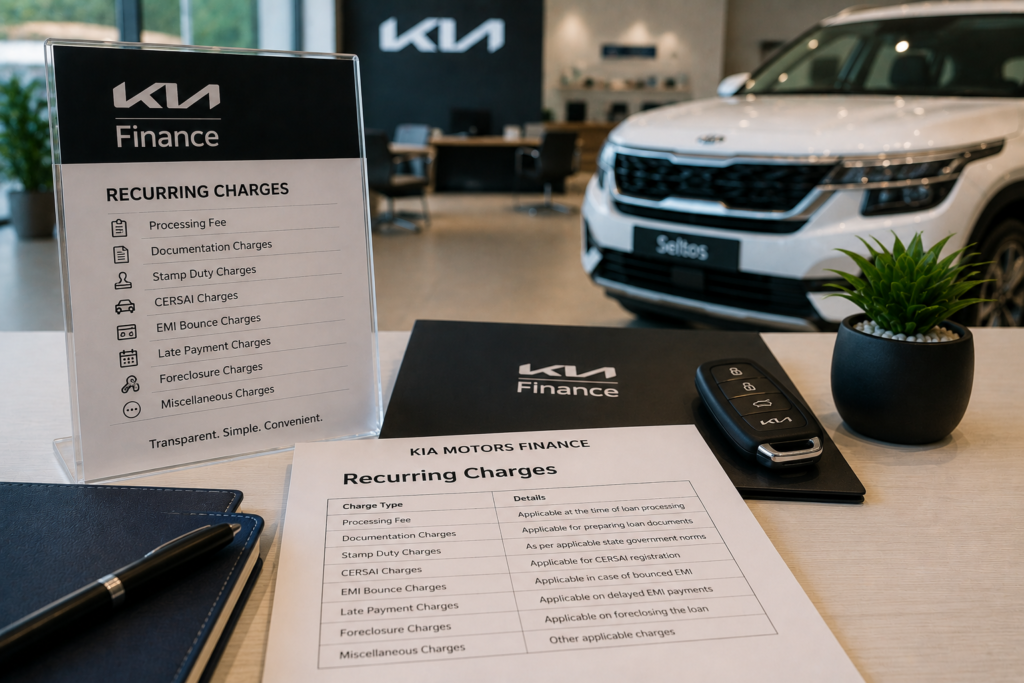
How to Manage Kia Motors Finance Recurring Charges Types
Now that you know what Kia Motors finance recurring charges types include, here’s how you can manage them smartly:
- Read the loan agreement carefully: Understand every charge line by line before signing.
- Confirm your interest rate type: Fixed and floating rates carry very different long-term implications.
- Compare insurance providers: Get quotes from multiple providers each year at renewal time.
- Pay on time, every time: This is the easiest way to avoid late payment penalties.
- Choose add-ons wisely: GAP insurance and extended warranties aren’t necessary for everyone, so evaluate before opting in.
Why Understanding Kia Motors Finance Recurring Charges Types Matters
Many buyers make their financing decision based purely on the down payment and EMI figures, ignoring the bigger picture. Overlooking Kia Motors finance recurring charges types can lead to financial stress later on. When you understand all these charges upfront, you can budget more effectively and avoid unexpected costs.
It’s also a good idea to ask your finance provider or dealership which charges are mandatory and which ones are optional. These charges can vary slightly depending on the Kia model and the specific finance plan you choose, so getting a personalized quote is always the smart move.
Final Thoughts
Understanding Kia Motors finance recurring charges types is essential for anyone planning to finance a Kia vehicle. From the EMI to insurance, service contracts, and late payment penalties, each charge plays a role in your total cost of ownership. By identifying these charges early and planning accordingly, you can avoid financial surprises and enjoy a smoother car ownership experience.
We hope this guide has given you a clear and useful overview of Kia Motors finance recurring charges types. If you’re considering Kia financing, bookmark this article and review it once more before making your final decision.