

Choosing a financial product can feel harder than it should. Savings accounts, mortgages, credit cards and loans all come with different rates, fees, terms and eligibility rules.
That is where Moneyfacts can be useful. The service has long been known for financial product data and comparison tables covering a wide range of UK products. Today, Moneyfactscompare.co.uk allows consumers to compare areas such as savings, ISAs, mortgages, credit cards, loans, current accounts and insurance.
But there is a catch.
Finding the product with the biggest headline rate is not necessarily the same as finding the right deal for you. A savings account with a high AER may have withdrawal restrictions. A mortgage with a low initial rate may carry a sizeable product fee. A credit card offering 0% interest may have specific conditions that matter.
So, how should you actually use Moneyfacts?
This guide explains what the platform does, what you can compare, how to read the results and the checks worth making before you apply.
What Is Moneyfacts?
Moneyfacts is a UK financial information and comparison service. Its consumer comparison website is now known as Moneyfactscompare.co.uk, following the rebrand of Moneyfacts.co.uk in 2023. The underlying Moneyfacts Group business has operated since 1988.
The simplest way to think about Moneyfacts is as a research tool.
Instead of visiting dozens of banks, building societies and lenders individually, you can use comparison tables to see different financial products in one place. The service covers a broad range of consumer finance categories, including savings accounts, ISAs, mortgages, credit cards, loans and current accounts.
That can save considerable time.
However, Moneyfacts is not your financial adviser. The company explains that Moneyfactscompare is a comparison website rather than a broker or adviser. It provides information to help consumers compare products, while the final application is generally made with the provider or relevant intermediary.
Why people use Moneyfacts
There are several practical reasons someone might start with Moneyfacts:
- To compare savings interest rates
- To find different types of ISAs
- To research current mortgage rates
- To compare fixed and variable mortgages
- To investigate personal loans
- To compare credit cards
- To research current accounts
- To understand financial products before applying
- To monitor changes in rates
Moneyfacts also provides guides, calculators and financial news, so the site is useful for research as well as simple comparison shopping.
Actionable takeaway: Use Moneyfacts as your research starting point, then check the provider’s own terms before committing to anything.
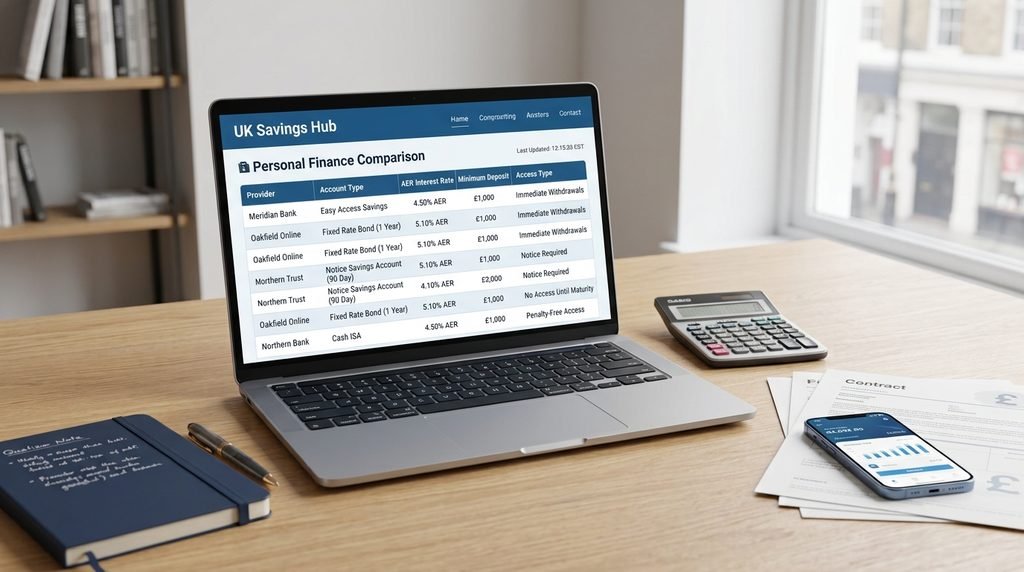
How Moneyfacts Works
One of the more useful features of Moneyfacts is the breadth of information behind its comparison tables.
Moneyfacts Group says its teams monitor thousands of UK financial products and process frequent changes from providers. Moneyfactscompare also says much of its comparison data comes directly from banks, building societies and other providers.
This matters because financial products can change quickly.
A savings provider might reduce its variable rate. A lender may withdraw a mortgage deal. A credit card promotion could reach its end date. A product that looked attractive last week may no longer be competitive today.
Moneyfacts therefore works best when you treat comparison as an ongoing process rather than a one-time search.
Are Moneyfacts comparison tables free?
Yes. Moneyfactscompare states that consumers can use its comparison service without paying a fee or sharing personal information simply to access its comparison tables. It also explains that it can earn money through advertising and third-party links.
This distinction is worth understanding.
A comparison site can be free for the consumer while still earning money when users click through to certain providers. That does not automatically mean a product is unsuitable, but it is another reason to look beyond the first result you see.
Does Moneyfacts include the whole market?
Moneyfactscompare states that its savings, mortgage, banking, credit card and personal loan charts cover the whole market and that providers do not pay to be included in those charts. It also explains that products with third-party links may appear first by default, although users can change the sorting method.
That is useful when researching a deal because you can change how results are displayed instead of simply accepting the default order.
Actionable takeaway: When comparing products, change the sorting option where possible and look at rate, cost, terms and eligibility together.
What You Can Compare
Moneyfacts covers much more than savings accounts.
The main categories include savings and ISAs, mortgages, loans, credit cards, current accounts and insurance. There are also guides and calculators designed to help consumers understand different financial decisions.
Here is a quick overview.
| Product | What to compare |
|---|---|
| Savings accounts | AER, access, minimum deposit, withdrawals |
| Cash ISAs | AER, tax treatment, access, ISA rules |
| Mortgages | Initial rate, APRC, fees, LTV, term |
| Personal loans | APR, amount, term, total repayment |
| Credit cards | APR, introductory period, fees, eligibility |
| Current accounts | Fees, interest, rewards, switching requirements |
| Insurance | Premium, cover, exclusions, excess |
The important point is that every category needs a slightly different approach.
For example, comparing two savings accounts mainly involves looking at AER and access conditions. Mortgage comparison is more complicated because the initial rate is only one part of the total cost.
How to Use Moneyfacts for Savings
Savings are one of the easiest areas in which to use Moneyfacts.
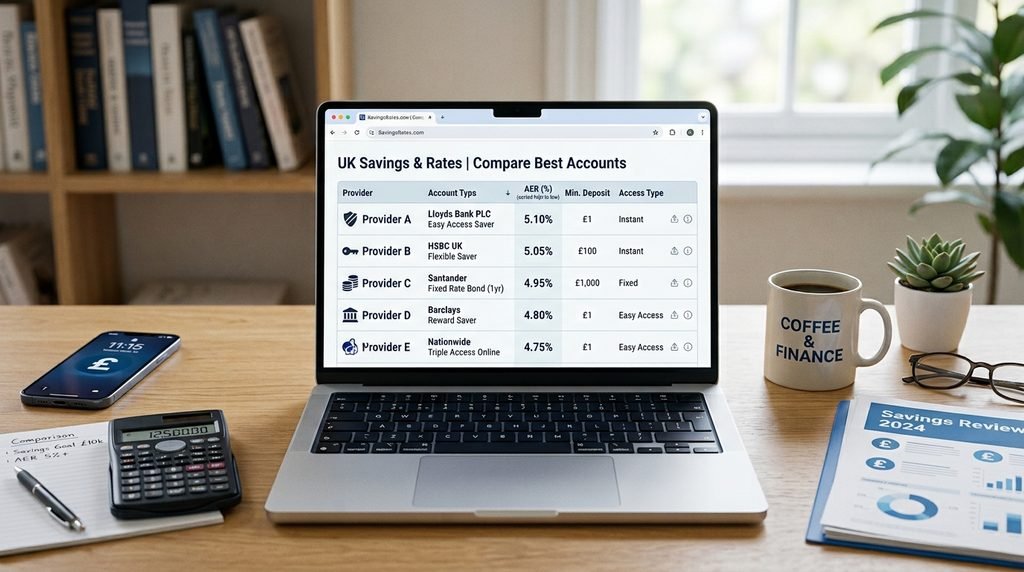
The platform separates savings into categories such as easy-access accounts, notice accounts, fixed-rate bonds, regular savers and monthly-interest accounts. It also provides different ISA categories, including cash ISAs, fixed-rate ISAs and variable-rate ISAs.
That categorisation is helpful because the highest rate is often attached to a product with more restrictions.
For example, an easy-access account might offer a lower rate but allow you to withdraw your money whenever necessary. A fixed-rate bond could offer a stronger return while requiring you to leave your money untouched for a set period.
Which one is better?
It depends on what the money is for.
Easy-access savings
If you are building an emergency fund, access may matter more than squeezing out the final fraction of a percentage point.
You could need the money for a broken boiler, unexpected travel or a large household bill. Locking the entire emergency fund away simply to earn a slightly higher rate may create unnecessary problems.
Fixed-rate savings
Fixed-rate accounts can make sense when you know you will not need the money during the fixed term.
However, check early-access rules carefully. Some products do not permit withdrawals at all, while others may allow access subject to a penalty.
Regular savings accounts
Regular savers can offer attractive headline rates, but they often limit how much you can deposit each month. Some may also require you to hold a current account with the provider.
Current Moneyfacts comparison data illustrates why the headline rate needs context. Recent tables have shown regular savings products offering rates substantially above many easy-access accounts, but with specific monthly deposit and eligibility conditions.
Cash ISAs
Cash ISAs can be useful when tax efficiency is important.
Moneyfacts provides comparison options for easy-access, fixed-rate, variable-rate, notice and other ISA products.
The rules around ISAs can change, though. Always check the current allowance and eligibility requirements before making a decision.
Actionable takeaway: Before choosing a savings account through Moneyfacts, decide how quickly you may need the money. Then compare the rate against access restrictions.
Using Moneyfacts to Compare Mortgages
Mortgage comparison requires more care than simply searching for the lowest rate.
Moneyfacts provides mortgage comparison tables covering fixed, variable and other mortgage categories. Current tables can be filtered by situations such as first-time buyers, moving home and remortgaging.
The platform also displays information such as rates, APRC and maximum loan-to-value.
These numbers tell different stories.
Initial interest rate
The initial rate is the rate you pay during the introductory period.
A lower rate can reduce your monthly payment. However, it does not automatically mean the mortgage is cheapest overall.
Product fee
Some mortgages come with a product fee. A deal with a slightly lower interest rate could therefore cost more once the fee is included.
For example, imagine two mortgages:
- Mortgage A: 4.5% with a £1,999 fee
- Mortgage B: 4.7% with no fee
Mortgage A looks better at first glance. But depending on the loan amount and how long you keep the deal, Mortgage B could be cheaper overall.
That is why total cost matters.
APRC
APRC stands for Annual Percentage Rate of Charge. It is designed to give borrowers a broader picture of borrowing costs than the initial interest rate alone.
Moneyfacts mortgage tables display APRC alongside rates, which can help you compare products more carefully.
Loan-to-value
Loan-to-value, or LTV, compares the size of your mortgage with the value of the property.
A larger deposit generally means a lower LTV. Depending on the lender and market conditions, lower-LTV borrowers may have access to different mortgage pricing.
Moneyfacts currently provides mortgage comparisons across different LTV levels, making this an important filter when researching deals.
Fixed versus variable
A fixed mortgage gives you payment-rate certainty for the fixed period.
A variable mortgage can move as rates change.
Neither is automatically the right choice. Your income stability, risk tolerance, expected plans and view of future rates all matter.
Moneyfacts’ own mortgage guidance makes a similar point: choosing between shorter and longer fixed periods depends on individual circumstances and expectations about future rates.
Actionable takeaway: Never choose a mortgage based on the initial rate alone. Compare the fee, APRC, LTV, fixed period and likely total cost.
Comparing Loans and Credit Cards
Moneyfacts can also help when you need to borrow rather than save.
For personal loans, the key numbers usually include the APR, borrowing amount, repayment term and total amount repayable.
A longer loan term can make the monthly payment look more manageable. However, you may pay more interest over the life of the loan.
MoneyHelper recommends looking at APR when comparing borrowing because it provides a way to assess the cost of borrowing over a year, including relevant charges.
Credit cards
Credit cards require a slightly different approach.
You may see products offering:
- 0% purchases
- 0% balance transfers
- Cashback
- Rewards
- Travel benefits
- Low-rate borrowing
A 0% offer can look extremely attractive. But ask yourself what happens when the promotional period ends.
If you still have a balance at that point, the standard interest rate could become important.
The same principle applies to balance-transfer cards. A card might offer 0% interest but charge a transfer fee. The cheapest option depends on how much you transfer, how quickly you repay it and whether you meet the promotional conditions.
Actionable takeaway: For loans and cards, calculate the total cost rather than focusing only on the advertised monthly payment or introductory rate.
7 Smart Checks Before Choosing a Deal
Using Moneyfacts effectively comes down to what you do after finding a promising result.
Here are seven checks worth making.
1. Check the interest rate type
Is the rate fixed or variable?
A fixed rate gives more certainty for the agreed period. A variable rate can change.
For savings, also check whether the advertised rate includes a temporary bonus.
2. Look at the access rules
This is especially important with savings accounts.
Ask:
- Can I withdraw whenever I want?
- Is there a notice period?
- Are withdrawals limited?
- Is there an early-access penalty?
- Can I make additional deposits?
A high rate becomes less useful if the account does not fit your needs.
3. Check minimum deposits
Some products require only £1 to open.
Others may require hundreds or thousands of pounds.
Moneyfacts comparison tables typically display opening requirements, making it easier to eliminate unsuitable accounts before applying.
4. Check fees
Fees can change the calculation significantly.
With mortgages, consider product fees, broker fees where applicable and other associated costs.
With credit cards, check balance-transfer fees, cash-withdrawal charges and other applicable costs.
With savings, check whether penalties apply for early withdrawals.
5. Check eligibility
The best-looking product is irrelevant if you cannot qualify.
Some products have age, residency, income, deposit or existing-customer requirements.
Read the eligibility criteria before submitting a full application.
6. Check protection
If you are depositing money with a bank or building society, check whether eligible deposits are protected under the Financial Services Compensation Scheme.
MoneyHelper currently explains that the first £120,000 per person is protected, subject to the relevant rules, and that different brands can sometimes operate under the same banking licence.
This is a particularly important point if you spread money across multiple brands.
7. Verify the provider
Finally, check who you are dealing with.
The Financial Conduct Authority recommends using its Firm Checker or Financial Services Register to verify whether a financial firm is authorised and has the necessary permissions.
This simple step can help protect you from unauthorised firms and clone scams.
Actionable takeaway: Treat a comparison result as the beginning of your research, not the end. Always verify the provider and read the final terms.
Is Moneyfacts Worth Using?
For most people researching UK financial products, Moneyfacts can be a useful comparison tool.
Its biggest advantage is breadth. You can move from savings rates to mortgages, loans or credit cards without having to research every provider individually.
The platform also has a long history in UK financial data. Moneyfacts Group says it has more than 35 years of historical and current data and monitors a large number of UK retail financial products.
Another advantage is that comparison tables can expose smaller or less familiar providers.
That matters because the biggest high-street bank is not guaranteed to have the best deal. Moneyfacts’ savings guidance specifically highlights the fact that challenger banks can sometimes offer competitive rates to attract deposits.
Still, comparison tools have limits.
A comparison table cannot know every detail of your personal circumstances. It cannot decide whether locking away your emergency fund is sensible. It cannot fully replace regulated advice when your situation requires personalised financial planning.
So, use Moneyfacts for what it does best: research, comparison and discovery.
Then do your own checks.
Moneyfacts versus choosing directly from your bank
There is nothing wrong with checking your existing bank first.
In fact, it can be convenient. You may already have an established relationship, and some products are available only to existing customers.
The problem comes when convenience becomes the only reason you stay.
A five-minute comparison could reveal that another provider offers a materially better rate or more suitable terms.
Moneyfacts makes that comparison easier because you can see products from different providers in one place.
Moneyfacts and changing financial rates
Rates are constantly moving.
Recent Moneyfacts data shows how quickly savings and mortgage pricing can change. Its savings tables are updated during the working day, while mortgage tables are also maintained as lenders change their products.
That means an article, comparison table or screenshot from several months ago may no longer reflect the deal available today.
Always verify current figures directly with the provider.
Actionable takeaway: Moneyfacts is strongest as a research shortcut. Use it to build your shortlist, then confirm the live offer and terms before applying.
A Simple Moneyfacts Comparison Checklist
If you want a quick process, use this checklist.
For savings
- Decide whether you need easy access.
- Compare AER.
- Check whether the rate is fixed or variable.
- Look for introductory bonuses.
- Check withdrawal restrictions.
- Check the minimum deposit.
- Confirm FSCS protection.
- Recheck the rate regularly.
For mortgages
- Calculate your deposit.
- Work out your LTV.
- Compare initial rates.
- Check the product fee.
- Compare APRC.
- Look at the fixed or introductory period.
- Consider the revert rate.
- Check early repayment charges.
- Consider whether professional mortgage advice would help.
For loans
- Decide how much you actually need.
- Compare APR.
- Compare the total repayment.
- Check the loan term.
- Look for early repayment charges.
- Check eligibility.
- Avoid borrowing more simply because a lender offers it.
For credit cards
- Identify why you need the card.
- Compare the promotional period.
- Check the standard APR.
- Check balance-transfer or other fees.
- Understand the minimum payment.
- Confirm what happens after the introductory period.
- Have a repayment plan.
MoneyHelper also warns against choosing a savings or borrowing product purely because it has the best interest rate. Access, fees, repayment terms and other features can matter just as much.
What Should You Check Before Applying?
Before clicking an application button, stop for a minute.
Ask yourself three questions:
Does the product fit my situation?
A high rate is irrelevant if you need instant access and the account locks your money away.
Do I understand the total cost?
This is especially important for mortgages, loans and credit cards. Look beyond the headline figure.
Have I checked the latest information?
Financial products change. Rates, fees, eligibility and availability can all be updated.
This is why current information matters so much when using Moneyfacts.
For example, Moneyfacts’ current savings tables show that rates vary considerably by account type, while mortgage tables show different pricing depending on borrower circumstances and LTV.
Do not assume yesterday’s deal is still available today.
Important disclaimer
Financial rates, product availability, fees, eligibility criteria, tax rules and protection limits can change. Information in this guide is provided for general educational purposes and should not be treated as personal financial advice.
Before opening an account, taking out a mortgage, applying for a loan or choosing a credit card, verify the current terms directly with the relevant provider and check official UK sources where appropriate.
Frequently Asked Questions
1. What is Moneyfacts used for?
Moneyfacts is used to research and compare UK financial products. Moneyfactscompare.co.uk covers areas including savings accounts, ISAs, mortgages, loans, credit cards and current accounts. It also provides guides, calculators and financial news to help consumers understand their options before applying.
2. Is Moneyfacts free to use?
Yes. Moneyfactscompare states that consumers can access its comparison tables without paying a fee. The website can generate revenue through advertising and third-party links. However, you should still compare the full product details rather than assuming the first displayed option is automatically the best choice.
3. Is Moneyfacts reliable?
Moneyfacts has a long history of collecting UK financial product data, with Moneyfacts Group operating since 1988. Moneyfactscompare says much of its data comes directly from financial providers and that its teams regularly process product changes. Even so, always confirm the current rate and terms with the provider.
4. Does Moneyfacts show the best savings rates?
Moneyfacts provides comparison tables for different types of savings accounts and regularly updates its data. However, the highest advertised rate may come with restrictions, bonuses, minimum deposits or limited withdrawals. Compare the full terms, not just the headline AER, before moving your money.
5. Can Moneyfacts help me compare mortgages?
Yes. Moneyfactscompare provides mortgage comparison tables covering fixed and variable deals, as well as categories such as first-time buyers, moving home and remortgaging. You can compare factors such as rates, APRC and LTV. However, a mortgage comparison does not replace personalised advice where that is needed.
6. Should I apply directly after finding a deal on Moneyfacts?
Not immediately. First check the provider’s current rate, eligibility criteria, fees, terms and protection arrangements. Mortgage and borrowing decisions can also benefit from professional advice. Rates and availability can change, so verify the final offer before submitting an application.
FAQ Schema-Ready Content
Question: What is Moneyfacts used for?
Answer: Moneyfacts is used to research and compare UK financial products, including savings accounts, ISAs, mortgages, loans, credit cards and current accounts. It also provides financial guides, calculators and news.
Question: Is Moneyfacts free to use?
Answer: Yes. Moneyfactscompare states that consumers can access its comparison tables without paying a fee. The website may earn revenue from advertising and third-party links.
Question: Is Moneyfacts reliable?
Answer: Moneyfacts has collected UK financial product data for decades. Moneyfactscompare says much of its comparison data comes directly from financial providers and is regularly updated.
Question: Does Moneyfacts show the best savings rates?
Answer: Moneyfacts provides regularly updated savings comparison tables, but the highest rate may come with restrictions or eligibility requirements. Always check the full account terms before applying.
Question: Can Moneyfacts help me compare mortgages?
Answer: Yes. Moneyfactscompare provides mortgage comparison tables covering fixed and variable deals, including options for first-time buyers, movers and remortgagers. Rates, APRC and LTV can be compared.
Question: Should I apply directly after finding a deal on Moneyfacts?
Answer: No. Check the provider’s current rate, eligibility requirements, fees, terms and relevant protection before applying. Financial products can change, so confirm the final offer directly with the provider.
Final Thoughts
Moneyfacts can make financial research much easier, particularly when you are faced with dozens or even hundreds of products.
The real value, though, is not simply finding a low rate.
It is finding a product that fits the way you actually use your money.
For savings, think about access and protection. For mortgages, look beyond the initial rate. For loans and credit cards, calculate the total cost. And whatever you choose, verify the latest information before signing up.
If you are comparing a financial product today, start with Moneyfacts to build your shortlist, then check the provider’s official terms and the relevant FCA or MoneyHelper guidance before making your final decision.