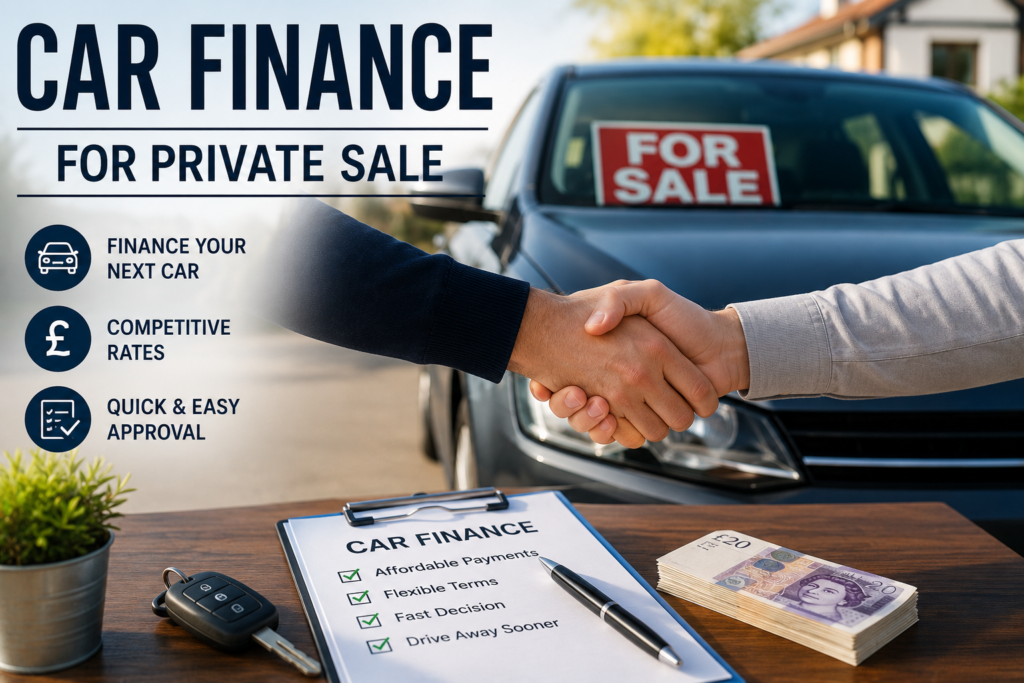
Car finance for private sale sounds like a single, simple topic, but it’s actually two very different questions depending on which side of the deal you’re on. Are you trying to buy a car from a private seller and need financing to make it happen? Or are you the one selling your car privately while it’s still on finance?
Most guides online only tackle one side of this. That’s a problem, because plenty of people searching this exact phrase are trying to figure out both at once, especially if they’re selling their current financed car to help fund the next one. This guide covers both angles clearly, so you know exactly what applies to your situation.
Buying a Car Privately: Can You Actually Get Finance?
Here’s the first thing to understand: traditional dealership finance products like PCP (Personal Contract Purchase) don’t typically work for private sales, since they’re structured around dealership partnerships. That doesn’t mean you’re out of options.
The two realistic routes for car finance for private sale are:
- A personal loan, which isn’t tied to the vehicle or the seller, giving you more flexibility once approved
- Hire Purchase (HP) from a specialist private-sale lender, where the loan is secured against the car itself
Quick takeaway: A personal loan tends to be the more straightforward route for financing a private purchase, since approval isn’t dependent on the lender’s opinion of the specific vehicle or seller.
How Financing a Private Purchase Actually Works
If you go the personal loan route, the process is fairly simple in practice:
- Get pre-approved for a loan amount before you start seriously looking, so you know your budget upfront
- Find the car and agree a price with the private seller
- Confirm the funds with your lender, who typically transfers money directly to your account or, in some cases, directly to the seller
- Complete the purchase and handle the DVLA ownership transfer yourself
If you go through an HP specialist lender instead, the lender may pay the seller directly once your application and the vehicle both pass their checks.
Quick takeaway: Getting pre-approved before you start car shopping gives you real negotiating power. You can approach private sellers essentially as a cash buyer, which often works in your favor on price.

Essential Checks Before You Buy
This is the part that separates a smooth private purchase from a costly mistake, and it matters just as much as the financing itself.
- Run an HPI-style vehicle history check to confirm the car isn’t already subject to outstanding finance, since buying a car with undisclosed finance on it is illegal and puts your ownership at risk
- Verify the seller’s identity matches the vehicle’s registered keeper details
- Ask for a settlement confirmation letter if the seller mentions any existing finance on the car, proving it’s been cleared
- Check the car’s full service and MOT history independently, since private sales don’t come with dealership guarantees
Quick takeaway: Never hand over money, financed or otherwise, until you’ve independently confirmed the car is free of outstanding finance. This single check prevents the vast majority of private sale disputes.
Selling Your Car Privately While It’s Still on Finance
Now for the other half of this topic: if you’re the one selling a financed car privately, the rules are stricter, and skipping them can create serious legal problems.
Until your finance agreement is fully settled, the finance company retains a legal interest in the vehicle. That means you cannot legally transfer ownership to a private buyer until the outstanding balance is cleared.
Here’s the general process:
- Request an up-to-date settlement figure from your finance company, since these figures change daily due to accruing interest
- Check your car’s current market value to see whether it covers your settlement figure
- Identify whether you’re in positive or negative equity — if the car is worth less than your settlement figure, you’ll need to cover the difference before selling
- Pay off the settlement figure, either from your own funds or from the sale proceeds, before transferring ownership
Quick takeaway: Always request a fresh settlement figure right before completing a sale, not weeks in advance. Interest accrues daily, so an outdated figure can leave you short at the finish line.
Positive vs Negative Equity: Why It Matters More in 2026
With used car values having shifted noticeably over the past couple of years, many sellers are discovering they’re in a better equity position than expected, while others face the opposite.
- Positive equity means your car is worth more than your settlement figure, leaving you with extra funds after the finance is cleared
- Negative equity means you owe more than the car is currently worth, requiring you to cover the shortfall out of pocket before completing the private sale
Quick takeaway: Check your settlement figure and an independent valuation before listing your car for sale, not after. It changes how you price the listing and what you can realistically expect to walk away with.
The Risks of Selling a Financed Car Privately
Selling privately while finance is still outstanding is legal, but it does come with more risk and complexity than selling to a dealer or car-buying service.
- Buyer hesitation — many private buyers are cautious about cars with existing finance, and some will walk away entirely rather than deal with the added complexity
- Timing risk — if the settlement payment and ownership transfer aren’t coordinated properly, both parties can be left in a legally uncertain position
- Transparency obligations — failing to disclose outstanding finance to a buyer isn’t just risky, it’s against the law
Quick takeaway: Being upfront with a private buyer about existing finance, and showing them your settlement figure and payoff plan clearly, goes a long way toward keeping the deal on track.

Alternatives If a Private Sale Feels Too Risky
If juggling a settlement figure alongside a private sale feels like more risk than it’s worth, a couple of alternatives are worth considering.
- Selling to a dealer, who will often settle the outstanding finance directly and deduct it from your payout, simplifying the process considerably
- Using a car-buying service, which typically handles the finance settlement and paperwork on your behalf, usually in exchange for a slightly lower sale price than a private buyer might offer
Quick takeaway: A private sale generally gets you a higher price, but a dealer or car-buying service trades some of that value for a significantly simpler, lower-risk process.
What About the 2026 Car Finance Redress Scheme?
If you took out car finance, especially PCP or HP, before November 2024, you may be part of an ongoing FCA redress scheme addressing historic commission mis-selling. Compensation, averaging around £700 per agreement according to current estimates, is expected to begin reaching eligible customers through 2026.
Quick takeaway: This redress scheme relates to historic finance agreements and doesn’t change the actual steps involved in buying or selling a car privately today, but it’s worth checking your eligibility separately if you had older car finance.
5. FAQs
Q1: Can I get car finance for a private sale in the UK? Yes, though traditional dealership PCP deals rarely apply. A personal loan or a specialist Hire Purchase lender for private sales are the two most common routes for buyers.
Q2: Can I sell my car privately if it still has finance on it? Yes, but only once the outstanding finance is fully settled. You’ll need an up-to-date settlement figure from your finance company before ownership can legally transfer to the buyer.
Q3: What is a settlement figure in car finance for private sale? It’s the exact amount required to pay off your finance agreement in full on a given date. Settlement figures change daily due to interest, so always request a current one before selling.
Q4: What happens if my car is worth less than my settlement figure? This is called negative equity. You’ll need to cover the shortfall yourself before the private sale can be completed, since the finance company must be paid in full first.
Q5: Is it illegal to sell a car with undisclosed finance? Yes. The finance company retains a legal interest in the vehicle until the balance is cleared, and failing to disclose outstanding finance to a buyer is against the law.
Q6: Is a personal loan better than HP for financing a private car purchase? A personal loan is often simpler since it isn’t tied to the vehicle or seller, offering more flexibility. HP can suit buyers who need a lender that manages the vehicle-specific checks directly.
Final Thoughts
Car finance for private sale isn’t a single, simple process, it depends entirely on whether you’re buying or selling. Buyers need a solid pre-approval strategy and thorough vehicle history checks. Sellers need an accurate, current settlement figure and a clear understanding of their equity position before agreeing to any price.
Whichever side of the transaction you’re on, the same principle applies: don’t rush the financial verification steps. They take a little extra time, but they’re exactly what stands between a smooth private sale and a genuinely costly mistake.
For official guidance on vehicle ownership transfers, the DVLA’s vehicle registration and transfer service is the authoritative source to confirm the correct process.