If you’ve bought more than two or three rental properties, you’ve probably hit a wall that no one warns you about early on: traditional mortgages start getting harder to secure. Most conventional lenders cap you at four to ten financed properties, and after that, the paperwork and scrutiny multiply fast. This is exactly where single family rental portfolio financing comes in — and honestly, it’s one of the most underused tools serious real estate investors have access to.
In simple terms, single family rental portfolio financing lets you bundle multiple rental properties under one loan, instead of chasing a separate mortgage for every single door. Fewer applications, fewer closings, and in a lot of cases, better long-term terms.
Let’s walk through what this actually looks like in practice, the 7 smart financing options available, what lenders expect from you, and the mistakes that trip up even experienced investors.
What Is Single Family Rental Portfolio Financing?
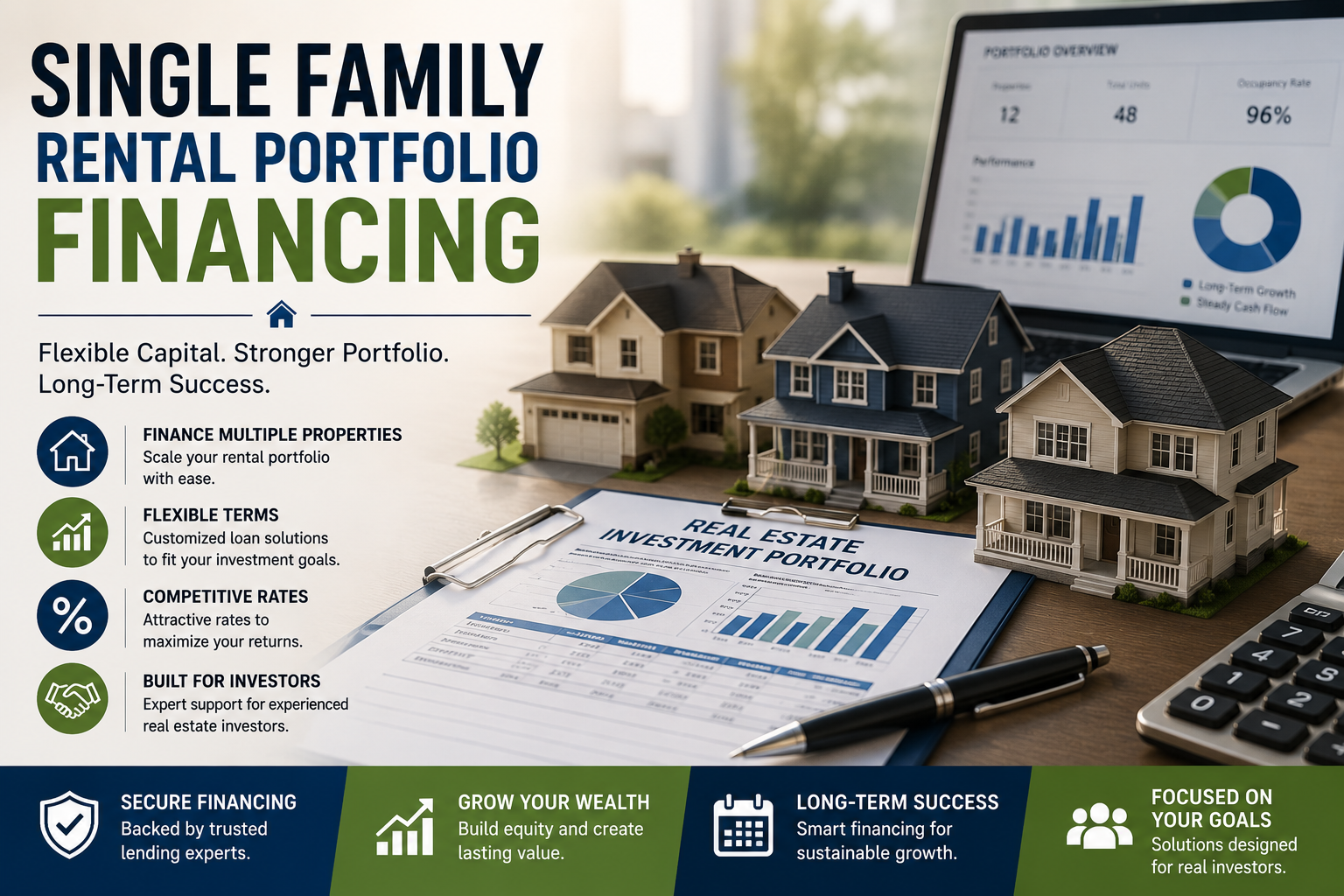
Single family rental portfolio financing is a loan structure designed specifically for investors who own multiple single-family rental homes. Instead of financing each property individually, you consolidate them — sometimes 5 properties, sometimes 50 — under one loan agreement with one lender.
The appeal here is pretty straightforward. One underwriting process instead of ten. One monthly payment instead of juggling multiple servicers. And often, the loan is underwritten based on the properties’ combined rental income rather than your personal income, which opens doors for investors who might not qualify property-by-property.
How It Differs From a Standard Rental Property Loan
- Standard loan: Financed against one property, usually requires personal income verification
- Portfolio loan: Financed against a group of properties, usually underwritten on rental cash flow (DSCR)
- Scalability: Portfolio structures are built to grow with you as you add properties
- Flexibility: Many portfolio lenders allow you to add or release individual properties without refinancing the entire loan
Why Investors Choose Portfolio Financing Over Individual Loans
Dekha jaye to, once you’re past your first handful of properties, individual financing simply doesn’t scale well. Here’s why so many investors move toward single family rental portfolio financing at that stage:
- Fewer loan applications: One application covers the whole portfolio instead of one per property
- Cash flow-based underwriting: Many portfolio lenders qualify you on rental income (DSCR), not W-2 income
- Consolidated management: One loan, one rate, one payment schedule across dozens of doors
- Room to scale: Well-structured portfolio loans often include provisions to add newly acquired properties later
- Better negotiating leverage: Lenders competing for larger portfolio deals sometimes offer sharper terms than they would on a single $200K property
7 Smart Single Family Rental Portfolio Financing Options
Not every investor needs the same structure. Here are the seven approaches worth knowing before you pick a lender.
1. DSCR Portfolio Loans
Debt Service Coverage Ratio (DSCR) loans qualify you based on whether your rental income covers the mortgage payment — not your personal tax returns. This has become one of the most popular routes for single family rental portfolio financing because it removes the income-documentation headache entirely.
2. Blanket Loans
A blanket loan wraps multiple properties into a single mortgage with one lien. The upside is simplicity; the tradeoff is that selling one property usually requires a partial release clause built into the agreement upfront.
3. Agency Portfolio Programs
Fannie Mae and Freddie Mac both offer investor programs designed for larger single-family rental portfolios, typically for investors with 5-10+ properties. These tend to offer competitive rates but come with stricter underwriting.
4. Bank Portfolio Loans
Regional and community banks sometimes keep loans in-house instead of selling them, which gives them more flexibility to structure a custom portfolio loan tailored to your specific properties and goals.
5. Cash-Out Refinance Across the Portfolio
If you’ve built equity across several properties, a portfolio cash-out refinance lets you pull that equity out in one transaction to fund your next acquisition, rather than refinancing each property separately.
6. Private and Hard Money Portfolio Loans
These come with higher rates but faster closings and far more flexible underwriting — useful for investors scaling quickly or working with properties that don’t fit conventional criteria.
7. Business Line of Credit Secured by the Portfolio
Instead of a fixed loan, some investors set up a revolving credit line secured against their rental portfolio, giving them flexible access to capital for renovations or new purchases without a full refinance each time.
How Much Does Single Family Rental Portfolio Financing Cost?
Costs vary quite a bit depending on the lender type and loan structure, but here’s a general breakdown of what affects your rate:
- Loan-to-value (LTV) ratio — lower LTV usually means better pricing
- DSCR ratio — stronger rental income coverage often unlocks lower rates
- Portfolio size — larger, well-performing portfolios sometimes negotiate better terms
- Property condition and location — higher-risk markets or older properties can raise rates
- Loan type — agency programs tend to be cheaper than private or hard money options
Iske ilawa, expect origination fees, appraisal costs across multiple properties, and sometimes a portfolio-level appraisal review — all of which add to your upfront cost. It’s worth comparing at least three lenders before committing, since portfolio loan terms can vary more widely than standard single-property mortgages.
How to Qualify for Single Family Rental Portfolio Financing
Lenders offering portfolio financing look at your deal a bit differently than a standard mortgage underwriter would. Here’s what typically matters most:
- Rental income and occupancy history: Consistent occupancy and documented rent rolls strengthen your application significantly
- Portfolio-wide DSCR: Most lenders want combined rental income to comfortably exceed combined debt payments
- Property condition reports: Expect inspections or condition assessments across the portfolio, not just one property
- Entity structure: Many lenders prefer the portfolio to be held under an LLC rather than personal name, for liability and underwriting clarity
- Reserves: Lenders often require several months of reserves per property, not just one lump sum
Quick checklist before applying:
- Are your rent rolls and lease documents organized and current?
- Do you know your portfolio-wide DSCR before applying?
- Is your portfolio held under a clean entity structure?
- Have you set aside adequate reserves per property?
- Have you compared DSCR, agency, and bank portfolio options side by side?
Common Mistakes Investors Make With Portfolio Financing
Sach baat ye hai ke, even experienced investors trip up on a few recurring issues when structuring single family rental portfolio financing deals:
- Not reading the release clause carefully — some blanket loans make it expensive or slow to sell a single property later
- Underestimating reserve requirements — lenders often want more cash reserves than investors expect
- Mixing personal and portfolio properties under one loan structure without a clear plan
- Choosing rate over flexibility — a slightly higher rate with better release terms can save more money long-term
- Not keeping documentation portfolio-wide — disorganized rent rolls or lease records slow down underwriting significantly
FAQs — Single Family Rental Portfolio Financing
Q1: How many properties do I need for single family rental portfolio financing? Most lenders start portfolio programs around 5 properties, though some DSCR lenders will structure smaller portfolios of 3-4 homes.
Q2: Is single family rental portfolio financing only for large investors? No. While it’s popular with investors scaling aggressively, many mid-size landlords with 5-15 properties use portfolio financing to simplify management and improve cash flow.
Q3: Can I add new properties to an existing portfolio loan? It depends on the lender and loan structure. Some portfolio loans include provisions for adding properties later; others require a new loan or amendment.
Conclusion
If you’re managing more than a handful of rental properties and juggling separate mortgages for each one, it’s worth seriously exploring single family rental portfolio financing. Whether you go with a DSCR loan, a blanket mortgage, or an agency program, the right structure can simplify your operations and free up capital to keep growing.
The smartest move isn’t rushing into the first offer you get — it’s comparing DSCR ratios, release clauses, and reserve requirements across a few lenders before committing to a structure that fits how you actually plan to scale.
Disclaimer: This article is written for general informational purposes. Loan terms, qualification requirements, and rates vary by lender and market, so consult a mortgage professional or financial advisor before finalizing your portfolio financing strategy.