So you just financed a motorcycle, and now the insurance agent is throwing around terms like “full coverage,” “gap insurance,” and “comprehensive,” and honestly, it’s starting to feel like a lot. Here’s the short answer: yes, in almost every case, do you need full coverage on a financed motorcycle — and it’s not really optional once a lender is involved.
But whether you truly need full coverage on a financed motorcycle isn’t just a yes-or-no question. It’s about understanding why lenders insist on it, what it actually covers, how much it’s going to cost you, and where you can save money without cutting corners on protection you genuinely need.
Let’s break this down the way an insurance agent would explain it to a friend, not the way a policy document does.
Why Lenders Require Full Coverage on Financed Motorcycles
Here’s the thing most riders don’t realize until they’re already signing the loan paperwork: when you finance a motorcycle, you don’t fully own it yet. The lender does, at least until the loan is paid off. And that’s exactly why the question of whether you need full coverage on a financed motorcycle comes up so often.
The Lender Has a Financial Stake in Your Bike
If your motorcycle gets stolen, totaled in an accident, or damaged in a fire, and you only have liability coverage, that policy pays for damage you caused to other people — not your own bike. Which means if something happens to it, the lender’s collateral is gone, and you’re still on the hook for the remaining loan balance.
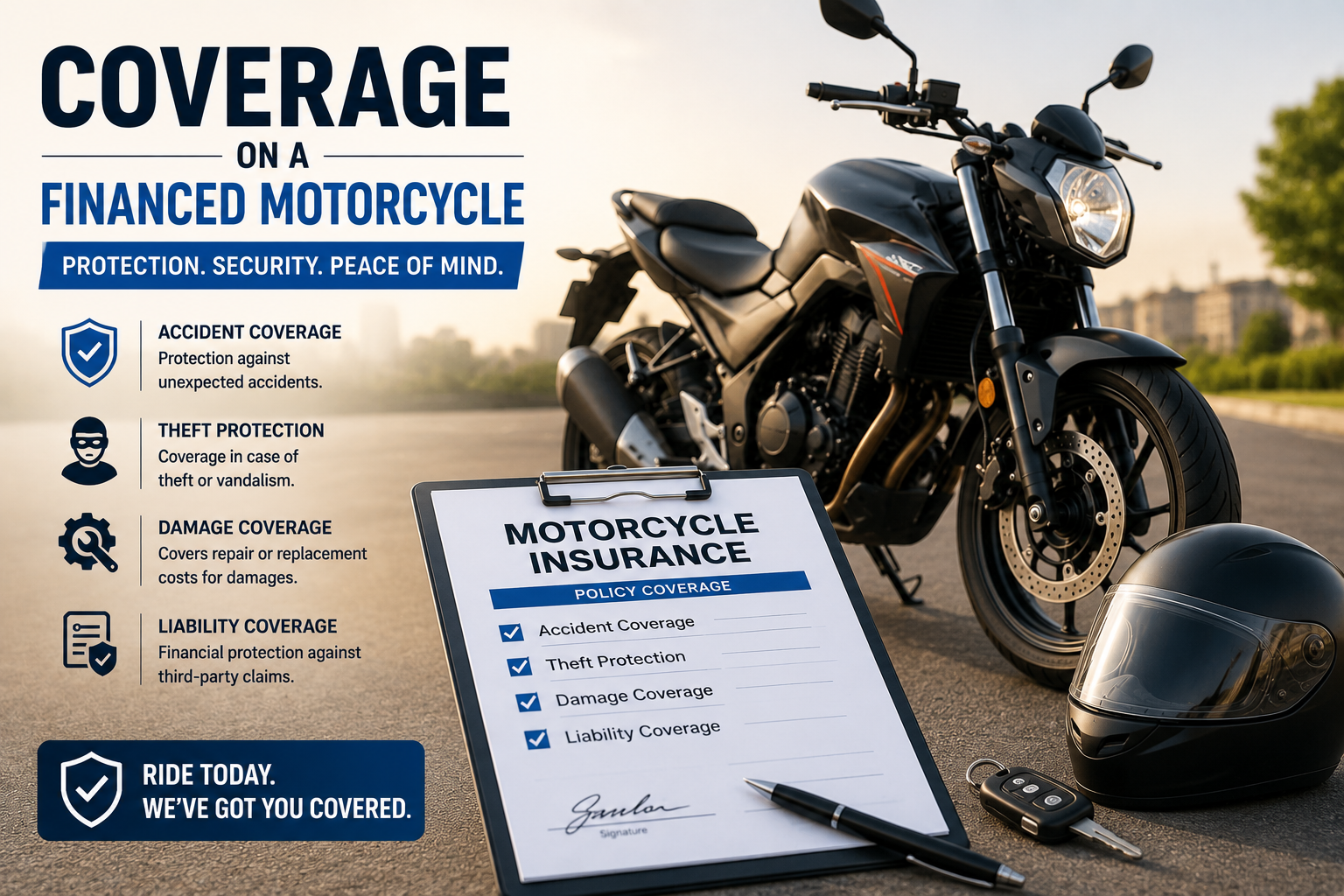
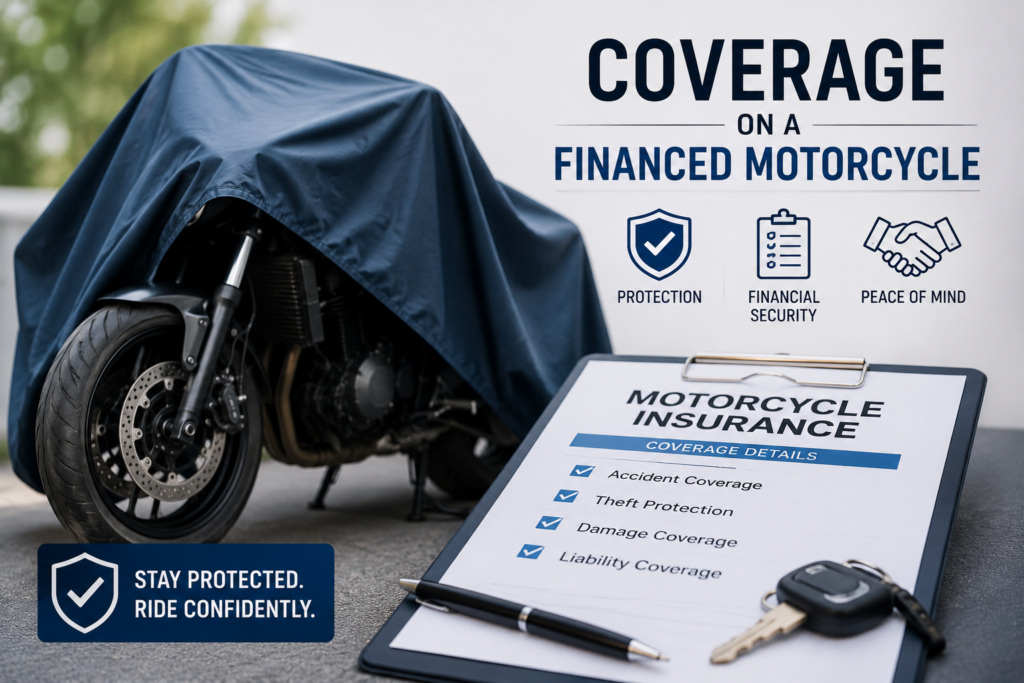
That’s exactly why loan and lease agreements almost always include a clause requiring comprehensive and collision coverage — together, these two make up what’s commonly called “full coverage” on a financed motorcycle.
What Happens If You Skip It
If you let your full coverage lapse while you still owe money on the bike, most lenders will find out. Loan agreements typically give them the right to:
- Add “force-placed insurance” to your account (which is usually far more expensive and covers only the lender’s interest, not you)
- Charge you for the gap in coverage retroactively
- In some cases, technically default you on the loan
None of this is exaggerated — it’s standard practice across auto and powersports lending, and motorcycle loans work the same way. This alone answers most of why people ask whether they need full coverage on a financed motorcycle in the first place.
What Does Full Coverage Actually Include?
A lot of people assume “full coverage” is some fixed, universal package. It isn’t. It’s really a combination of a few different coverage types bundled together.
Liability Coverage
This is the baseline, and it’s legally required in nearly every state regardless of financing. It covers injuries or property damage you cause to others in an accident.
Collision Coverage
This pays to repair or replace your motorcycle if it’s damaged in a collision — whether that’s with another vehicle, a guardrail, or honestly, a pothole you didn’t see coming.
Comprehensive Coverage
This covers non-collision incidents: theft, vandalism, fire, weather damage, or hitting an animal on the road. Motorcycles are actually more vulnerable to theft than most cars, so this piece matters more than riders often think.
Gap Insurance (Worth Mentioning Separately)
This one isn’t always bundled into full coverage on a financed motorcycle, but it’s worth asking your lender about. If your bike is totaled early in the loan, you often owe more than the bike is currently worth — gap insurance covers that difference. Without it, you could be paying off a loan for a motorcycle that no longer exists.
How Much Does Full Coverage Cost on a Financed Motorcycle?
This is where things get specific, because the cost of full coverage on a financed motorcycle depends on quite a few variables:
- Bike type and engine size — sportbikes typically cost more to insure than cruisers or standard bikes
- Rider’s age and experience — newer riders usually pay higher premiums
- Location — urban areas with higher theft or accident rates push costs up
- Credit history — in most states, this affects your rate
- Deductible amount — a higher deductible lowers your monthly premium, but raises your out-of-pocket cost if you file a claim
On average, riders can expect full coverage to run noticeably higher than liability-only coverage — sometimes double, depending on the bike. It’s worth getting quotes from a few insurers rather than accepting the first number you’re given, since rates can vary significantly between providers for the exact same coverage.
How to Lower the Cost Without Dropping Required Coverage
Here’s something I’ve noticed working with riders who finance their bikes — a lot of them think their only options are “pay the high premium” or “risk defaulting on the loan.” That’s not true. There are legitimate ways to bring down the cost of full coverage on a financed motorcycle.
- Take a motorcycle safety course: Many insurers offer a discount for completing an approved rider safety program
- Bundle policies: Combining motorcycle insurance with auto or home insurance often unlocks a multi-policy discount
- Raise your deductible slightly: If you can comfortably cover a higher out-of-pocket amount, this reduces your premium
- Install anti-theft devices: A tracking system or disc lock can lower your comprehensive premium
- Shop annually: Insurance rates shift, and loyalty doesn’t always pay off — comparing quotes once a year can save real money
- Ask about rider experience discounts: Some insurers reward a clean multi-year riding record
Quick checklist before you buy a policy:
- Does it meet your lender’s minimum coverage requirement?
- Have you compared at least 3 quotes?
- Does it include gap insurance, or do you need to add it separately?
- Is your deductible something you can actually afford if you need to file a claim?
- Have you asked about all available discounts?
Do You Still Need Full Coverage Once the Motorcycle Is Paid Off?
This is where riders often make a decision worth thinking through carefully. Once your loan is fully paid off, full coverage is no longer required by a lender — it becomes entirely your choice.
At that point, ask yourself honestly:
- Could you afford to repair or replace the bike out of pocket if something happened?
- Is the motorcycle still worth enough that comprehensive and collision coverage makes financial sense?
- Are you comfortable carrying only liability coverage, knowing it won’t protect your own bike?
For a brand-new or high-value motorcycle, many riders decide they still need full coverage even after the loan is paid off, simply because the replacement cost is high enough to justify it. For an older bike with a lower market value, some riders scale back to liability-only once they’re no longer required to carry more.
5 Risks of Skipping Full Coverage on a Financed Motorcycle
If you’re still weighing whether you truly need full coverage on a financed motorcycle, here are the real risks of going without it:
- Loan default risk: Letting coverage lapse can technically put you in breach of your loan agreement
- Force-placed insurance: Your lender can add expensive coverage on your behalf that protects only their interest, not yours
- Out-of-pocket repair costs: Without collision coverage, you’re paying for bike damage entirely on your own
- Total loss without protection: If the bike is stolen or totaled, you could still owe the full loan balance with nothing to show for it
- No gap coverage: Early in a loan, you often owe more than the bike is worth — skipping full coverage usually means skipping this protection too
Common Mistakes Riders Make With Financed Motorcycle Insurance
A few patterns show up again and again, and they’re worth being aware of before you make a decision:
- Letting coverage lapse to save money short-term — this almost always backfires once the lender notices
- Not asking about gap insurance — this gets overlooked more than any other add-on
- Assuming the cheapest quote is the best deal — lower premiums sometimes mean higher deductibles or weaker claim support
- Not updating the policy after upgrades or accessories — aftermarket parts often aren’t covered unless you declare them
- Forgetting to compare rates annually — loyalty discounts rarely beat what a fresh quote can offer
FAQs — Full Coverage on a Financed Motorcycle
Q1: Do you need full coverage on a financed motorcycle if your state only requires liability? Yes. State minimum requirements and lender requirements are two different things. Even if your state only mandates liability, your loan agreement will almost always require comprehensive and collision coverage as well.
Q2: Is gap insurance the same as full coverage? No. Gap insurance is a separate add-on that covers the difference between what you owe and what the bike is worth if it’s totaled early in the loan.
Q3: What happens if I stop paying for full coverage while I still owe money? Your lender can add force-placed insurance to your account, which is usually more expensive and offers less protection to you personally.
Conclusion
If you’re financing a bike right now, the honest answer to do you need full coverage on a financed motorcycle is almost certainly yes — not because insurance companies want to upsell you, but because your lender’s loan agreement typically requires it. Beyond just meeting that requirement, full coverage genuinely protects you financially if something goes wrong with a bike you’re still paying off.
The smarter move isn’t trying to avoid full coverage on a financed motorcycle — it’s shopping around, asking about discounts, and understanding exactly what your policy includes so you’re not overpaying for coverage you don’t need or underinsured for risks you do.
Disclaimer: This article is written for general informational purposes. Insurance requirements vary by lender, state, and individual loan agreement, so confirm your specific coverage requirements with your lender and insurance provider before making a decision.