
Finding the best ISA rates is not simply about choosing the account with the biggest percentage on today’s comparison table. A rate can include a temporary bonus, require a large minimum deposit, restrict withdrawals or lock your money away for several years. The right choice depends on how much you are saving, when you might need the money and whether you are moving an existing ISA.
For UK savers, this matters even more in 2026. The overall ISA allowance remains £20,000 for the 2026/27 tax year, while the government is introducing a £12,000 annual Cash ISA limit for people under 65 from 6 April 2027.
So, which account actually deserves your money?
This guide explains how to compare the best ISA rates, what the headline numbers really mean and which details deserve your attention before you open or transfer an account.
What Are the Best ISA Rates Right Now?
There is no single ISA rate that is best for every saver.
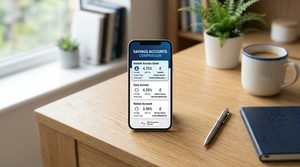
At the time of writing, the UK market includes easy-access Cash ISAs around the mid-4% range, while competitive fixed-rate Cash ISAs can reach close to 5%. Moneyfacts’ current comparison data shows ISA products available at rates approaching 5%, although rates can change without notice.
Recent independent comparisons also show how quickly the market can move. For example, Which?’s latest data sourced from Moneyfacts on 24 August 2026 lists a five-year fixed Cash ISA from Vida Savings at 4.85% AER, while other five-year products are close behind.
Nationwide has also recently increased some of its fixed ISA rates, with its one-year and two-year fixed Cash ISAs reaching 4.50% and 4.55% respectively. However, other providers are offering higher rates.
The lesson is simple: do not judge an ISA by the provider’s name alone.
A smaller building society or specialist savings provider may offer a higher rate than a familiar high-street bank. That does not automatically make it better, though. You still need to check access, minimum deposits, transfer rules and protection.
Actionable takeaway: Use the rate as your starting point, not your final decision.
Easy-Access vs Fixed-Rate ISAs
The first decision is usually straightforward.
Do you want flexibility, or are you comfortable leaving your money untouched?
Easy-access Cash ISA
An easy-access Cash ISA allows you to withdraw your money without committing to a fixed term, although individual accounts can still have withdrawal conditions.
The main advantage is flexibility. If you are saving for a house deposit, emergency fund, renovation or another expense that could arrive unexpectedly, keeping your money accessible can be more valuable than squeezing out an extra fraction of a percentage point.
The drawback is that the interest rate is normally variable.
If market rates fall, your ISA rate may fall too.
That means an account paying 4.5% today could pay less later. A high rate is therefore not necessarily a long-term guarantee.
Fixed-rate Cash ISA
A fixed-rate Cash ISA works differently.
You agree to leave your money in the account for a specific period, such as one, two, three or five years. In exchange, the provider normally gives you a guaranteed interest rate for the agreed term.
The trade-off is access.
Early withdrawals may be restricted or may result in an interest penalty. Some accounts do not allow withdrawals at all unless you close the account and accept the associated cost.
Recent market data shows why it is worth comparing terms rather than simply choosing the longest fix. Which? reported five-year Cash ISA rates as high as 4.85% in late August 2026, but shorter fixed deals can sometimes offer rates that are surprisingly close.
Imagine you find:
- Easy access: 4.5%
- One-year fixed: 4.7%
- Five-year fixed: 4.85%
Would you lock your money away for five years to gain 0.15 percentage points over an easy-access account?
Maybe. But for many people, that extra return is not worth giving up flexibility.
Actionable takeaway: If you may need the money soon, prioritise access. If you are certain you will not need it, compare fixed rates.
How to Compare the Best ISA Rates Properly
The biggest mistake is comparing percentages without reading the account conditions.
When you see a rate advertised as one of the best ISA rates, check these seven things.
1. AER
AER means Annual Equivalent Rate.
It is the standard figure used to make savings products easier to compare because it reflects the effect of compounding over a year.
Always compare AER with AER rather than mixing different interest-rate figures.
2. Minimum deposit
Some ISAs can be opened with £1.
Others require £500, £1,000 or even £5,000.
A rate may look attractive, but it is not useful if you cannot meet the provider’s minimum deposit.
3. Withdrawal restrictions
“Easy access” does not always mean completely unrestricted access.
Some products may limit withdrawals or apply conditions. Fixed accounts can have much stricter rules.
Read the withdrawal section before opening the account.
4. ISA transfers
If you already have money inside an ISA, check whether the new provider accepts transfers.
This is particularly important when moving a large balance.
Do not simply withdraw an old ISA and deposit the money into another account. Use the official ISA transfer process instead.
GOV.UK confirms that ISA withdrawals can have different consequences depending on whether the account is flexible.
5. Bonus rate
A headline rate may include a temporary bonus.
For example, an account might pay a high rate for 12 months and then move to a much lower variable rate.
That is not necessarily a bad deal. You just need to know when the bonus ends.
6. Interest payment frequency
Interest might be paid monthly, annually or when a fixed term matures.
If you want regular income, monthly interest may be more useful. If you simply want to grow the balance, annual compounding may suit you.
7. FSCS protection
Check whether the provider and the money held are eligible for FSCS protection.
The current deposit protection limit is £120,000 per eligible person, per authorised firm. However, different brands can share the same banking licence, so opening accounts with two different brands does not necessarily give you two separate protection limits.
Actionable takeaway: Make a seven-point checklist before applying. The highest AER is only one part of the decision.
Understanding Bonuses and Introductory Rates
This is where many savings comparisons become confusing.
An easy-access ISA may advertise an impressive rate because it includes a temporary bonus. Once the bonus disappears, the underlying rate can be much less competitive.
For example, imagine an ISA pays:
4.60% AER for the first 12 months
but that consists of:
- 3.70% variable base rate
- 0.90% temporary bonus
After 12 months, your rate could drop to 3.70%.
The account was not necessarily misleading. The problem comes when a saver forgets to review it.
A simple calendar reminder can solve much of this.
Set a reminder for about 11 months after opening the account. Check the new rate and compare it with the market.
If another provider is paying substantially more, you can investigate a transfer.
This is one of the easiest ways to improve your long-term savings return without taking investment risk.

Are the highest ISA rates always the best?
No.
A slightly lower rate with no bonus may be better for someone who dislikes moving accounts every year.
Likewise, a high fixed rate may be unsuitable if you expect to need the money within six months.
Think about the net benefit after conditions, rather than the biggest number in bold.
Actionable takeaway: Never treat a bonus as permanent. Record its end date when you open the account.
ISA Transfers, Allowances and the 2027 Changes
ISA rules are particularly relevant right now.
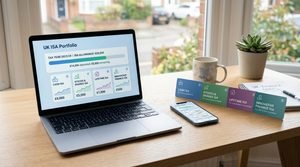
For the 2026/27 tax year, the overall ISA allowance is £20,000. This is the total amount you can subscribe across your ISAs during the tax year.
However, a major Cash ISA change is scheduled for April 2027.
From 6 April 2027, the annual Cash ISA subscription limit will be £12,000 for investors under 65. The overall ISA allowance will remain £20,000, meaning the remaining £8,000 can potentially be used through other eligible ISA investments. People aged 65 and over will retain the £20,000 Cash ISA limit.
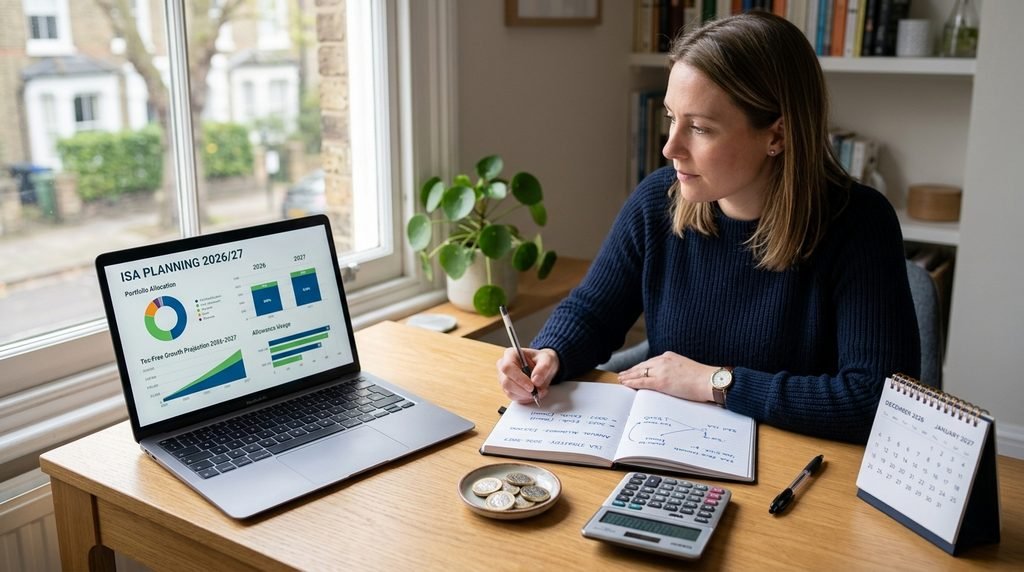
That makes the 2026/27 tax year particularly interesting for savers who prefer cash.
If you are under 65 and have £20,000 available, the current tax year is the last opportunity to subscribe the full £20,000 into a Cash ISA under the existing rules.
That does not mean you should rush into an unsuitable account.
A five-year fixed ISA might have a great rate, but locking away money simply because the rules are changing could create a bigger problem later.
What if you already have an ISA?
Be careful when moving existing ISA savings.
An ISA transfer is different from withdrawing money and paying it into another ISA.
If you withdraw the money yourself, you could lose the tax advantages attached to those savings and may use up your available allowance when trying to replace it.
Instead, ask your new provider to arrange the transfer.
This is especially important if you have accumulated ISA savings over several tax years.
Actionable takeaway: Check both your current-year allowance and your existing ISA balances before moving money.
How Safe Is Money Held in an ISA?
Cash ISAs are generally considered lower-risk savings products than investments, but that does not mean every provider or product works in exactly the same way.
For eligible deposits held with a UK-authorised bank, building society or credit union, the FSCS currently protects up to £120,000 per person, per authorised firm.
There is an important detail here.
The £120,000 limit applies across accounts under the same authorised firm. If two brands operate under one banking licence, your balances may be combined for protection purposes.
For example, suppose you have:
- £80,000 with Brand A
- £60,000 with Brand B
- Both are operated by the same authorised firm
You should not automatically assume you have £120,000 protection for each brand.
Use the FSCS protection checker if you have a substantial balance.
There can also be temporary protection for certain high balances, such as money received from selling a home, but specific eligibility conditions apply.
Actionable takeaway: If your savings exceed £120,000, check the underlying authorised firm rather than just the brand name.
Which ISA Type Is Right for You?
The phrase “best ISA rates” can mean different things because there are several types of ISA.
Cash ISA
Best suited to people who want:
- Tax-free interest
- Capital stability
- Easy access or fixed savings
- Lower risk than investments
For short- and medium-term savings, this is often the most straightforward option.
Stocks and Shares ISA
A Stocks and Shares ISA is designed for investments rather than ordinary cash savings.
You can invest in assets such as funds, shares and bonds, depending on the provider.
There is no guaranteed interest rate. Investments can rise or fall, and you could receive less than you originally invested.
For that reason, comparing a Stocks and Shares ISA by “rate” is not really the right approach.
Instead, look at investment choice, platform fees, fund charges, service quality and your investment timeframe.
Lifetime ISA
A Lifetime ISA can be useful for eligible people saving for a first home or retirement.
The annual contribution limit is £4,000, and government bonuses can make it attractive for qualifying savers. However, withdrawal rules are more restrictive than ordinary Cash ISAs.
Innovative Finance ISA
This type of ISA can involve peer-to-peer lending and other qualifying investments.
The potential returns may be higher, but so can the risks. It should not be treated like a normal savings account.
Actionable takeaway: Decide what the ISA needs to do before comparing rates. Cash protection and investment growth are different goals.
7 Practical Ways to Get More From Your ISA
1. Compare the full rate, not the headline
Look for bonuses, minimum balances and rate expiry dates.
A slightly lower permanent rate can beat a high temporary rate if you forget to switch.
2. Match the term to your plans
Do not fix money for five years if you might need it next year.
Conversely, if you have money you definitely will not touch, an appropriate fixed-rate ISA could provide useful certainty.
3. Review your ISA at least once a year
Savings rates move.
The account that was competitive when you opened it may not remain competitive.
A yearly review takes little time and can make a meaningful difference to larger balances.
4. Use ISA transfers correctly
Moving an ISA should normally be done through the provider’s transfer process.
Do not withdraw a large balance simply because another account offers a better rate.
5. Watch the bonus expiry date
This is particularly important with easy-access accounts.
Put the date in your calendar immediately.
6. Check FSCS protection
For larger balances, look beyond the brand.
Check which authorised firm actually holds your money.
7. Consider inflation
A savings account can pay interest while your money still loses purchasing power in real terms.
If inflation is 3% and your ISA pays 4.5%, your return is positive in nominal terms and roughly 1.5 percentage points above inflation before considering the precise inflation measure and compounding.
That is not guaranteed to remain the case.
Actionable takeaway: The best ISA is one that fits your timeframe, risk level and access needs while paying a competitive rate.

What Should You Check Before Opening an ISA?
Before pressing the application button, run through this quick checklist:
- Is the advertised rate variable or fixed?
- Does it include a temporary bonus?
- When does the bonus end?
- What is the minimum deposit?
- Can you make withdrawals?
- Are there withdrawal penalties?
- Does the account accept ISA transfers?
- How often is interest paid?
- Is the provider eligible for FSCS protection?
- What happens when a fixed term ends?
- Have you used any of your £20,000 ISA allowance this tax year?
- Are you under or over 65 for the 2027 Cash ISA rules?
- Would an alternative ISA type better match your long-term goal?
It sounds like a lot.
In practice, it takes only a few minutes once you know what to look for.
A simple example
Imagine you have £15,000 in cash.
You expect to buy a car within 12 months, so access matters. A five-year fixed ISA paying 4.85% may look attractive, but it could be a poor match for your circumstances.
An easy-access ISA paying slightly less might give you the flexibility you actually need.
Now imagine you have another £15,000 that you are certain you will not need for several years.
The calculation changes.
A fixed-rate ISA could make more sense because you are being compensated for giving up access.
That is why there is no universal “best” ISA.
There is only the best fit for the money you are saving.
Final Thoughts
The best ISA rates can help your savings grow faster, but the percentage should never be the only thing you compare.
For easy-access savings, look closely at bonuses and what happens when they expire. For fixed ISAs, think carefully about whether you can genuinely leave the money untouched for the full term. If you are transferring an existing ISA, use the correct transfer process rather than withdrawing the money yourself.
The 2027 Cash ISA changes also deserve attention. Under-65s will have a £12,000 annual Cash ISA limit from 6 April 2027, while the overall ISA allowance remains £20,000.
Rates, terms and tax rules can change, so always verify the latest information directly with the provider and relevant official sources before making a decision.
The smartest approach is simple: compare the rate, read the conditions, check the protection and choose the account that matches when you need the money.