How Many ISAs Can I Have?
If you are wondering how many ISAs can I have, the short answer is: there is no overall limit on the number of adult ISAs you can hold. You can have multiple Cash ISAs, Stocks and Shares ISAs and Innovative Finance ISAs, even with different providers.
However, there is an important catch. The number of accounts you open is different from the amount you can pay into them.
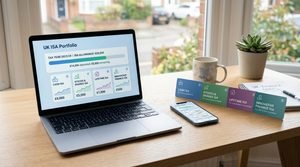
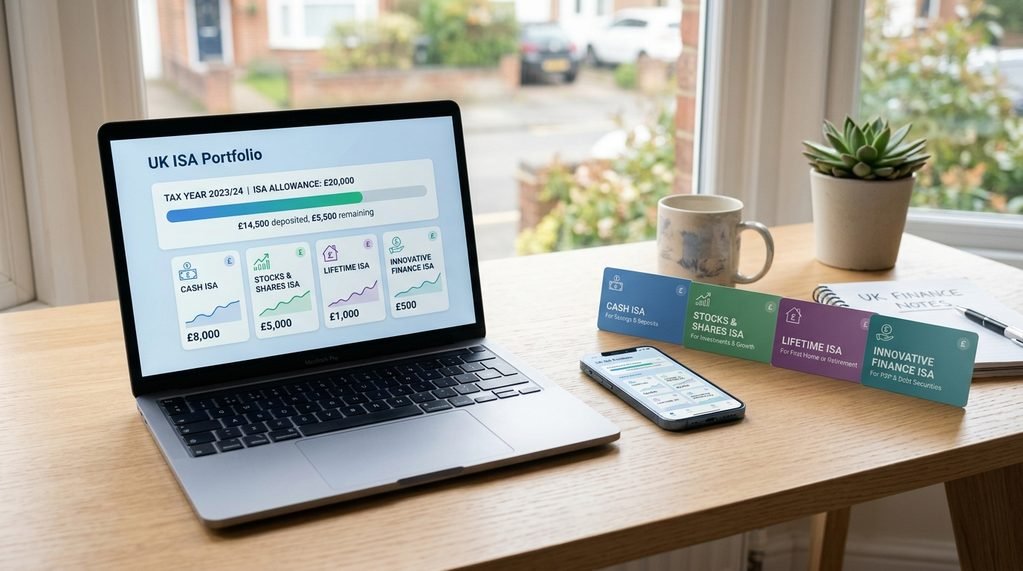
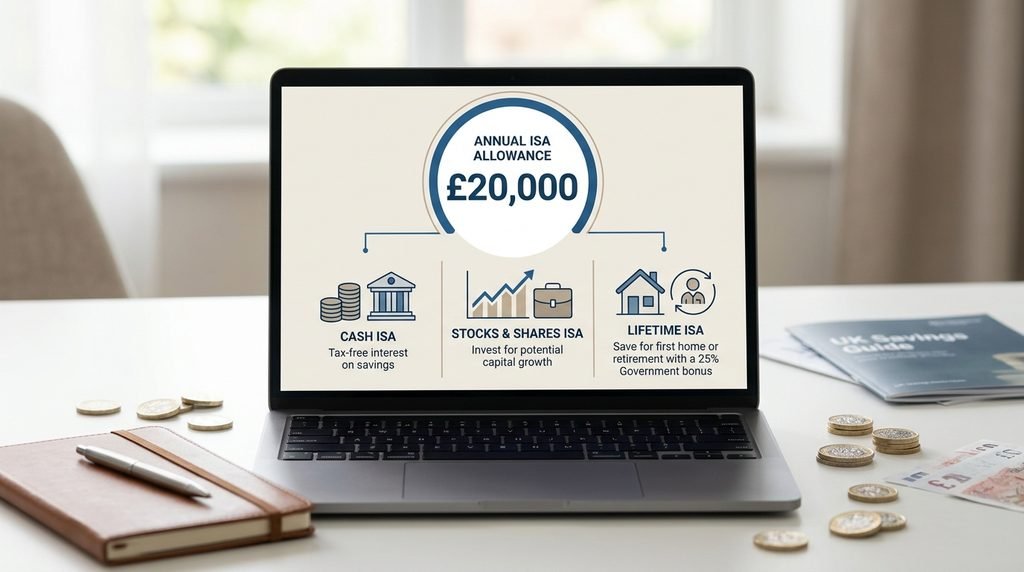
For the 2026/27 tax year, which runs from 6 April 2026 to 5 April 2027, your overall ISA allowance is £20,000. You can split that allowance between different ISAs, provided your total contributions stay within the limit.
That makes multiple ISAs useful for people with different savings or investment goals. For example, you might keep an emergency fund in one Cash ISA, invest for the long term through a Stocks and Shares ISA, and use a Lifetime ISA for a qualifying first home.
There are, however, special rules for Lifetime ISAs and Junior ISAs. The rules are also changing for Cash ISAs from April 2027, so it is worth understanding the details before opening several accounts.
How Many ISAs Can I Have in 2026/27?
There is no fixed maximum number of adult ISAs you can hold.
This is one of the biggest changes people sometimes miss. Since 6 April 2024, HMRC rules have allowed investors to subscribe to multiple ISAs of the same type during a tax year, subject to the normal annual allowance.
So, in the 2026/27 tax year, you could potentially have:
- Two or more Cash ISAs
- Multiple Stocks and Shares ISAs
- Multiple Innovative Finance ISAs
- A Lifetime ISA, subject to its specific rules
- Older ISAs from previous tax years
The important distinction is between holding an ISA and subscribing to one.
You may have several existing ISAs containing money from previous tax years. Those balances do not suddenly become part of your current year’s £20,000 contribution limit.
For example, imagine you have:
- £15,000 in an old Cash ISA
- £20,000 in an old Stocks and Shares ISA
- £8,000 in another ISA from previous years
You can still have those accounts while using your new £20,000 allowance for 2026/27.
A simple example
Suppose you want to use your £20,000 allowance across three accounts:
- £8,000 into Cash ISA A
- £7,000 into Cash ISA B
- £5,000 into a Stocks and Shares ISA
Your total new contributions are £20,000.
That is allowed under the current rules.
Takeaway: There is no magic number such as two, three or four adult ISAs. Your main restriction is how much you contribute during the tax year.
Can I Have Multiple ISAs of the Same Type?
Yes. This is where the current rules are quite different from the old ISA system.
You can now open multiple ISAs of the same type and contribute to them during the same tax year, provided your overall contributions remain within your applicable allowance. GOV.UK confirms that investors can subscribe to multiple ISAs of the same type from 6 April 2024.
For example, you could have:
Cash ISA 1: £5,000
Cash ISA 2: £5,000
Cash ISA 3: £10,000
That would use your entire £20,000 allowance for 2026/27.
Why might someone do this?
Perhaps one bank offers a competitive easy-access rate, while another has a better one-year fixed rate. Keeping them separate can make it easier to match different savings goals.
That said, individual providers can still apply their own account-opening or subscription conditions. So, while HMRC rules may allow multiple accounts, a particular bank or building society may restrict how many accounts you can open with it.
What about multiple Stocks and Shares ISAs?
The same general principle applies.
You could use one investment platform for a long-term portfolio and another for a different investment strategy. Your total ISA subscriptions for the tax year still need to remain within your overall allowance.
However, opening several investment accounts simply because you can is not necessarily a good strategy.
Different platforms can charge different fees, have different investment choices and offer different levels of customer support. Therefore, compare the costs and features before spreading your investments around.
Takeaway: Multiple ISAs of the same type are allowed, but there should be a practical reason for having them.
How Does the £20,000 ISA Allowance Work?
The £20,000 ISA allowance is the figure that matters most when answering “how many ISAs can I have?”
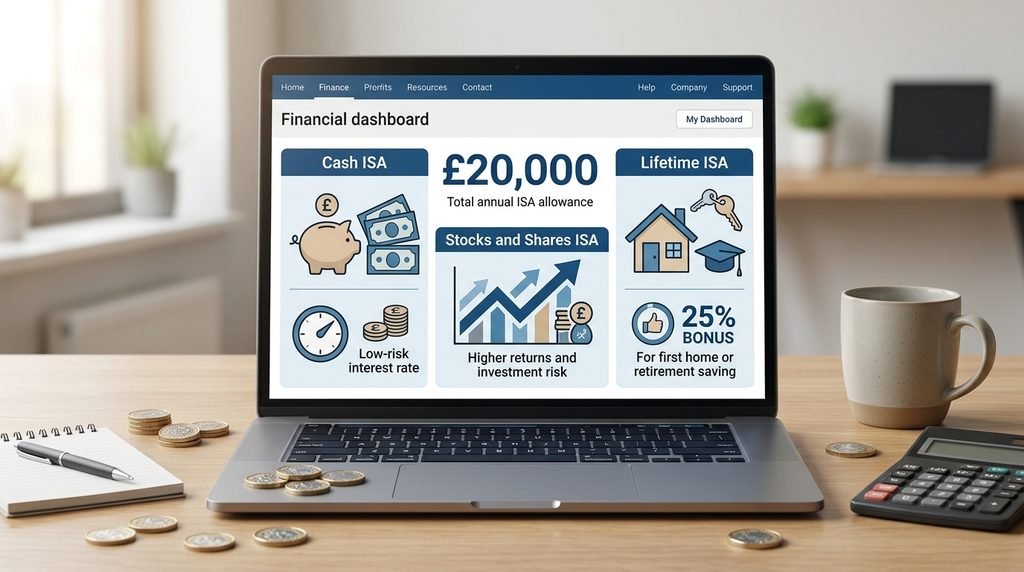
For the 2026/27 tax year, you can contribute up to £20,000 across your adult ISAs.
It does not mean you can put £20,000 into every ISA.
Instead, think of £20,000 as one annual pot that you can divide between eligible ISA types.
For example:
| ISA type | Contribution |
|---|---|
| Cash ISA | £10,000 |
| Stocks and Shares ISA | £6,000 |
| Lifetime ISA | £4,000 |
| Total | £20,000 |
The £4,000 Lifetime ISA contribution counts towards the overall £20,000 allowance.
You could also put the entire £20,000 into one Cash ISA if that suits your circumstances.
What happens to unused allowance?
Your annual ISA allowance generally does not roll forward.
If you use £12,000 of your £20,000 allowance during 2026/27, you cannot normally add the unused £8,000 to your following year’s allowance.
Your allowance resets when the new tax year begins on 6 April.
This is why checking your ISA contributions before the end of the tax year can be worthwhile.
Takeaway: Focus less on the number of accounts and more on tracking your total contributions during each tax year.
What Are the Rules for Each Type of ISA?
The four main adult ISA types have different purposes and, in some cases, different contribution rules.
Cash ISA
A Cash ISA is designed for saving rather than investing in the stock market.
You earn interest without paying UK Income Tax on that ISA interest.
For 2026/27, the overall ISA allowance is £20,000, and Cash ISAs can currently receive up to the available overall allowance, subject to the wider rules.
However, a major change is scheduled for 6 April 2027.
For people under 65, the annual amount that can be paid into Cash ISAs will be limited to £12,000, while the overall ISA allowance will remain £20,000. The remaining £8,000 can potentially be used through other eligible ISA types.
If you are aged 65 or over, the planned Cash ISA limit remains £20,000.
Stocks and Shares ISA
A Stocks and Shares ISA is intended for investments rather than ordinary cash savings.
You can invest in eligible assets within the ISA and generally benefit from tax-free treatment on investment gains and dividends within the account.
Unlike a Cash ISA, investment values can fall as well as rise.
So, if you need the money in the short term, a Stocks and Shares ISA may not be suitable simply because it has tax advantages.
Innovative Finance ISA
An Innovative Finance ISA, or IFISA, can be used for certain peer-to-peer lending and other qualifying investments.
The potential returns can be attractive, but the risks can also be higher than with a traditional savings account.
Do not assume that an ISA wrapper makes an investment risk-free.
Lifetime ISA
A Lifetime ISA is different.
You can contribute up to £4,000 per tax year, and this amount counts towards your £20,000 overall ISA allowance. The government can add a 25% bonus, subject to the applicable rules.
The Lifetime ISA is designed primarily for first-home purchases and later-life savings.
There is also a special restriction: you can only subscribe to one Lifetime ISA in a tax year. GOV.UK specifically identifies the Lifetime ISA as an exception to the multiple-ISA rules.
Takeaway: Multiple ISAs are possible, but each ISA type has its own purpose and rules. Do not treat all ISAs as interchangeable.
Can I Have ISAs With Different Providers?
Yes. You can hold ISAs with different banks, building societies, investment platforms and other ISA providers.
For example, you might have:
- A Cash ISA with one bank
- Another Cash ISA with a different provider
- A Stocks and Shares ISA with an investment platform
- A Lifetime ISA with another provider
This can be useful when providers offer different rates, investment choices or account features.
However, there is a practical downside: the more accounts you have, the harder it can become to track everything.
You need to know how much you have contributed during the tax year, which accounts are flexible, where your older ISA money is held and whether any fixed-term accounts have withdrawal restrictions.
Before opening another account, ask yourself three questions:
- What advantage does this account give me?
- Will it save me money or improve my returns?
- Can I manage another account without losing track of my contributions?
If you cannot answer the first two clearly, another ISA may not be necessary.
Takeaway: Different providers can be useful, especially when comparing rates and features, but convenience has value too.
Is Having Multiple ISAs a Good Idea?
Sometimes, yes.
There is no prize for having the most ISA accounts. The better question is whether multiple accounts make your financial life easier or more efficient.
Here are some situations where having several ISAs can make sense.
You have different financial goals
You might want separate pots for:
- An emergency fund
- A house deposit
- Long-term investing
- Retirement planning
- A specific future purchase
Separating these goals can make your progress easier to track.
You want to compare savings rates
Cash ISA rates can vary considerably between providers.
If one provider offers a competitive easy-access rate and another offers a better fixed-rate product, using separate accounts could make sense.
However, rates change. A rate that looks excellent today may no longer be competitive several months later.
You want different investment options
One Stocks and Shares ISA provider might offer low-cost index funds, while another might provide a wider range of investments.
If you understand the fees and risks, using different providers can sometimes be useful.
When multiple ISAs may be unnecessary
On the other hand, keeping five or six accounts can create unnecessary administration.
You may forget where your money is. You may also lose track of how much you have contributed during the current tax year.
A simple spreadsheet or personal finance app can help.
Takeaway: Have multiple ISAs for a reason. Organisation and cost should matter as much as tax efficiency.
What Changes for Cash ISAs in 2027?
This is one of the most important upcoming ISA changes.
From 6 April 2027, people under 65 will have a £12,000 annual Cash ISA subscription limit, while the overall ISA allowance remains £20,000. People aged 65 or over will continue to have a £20,000 Cash ISA limit under the announced rules.
That means someone under 65 could potentially structure their annual allowance like this:
- £12,000 into Cash ISAs
- £8,000 into a Stocks and Shares ISA
Or they could use some of the remaining allowance for another eligible ISA type.
The change does not mean existing Cash ISA balances suddenly become taxable.
It is a restriction on new annual subscriptions rather than a tax on money already held inside your Cash ISA.
The government has also announced anti-circumvention rules connected with the 2027 reform.
Because these rules are future-facing and implementation details can develop, check the latest GOV.UK guidance before making a major decision around the 2027/28 tax year.
Takeaway: If you are planning to save large amounts in Cash ISAs, the 2027 rules should be part of your planning.
Common Mistakes to Avoid
Knowing how many ISAs can I have is only half the job. The bigger risk is misunderstanding how contributions and transfers work.
1. Thinking every ISA gets a separate £20,000 allowance
This is incorrect.
The £20,000 allowance applies across your eligible adult ISA subscriptions for the tax year.
Putting £20,000 into three different ISAs would mean £60,000 of new contributions, not £20,000.
2. Forgetting about your Lifetime ISA contribution
If you put £4,000 into a Lifetime ISA, that £4,000 counts towards your overall £20,000 allowance.
It is not an additional £4,000 on top.
3. Withdrawing money and assuming the allowance comes back
This depends on whether your ISA is flexible.
With a flexible ISA, eligible withdrawals can generally be replaced during the same tax year without using additional allowance. With a non-flexible ISA, withdrawing money and paying it back can use more of your annual allowance.
Check your provider’s terms before moving money around.
4. Taking money out instead of using an ISA transfer
If you want to move an ISA to another provider, use the formal ISA transfer process where appropriate.
Simply withdrawing the money and depositing it into another ISA can create unnecessary tax-wrapper problems and may count as a new subscription.
MoneyHelper also recommends using the ISA transfer process when moving money between providers.
5. Ignoring provider fees
A tax-free investment can still be an expensive investment if the provider charges high platform, dealing or fund fees.
Look at the total cost rather than choosing an account solely because it is an ISA.
Takeaway: Most ISA mistakes come from misunderstanding contributions, transfers or provider rules rather than from simply having several accounts.
How to Decide How Many ISAs You Actually Need
You do not need to open several ISAs just because the rules allow it.
A sensible approach is to start with your goals.
If you are saving for short-term needs
A Cash ISA may be more appropriate because you generally know what your balance is and can choose between easy-access and fixed-rate options.
If you are investing for the long term
A Stocks and Shares ISA may be worth considering if you are comfortable with investment risk and have a sufficiently long time horizon.
If you are saving for your first home
A Lifetime ISA may be useful if you meet the eligibility requirements and understand its withdrawal rules.
If you already have several old ISAs
Do not automatically close them.
First, check their interest rates, fees, investment choices and transfer options. An ISA from a previous tax year can remain open while you use a different provider for new contributions.
A useful rule is simple: one ISA can be enough if it gives you the right combination of cost, access and returns. Several can be better when each one has a clear job.
Final Thoughts: How Many ISAs Can I Have?
So, how many ISAs can I have?
For most adult savers, there is no overall numerical limit. You can hold multiple Cash ISAs, Stocks and Shares ISAs and Innovative Finance ISAs, including accounts opened with different providers.
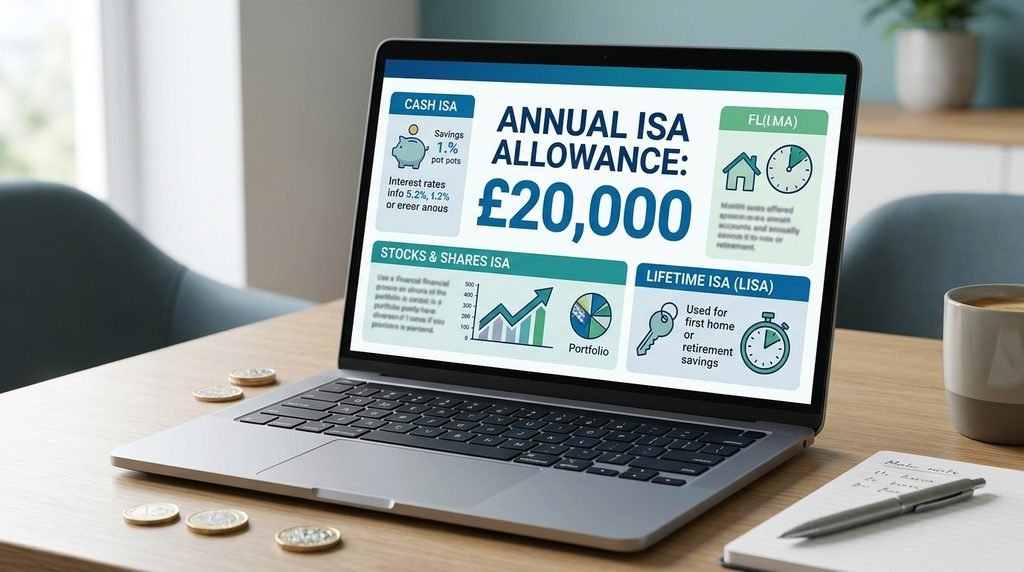
The figure you need to watch is the £20,000 annual ISA allowance for 2026/27, rather than the number of accounts.
You can split that allowance across eligible ISA types. A Lifetime ISA has its own £4,000 contribution limit, but that amount still counts towards the £20,000 overall allowance.
From April 2027, Cash ISA rules will also change for people under 65, with a £12,000 annual Cash ISA limit while the overall ISA allowance remains £20,000.
Before opening another account, compare the interest rate or investment options, fees, withdrawal conditions and transfer rules. Most importantly, keep a record of your contributions across every ISA you fund during the tax year.
The best number of ISAs is not the maximum you can open. It is the number that helps you reach your financial goals without making your money harder to manage.
Financial information and ISA rules can change. The figures and rules discussed above relate to the 2026/27 tax year and announced 2027 changes. Always check the latest GOV.UK guidance and your provider’s terms before opening, transferring or contributing to an ISA. This article is for general information and is not personal financial advice.
FAQs
How many ISAs can I have in one tax year?
There is no overall limit on the number of adult ISAs you can hold or open, provided you follow the contribution rules. For 2026/27, you can subscribe to multiple ISAs, including multiple ISAs of the same type, while keeping your total contributions within the £20,000 annual allowance.
Can I have two Cash ISAs at the same time?
Yes. Under the current rules, you can have multiple Cash ISAs and contribute to more than one during the same tax year. However, your total ISA contributions must remain within the £20,000 overall allowance for 2026/27. Individual providers may also have their own account-opening conditions.
How many ISAs can I have with different banks?
You can have ISAs with multiple banks, building societies and other providers. There is no general rule limiting you to one provider. However, keep track of your total contributions because the £20,000 allowance applies across your eligible ISA subscriptions rather than separately to each bank.
Can I have more than one Lifetime ISA?
You may be able to hold more than one Lifetime ISA, but you can only subscribe to one Lifetime ISA in a tax year. The annual contribution limit is £4,000, and this counts towards your overall £20,000 ISA allowance. Check the provider and current HMRC rules before contributing.
How many ISAs can I have after the 2027 Cash ISA changes?
From 6 April 2027, people under 65 will have a £12,000 annual limit for Cash ISA subscriptions, while the overall ISA allowance remains £20,000. The number of Cash ISAs you can hold is not the same as the amount you can contribute to them.
Can I have multiple ISAs from previous tax years?
Yes. You can continue to hold ISAs from previous tax years while opening and contributing to new ISAs. Money already held inside those older ISAs does not normally use your current year’s subscription allowance. If you want to move an older ISA, use the proper ISA transfer process.
FAQ Schema-Ready Content
Question: How many ISAs can I have in one tax year?
Answer: There is no overall limit on the number of adult ISAs you can hold or open, provided you follow the contribution rules. For 2026/27, you can subscribe to multiple ISAs while keeping total contributions within the £20,000 annual allowance.
Question: Can I have two Cash ISAs at the same time?
Answer: Yes. You can have multiple Cash ISAs and contribute to more than one during the same tax year. Your total ISA contributions must remain within the £20,000 overall allowance for 2026/27, and individual providers may have their own conditions.
Question: How many ISAs can I have with different banks?
Answer: You can have ISAs with multiple banks, building societies and other providers. There is no general rule limiting you to one provider. However, the £20,000 annual allowance applies across your eligible ISA subscriptions.
Question: Can I have more than one Lifetime ISA?
Answer: You may hold more than one Lifetime ISA, but you can only subscribe to one Lifetime ISA in a tax year. The annual contribution limit is £4,000, and this counts towards your overall £20,000 ISA allowance.
Question: How many ISAs can I have after the 2027 Cash ISA changes?
Answer: From 6 April 2027, people under 65 will have a £12,000 annual limit for Cash ISA subscriptions, while the overall ISA allowance remains £20,000. The change affects contributions rather than the number of Cash ISAs you can hold.
Question: Can I have multiple ISAs from previous tax years?
Answer: Yes. You can hold ISAs from previous tax years while opening and contributing to new ISAs. Money already held in older ISAs does not normally use your current year’s subscription allowance. Use the formal ISA transfer process when moving an ISA.