
Finding the best free Business Bank Account in the UK can help freelancers, sole traders, startups and small businesses keep banking costs under control.
A Business Bank Account can make it easier to separate business and personal finances, receive customer payments, pay suppliers and keep track of everyday expenses.
But there is an important catch: “free” does not always mean completely free.
Some providers offer £0 monthly fees but charge for certain transactions, cash deposits, international payments, extra cards or additional services. Others offer free introductory periods that later move to paid plans.
So, which free business bank account is right for you?
In this guide, we compare 7 free or low-cost business banking options in the UK for 2026, explain what to look for and show you how to choose an account based on your business needs.
Important: Business Account fees, eligibility, transaction limits and features can change. Always check the provider’s latest terms and pricing before applying.
Quick Answer: What Is the Best Free Business Bank Account in the UK?
There is no single best free business bank account for every business.
The right option depends on factors such as:
- Your business structure
- Monthly transaction volume
- Whether you handle cash
- International payment requirements
- Accounting software
- Number of cards or users required
- Customer support preferences
- Future business growth
Digital providers can be attractive for businesses that mainly operate online, while a traditional bank may be more suitable if you regularly need branch services or cash deposits.
The important thing is to compare the total cost and features, rather than choosing an account simply because it advertises £0 monthly fees.

7 Best Free Business Bank Accounts UK 2026
1. Starling Business
Starling Bank offers business banking designed around digital account management.
For eligible businesses, its business banking options can provide everyday banking without a standard monthly account fee, although additional services may have separate charges.
Features to consider
- Business current account
- Mobile banking
- Business debit card
- Bank transfers
- Spending management
- Accounting integrations
- Digital statements
Starling Business can be worth considering if you want a digital-first business account and prefer managing your finances through an app.
Before applying, check the current eligibility requirements and charges for any services your business expects to use.
2. Mettle
Mettle is a digital business banking service from NatWest aimed particularly at smaller businesses and sole traders.
Depending on eligibility and the current account offering, Mettle can provide business banking without a monthly account fee.
Potential features
- Business account management
- Mobile banking
- Business debit card
- Invoicing tools
- Expense management
- Digital banking
Mettle may suit a smaller business owner who wants straightforward app-based banking and basic business management tools.
As with any business account, check the latest eligibility rules and included services before applying.
3. Revolut Business
Revolut Business offers several plans rather than one simple free account.
This means you should check the current pricing tier, transaction allowances and included features before deciding whether it is genuinely cost-effective for your business.
Potential benefits include:
- Digital business banking
- Business payment tools
- Multi-currency functionality
- Business cards
- Expense management
- International payment features
Revolut Business can be particularly interesting if you work with customers or suppliers outside the UK.
However, international businesses should pay close attention to foreign exchange costs, transfer fees and transaction allowances.
4. Tide
Tide is a business-focused digital banking platform used by UK small businesses and sole traders.
It offers different business account plans, including options designed to keep basic banking costs low.
Features may include:
- Business account management
- Mobile app
- Business debit card
- Invoicing
- Expense management
- Accounting integrations
Tide may be worth comparing if you want a business-focused platform rather than a traditional high-street banking experience.
Check the latest pricing carefully because the features included can depend on the plan you choose.
5. Monzo Business
Monzo Business provides business banking options for eligible sole traders and limited companies.
Its app-based approach allows business owners to manage their finances from a smartphone.
Potential features include:
- Mobile-first banking
- Business debit card
- Spending insights
- Business payments
- Account management tools
- Integration options
Monzo Business may be suitable if you already prefer app-based banking and want to manage business finances digitally.
Check the current plans because some features may only be available on paid accounts.
6. ANNA Money
ANNA Money combines business banking with tools designed to help small businesses manage financial administration.
Depending on the current plan, businesses may have access to different pricing and feature levels.
Potential benefits
- Business banking
- Invoicing tools
- Expense management
- Administrative features
- Digital account management
ANNA Money may be worth researching if you want banking and business administration tools in one platform.
However, compare the latest pricing with your actual monthly transaction needs before choosing an account.
7. A Traditional Bank With a Free Introductory Period
Some traditional UK banks offer introductory periods of free business banking for eligible new customers.
This can be attractive if you prefer:
- Branch access
- Telephone support
- Established banking infrastructure
- Cash deposits
- Face-to-face service
- Potential access to wider business banking services
The important difference is that an introductory offer is not necessarily permanent.
Before opening the account, check:
- How long the free period lasts
- What happens after the introductory period
- Which transactions are included
- Cash deposit charges
- Transfer charges
- Minimum requirements
- Other account fees
For a business that handles cash regularly, a traditional bank could be more practical than a digital-only provider.
How to Choose the Best Free Business Bank Account
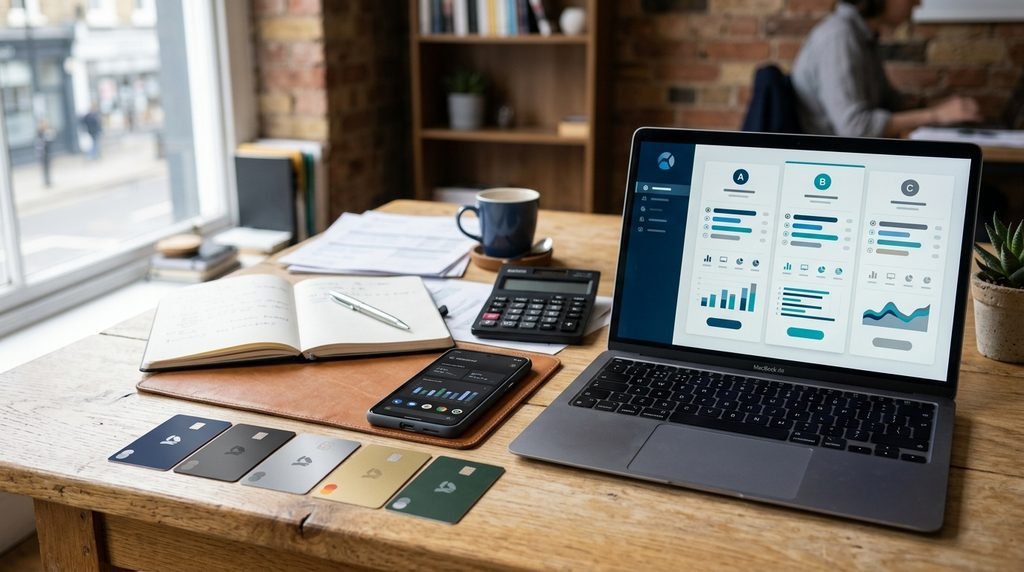
The cheapest account on paper is not necessarily the cheapest account for your business.
Use these steps before making your decision.
Step 1: Check Your Business Type
First, identify how your business operates.
You may be a:
- Sole trader
- Freelancer
- Contractor
- Limited company
- Partnership
- Startup
- Small company
Not every provider accepts every type of business, so check eligibility first.
Step 2: Estimate Your Monthly Transactions
Think about how often your business receives and sends money.
Consider:
- Customer payments
- Supplier payments
- Bank transfers
- Direct debits
- Cash deposits
- Card payments
- International transfers
A £0 monthly account may become expensive if you regularly exceed its included transaction allowances.
Step 3: Decide Whether You Need Cash Deposits
This is particularly important for businesses that receive physical cash.
If almost all your customers pay by card or bank transfer, a digital account may be convenient.
If you regularly deposit cash, check:
- Whether cash deposits are supported
- Where deposits can be made
- Deposit limits
- Deposit fees
Do this before opening the account.
Step 4: Check International Banking Costs
If your business works with overseas customers or suppliers, don’t focus only on the monthly account fee.
Compare:
- International transfer fees
- Foreign exchange rates
- Supported currencies
- Receiving international payments
- Card usage abroad
A business account that is free for everyday UK banking may not be the cheapest choice for international transactions.
Step 5: Check Accounting Integrations
If you already use accounting software, check whether your chosen provider integrates with it.
Good accounting integration can make bookkeeping easier by automatically transferring transaction information into your accounting system.
Step 6: Check Transaction Limits
A “free” business account may come with limits.
Look for restrictions on:
- Monthly transactions
- Transfers
- Cash deposits
- Cash withdrawals
- ATM usage
- Number of users
- Number of cards
- Invoicing or business tools
Compare these limits with what your business actually needs.
Step 7: Read the Complete Fee Schedule
Never stop at the word “free”.
Look for charges relating to:
- Cash deposits
- Cash withdrawals
- International transfers
- Foreign exchange
- Extra cards
- Additional users
- Replacement cards
- Premium features
- Other business services
The goal is not necessarily to find an account that costs £0 in every situation.
The goal is to find the account that provides the lowest realistic cost for your business.
What Should a Free Business Bank Account Include?
Before opening an account, consider whether it provides the basic features you need.
Business payments
You should be able to receive payments from customers and pay suppliers.
Business debit card
A business debit card can help you keep business spending separate from personal expenses.
Mobile banking
Mobile access can be particularly useful for freelancers and business owners who work remotely.
Bank transfers
Check whether standard UK transfers are included and whether transaction limits apply.
Transaction history
Clear statements and transaction records can make bookkeeping and tax preparation easier.
Accounting integrations
Integration with accounting software can reduce manual bookkeeping work.
Expense management
Some providers offer tools that help you monitor and categorise business spending.
Free Business Bank Account vs Paid Account
A free business bank account is not automatically better than a paid account.
The right choice depends on the size and needs of your business.
| Feature | Free Account | Paid Account |
|---|---|---|
| Monthly fee | Often £0 | Monthly charge |
| Basic banking | Usually included | Included |
| Transaction limits | May apply | May be higher |
| Extra features | Often limited | Usually more extensive |
| International services | May cost more | May offer additional options |
| Business tools | Basic | More advanced |
For example, a freelancer with a small number of monthly transactions may have little reason to pay for a premium account.
A growing company with hundreds of transactions may find that a paid account provides better value if the additional features reduce costs or save time.
Are Free Business Bank Accounts Really Free?
Not always.
Usually, “free” means there is no standard monthly subscription fee for the basic account.
It does not necessarily mean every service is free.
For example, an account could have:
£0 monthly fee + transaction charges
or:
£0 monthly fee + free UK banking + charges for international services
This is why comparing the complete fee schedule is more useful than comparing monthly account fees alone.
Advantages of Free Business Bank Accounts
Lower fixed costs
You may avoid paying a regular monthly subscription for basic banking.
Useful for startups
New businesses can keep fixed operating costs lower while they establish themselves.
Good for freelancers
A freelancer with relatively few transactions may not need advanced paid banking features.
Separate business finances
A dedicated business account can make it easier to keep business income and expenses separate from personal finances.
Mobile convenience
Many modern providers allow you to manage your account through a smartphone.
Potential Disadvantages
Free banking also has limitations.
Transaction limits
You may face charges after exceeding a certain allowance.
Limited branch access
Many digital providers do not operate traditional branches.
Additional fees
Cash deposits, international transfers, extra cards and premium services may cost more.
Fewer advanced features
Some business tools may only be available through paid plans.
How to Open a Free Business Bank Account
Once you have selected a provider, the application process is generally straightforward.
Step 1: Check eligibility
Make sure your business structure and location are accepted.
Step 2: Prepare your information
You may need:
- Personal identification
- Business details
- Business address
- Company registration information, where applicable
- Information about your business activities
Step 3: Start the application
Apply through the provider’s official website or app.
Step 4: Complete verification
The provider may ask you to verify your identity and business information.
Step 5: Wait for approval
The provider will review your application.
Step 6: Activate the account
Once approved, follow the provider’s instructions to activate your account and security settings.
Step 7: Start using your account
You can then arrange customer payments, supplier transfers and other business transactions.
Which Free Business Account Is Best for You?
Your ideal account depends on how your business operates.
Best for simple digital banking
Look for a provider with straightforward app-based banking, low fixed costs and the features you actually use.
Best for freelancers
Prioritise easy account management, invoicing tools and low transaction costs.
Best for startups
Look for £0 monthly fees, simple banking and useful basic business tools.
Best for international businesses
Focus on foreign exchange rates, international transfer fees and supported currencies.
Best for cash-based businesses
A traditional bank may be more suitable if your business regularly handles physical cash.
Best for growing companies
Look for accounting integrations, additional users, multiple cards and higher transaction allowances.
Frequently Asked Questions
What is the best free business bank account in the UK?
There is no single best account for every business. Starling, Mettle, Monzo Business, Tide, Revolut Business and ANNA Money all have different features, pricing structures and eligibility requirements.
Can I get a business bank account for free?
Yes. Some UK providers offer business accounts with no standard monthly account fee. However, additional services may still have charges.
Are free business bank accounts suitable for sole traders?
Many providers offer accounts for sole traders, but eligibility and features vary between providers. Check the current requirements before applying.
Do free business bank accounts have transaction limits?
Some do. Check the provider’s latest terms to see how many transactions are included and what happens when you exceed the allowance.
Can I use a free business account for international payments?
Some providers support international payments, but fees, currencies and exchange rates vary. Compare the total cost if your business regularly deals internationally.
Is a free business bank account safe?
Choose a legitimate provider and check its current regulatory status and protection arrangements before opening an account.
Should a new business choose a free business account?
It can be a sensible starting point if you want to keep fixed costs low. However, consider your expected transaction volume and future business needs before making a decision.
Final Thoughts
The best free business bank accounts in the UK can be useful for freelancers, sole traders, startups and small companies that want to keep banking costs under control.
But don’t choose an account simply because it says “free”.
First, consider your business structure, monthly transaction volume, cash requirements and international payment needs. Then compare transaction limits, included features and the complete fee schedule.
Digital providers such as Starling, Mettle, Monzo Business, Tide, Revolut Business and ANNA Money can be worth researching, while traditional banks may be more suitable for businesses that need branch access or regular cash services.
Ultimately, the best business account is the one that provides the right combination of low costs, useful features and flexibility for the way your business operates.
Before applying, check the provider’s latest pricing, eligibility requirements and terms because business banking offers can change.
A free business account can reduce your costs, but the smartest choice is the one that remains affordable as your business grows.