Opening your Kia Motors Finance statement and finding a charge you don’t recognize is more common than you’d think. Most buyers sign their loan or lease paperwork focused on the monthly payment number, and everything else in the fine print gets skimmed over.
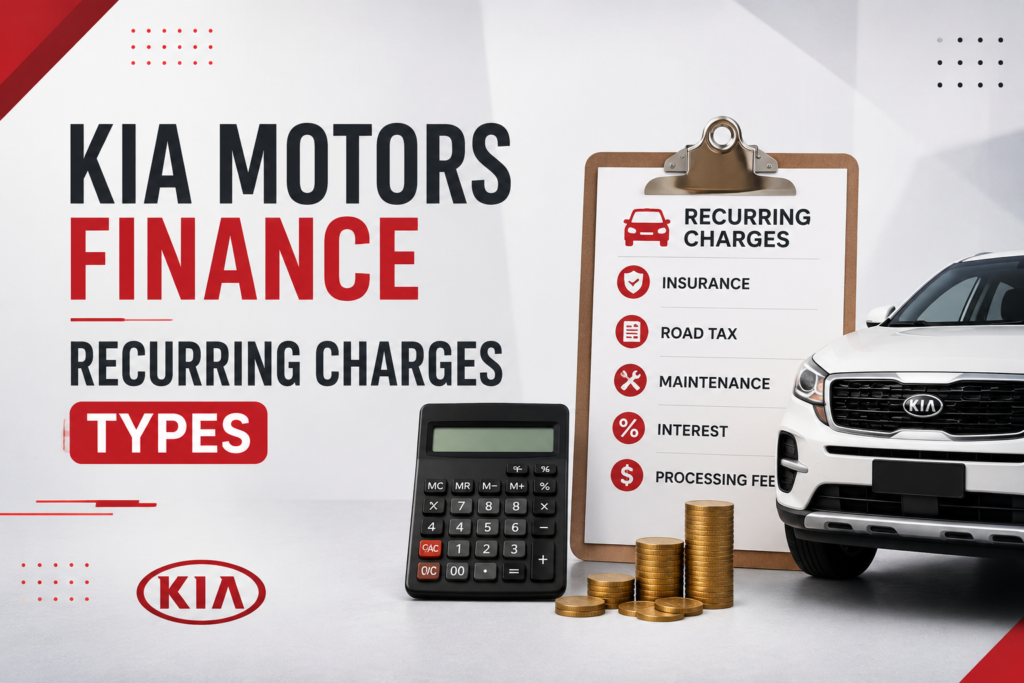
That’s exactly where problems start. Understanding the different Kia Motors Finance recurring charges types upfront saves you from confusing calls to customer service later, and it helps you budget accurately from day one. Once you know which Kia Motors Finance recurring charges types apply to your specific loan or lease, the whole billing process stops feeling like a mystery.
This guide breaks down every recurring charge you’re likely to encounter through Kia Motors Finance (KMF), why each one exists, and what you can actually do about it.
What Kia Motors Finance Actually Is
Before getting into the charges themselves, it helps to know who you’re dealing with. Kia Motors Finance is the financing arm connected to Kia’s sales and distribution operations in the U.S., handling both loans and leases for Kia vehicles nationwide.
When you finance or lease through KMF, your monthly bill isn’t just the vehicle payment. It can include interest, taxes, fees, and sometimes optional add-ons — all of which fall into different categories of recurring charges.
Quick takeaway: Before signing any finance agreement, ask for a full breakdown of every recurring line item, not just the advertised monthly payment. It’s the easiest way to avoid billing surprises later.

1. The Core Monthly Loan or Lease Payment
This is the charge everyone expects — your base payment covering the vehicle’s principal and interest (for a loan) or depreciation and rent charge (for a lease). Of all the Kia Motors Finance recurring charges types on this list, this is the one buyers already understand before signing.
- Loan payments typically run over terms of 3 to 6 years
- Lease payments are usually lower monthly but don’t build ownership
- Your rate depends heavily on credit score, term length, and any promotional offers active at signing
Takeaway: Always confirm whether your quoted payment already includes taxes and fees, or whether those are added separately — this single detail causes a lot of confusion.
2. AutoPay and Recurring Payment Enrollment
Many Kia Motors Finance customers enroll in AutoPay, which automatically pulls the monthly payment from a bank account on a set date. This is one of the most straightforward Kia Motors Finance recurring charges types, but it comes with its own quirks.
- Enrollment can typically be completed online, by phone, or through a mailed AutoPay form
- Missed enrollment updates (like an expired card or closed account) can trigger late fees even when you intended to pay
- Reviewing your AutoPay setup after any bank account change prevents accidental missed payments
Takeaway: Check your AutoPay enrollment every time you switch banks or cards. A silent payment failure is one of the most common — and avoidable — billing headaches.
3. Property or Excise Tax on Leased Vehicles
If you’re leasing rather than financing, you may notice a recurring property or excise tax charge — one of the more misunderstood Kia Motors Finance recurring charges types. This tax is based on your vehicle’s garaging or registration address and is sometimes labeled as ad valorem or motor vehicle tax depending on your state.
- This charge is the lessee’s responsibility, not Kia’s, since it relates to vehicle operation
- Rates and billing schedules vary significantly by state and locality
- If you believe you’ve been charged incorrectly, your local tax authority — not Kia Motors Finance — is who to contact
Takeaway: Don’t assume a tax charge on your lease statement is a Kia error. Confirm with your local tax authority first, since these charges originate outside of Kia’s own systems.
4. Convenience Fees for Phone or Alternative Payments
While enrolling in AutoPay or paying online typically doesn’t cost extra, using certain phone payment channels can. Kia Motors Finance has historically charged separate convenience fees depending on how a payment is submitted, making this another one of the Kia Motors Finance recurring charges types worth watching closely.
- Automated phone payment systems generally carry a smaller convenience fee
- Speaking with a live representative to process a payment usually costs more than the automated option
- Services like Western Union or MoneyGram typically add their own separate convenience fee on top
Takeaway: If you’re paying by phone regularly, switching to online payments or AutoPay can eliminate a recurring fee you may not even realize you’re paying every month.
5. Late Fees and Missed Payment Charges
Late fees are one of the more painful Kia Motors Finance recurring charges types, largely because they’re avoidable. If a payment isn’t received by the due date, a late fee is typically applied, and repeated late payments can also affect your credit history.
- Grace periods vary, so check your specific contract for the exact cutoff
- Some accounts allow you to skip a payment under specific conditions, usually after a string of on-time payments, though this extends your loan term rather than forgiving the payment
- Consistent late fees often point to a mismatched due date versus your pay schedule — this is worth calling in to adjust
Takeaway: If your due date consistently falls before your paycheck lands, call and ask about shifting your payment date. It’s a simple fix that prevents a recurring, entirely avoidable fee.
6. End-of-Term and Lease-End Charges
For lease customers, the end of the term brings its own set of recurring or one-time charges bundled into a final invoice, rounding out the last of the major Kia Motors Finance recurring charges types. These can include a disposition fee, mileage overage charges, wear-and-tear assessments, and any outstanding fees like unpaid tolls or late payments.
- Disposition fees are sometimes waived if you finance or lease another vehicle through Kia within a set window after your lease ends
- Mileage overage charges accumulate based on your contracted mileage limit versus actual usage
- Reviewing your lease-end paperwork early — rather than waiting for the final invoice — gives you time to dispute any charge that looks incorrect
Takeaway: Request your lease-end invoice details a few months before turn-in, not after. It gives you room to negotiate, dispute, or plan around charges before they’re finalized.
How to Keep Recurring Charges Under Control
Once you understand the different Kia Motors Finance recurring charges types, managing them becomes far less stressful. Recognizing these Kia Motors Finance recurring charges types early is really what separates a smooth ownership experience from a frustrating one. The pattern across almost every charge type is the same: confusion happens when buyers don’t ask enough questions upfront.
- Request an itemized statement rather than relying on the total due
- Set calendar reminders around lease-end dates well in advance
- Keep AutoPay details current any time your banking information changes
Takeaway: A five-minute call to confirm your account setup each year is far cheaper than untangling a billing dispute after the fact.
Final Thoughts
Financing or leasing a Kia is usually straightforward, but the recurring charges attached to that agreement aren’t always obvious at the point of sale. Knowing the common Kia Motors Finance recurring charges types — from AutoPay quirks to lease-end fees — puts you in a much stronger position to catch mistakes early and avoid unnecessary costs.
That said, billing systems and fee structures do change over time, so it’s worth reviewing your specific account terms directly with Kia Motors Finance rather than relying solely on general guidance. When in doubt, a quick call to confirm exactly what you’re being charged for is always worth the five minutes it takes.
5. FAQs Section
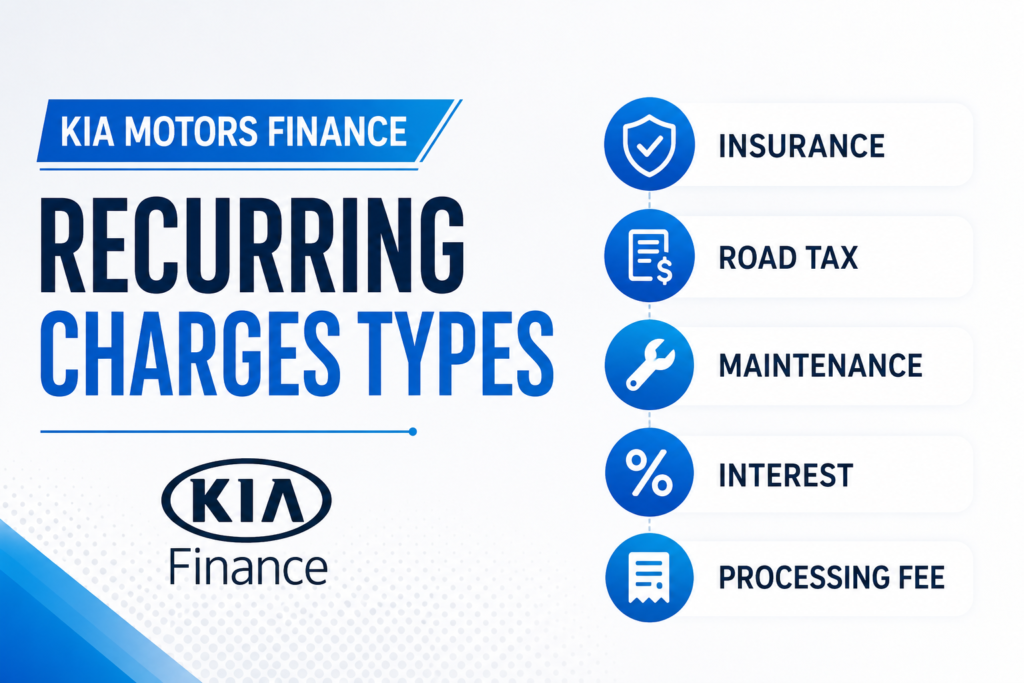
1. What are the main Kia Motors Finance recurring charges types? The most common types include the core monthly loan or lease payment, AutoPay processing, property or excise tax on leased vehicles, convenience fees for phone payments, late fees, and lease-end charges like disposition fees.
2. Why am I being charged property tax through Kia Motors Finance? Property or excise tax on a leased vehicle is based on your registration address and is your responsibility as the lessee. Contact your local tax authority if you believe the charge is incorrect.
3. Does Kia Motors Finance charge a fee for phone payments? Yes, in many cases. Automated phone payment systems typically carry a smaller convenience fee, while speaking with a live representative usually costs more per transaction.
4. Can I avoid the disposition fee at Kia lease-end? Often, yes. Kia frequently waives the disposition fee if you finance or lease another Kia within a set window, typically 60 days, after returning your current lease.
5. What happens if I miss a payment with Kia Motors Finance? A late fee is typically applied if payment isn’t received by the due date. Some accounts may allow you to skip a payment under specific conditions, though this extends your loan term rather than waiving the payment.
6. How can I reduce recurring charges on my Kia Motors Finance account? Enroll in AutoPay to avoid phone convenience fees, keep your banking details updated, and request an itemized statement periodically to catch any charge you don’t recognize early.