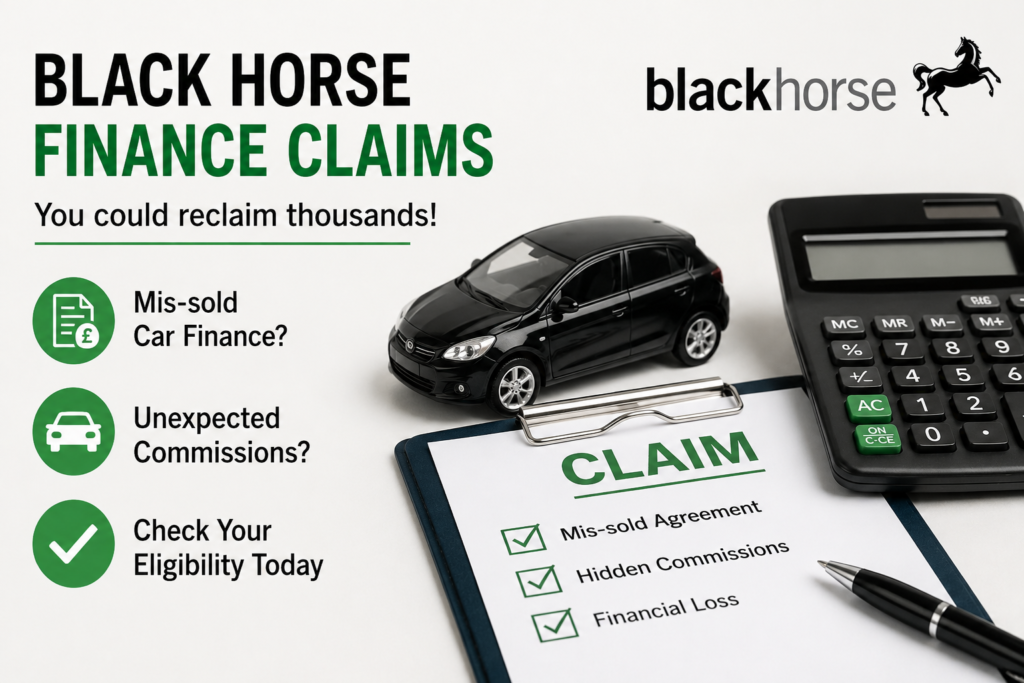
If you financed a car, van, or motorbike through Black Horse between 2007 and 2024, there’s a good chance you’ve seen headlines about compensation and wondered whether it actually applies to you. Black Horse finance claims have become one of the most significant consumer redress stories in the UK since PPI, and the details genuinely matter, both for how much you might receive and for avoiding the scams that have sprung up around this exact topic.
Here’s the thing worth knowing upfront: this isn’t a rumor or a maybe. The Financial Conduct Authority formally confirmed an industry-wide redress scheme in March 2026. But the scheme is also facing ongoing legal challenges, which means some details could still shift. Let’s walk through what’s actually confirmed right now.
Why Black Horse Finance Claims Exist in the First Place
Black Horse, part of Lloyds Banking Group and the UK’s largest motor finance lender, allowed car dealerships to set or adjust interest rates on finance agreements through what’s known as a discretionary commission arrangement (DCA). The higher the interest rate a dealer arranged, the more commission they earned, and customers weren’t always told this was happening.
The FCA’s own data on Black Horse specifically found that 57% of customers who submitted a complaint had a confirmed discretionary commission arrangement on their agreement, indicating this practice was genuinely widespread rather than a rare exception.
Quick takeaway: If your finance was arranged through a dealership rather than directly with a bank, and you were never shown alternative rate options, that’s exactly the pattern this scheme was designed to address.
Are You Eligible? The Core Requirements
To potentially qualify for Black Horse finance claims under the FCA’s scheme, your agreement generally needs to meet these conditions:
- The agreement was a Personal Contract Purchase (PCP), Hire Purchase (HP), or similar credit agreement, not a Personal Contract Hire (PCH) lease, which falls outside the scheme
- It was taken out between 6 April 2007 and 1 November 2024
- It involved a discretionary commission arrangement, or a tied/unusually high fixed commission structure
- It’s a personal consumer agreement, not a business finance agreement
Quick takeaway: You don’t need to know for certain whether your agreement had a DCA before making a complaint. Black Horse is required to check this for you once you submit a request.

What Black Horse Finance Claims Are Actually Worth
Understanding what Black Horse finance claims are actually worth starts with the FCA’s own estimate: an average payout of approximately £829 per agreement, though this figure varies significantly based on your specific circumstances.
Factors that influence your individual amount include:
- The size of your original loan
- How much your interest rate was inflated due to commission
- The length of your finance agreement
- Whether your case involves a standard DCA or a more complex commission structure
Lloyds Banking Group, Black Horse’s parent company, has set aside £1.95 billion specifically for motor finance redress, the largest provision of any UK lender, confirmed as unchanged following the group’s review of the FCA’s final scheme rules in April 2026.
Quick takeaway: Don’t anchor your expectations too tightly to the £829 average. It’s genuinely an average across millions of agreements, and your actual figure could be meaningfully higher or lower depending on your specific loan details.
Key Deadlines You Need to Know
Timing genuinely matters for Black Horse finance claims, and there are a few dates worth writing down before you submit yours.
- 30 June 2026 — Complaining before this date for agreements dated between April 2014 and November 2024 places you in the priority group, with payments potentially arriving as early as November 2026
- 30 September 2026 — Black Horse must issue a decision on priority-group complaints submitted before the June deadline
- 31 August 2027 — The final deadline to submit any complaint and remain covered by the FCA scheme
Quick takeaway: There’s no real benefit to waiting. Submitting your complaint sooner, even without full documentation, generally puts you further ahead in the queue without costing you anything.
How to Actually Submit a Claim
Here’s something worth knowing that a lot of claims companies don’t emphasize: you don’t need to pay anyone to make a complaint to Black Horse directly.
- Complain directly to Black Horse for free, through their dedicated motor commission complaints form
- Request full commission details, specifically asking whether a discretionary commission arrangement applied to your agreement
- Wait for acknowledgment, which Black Horse must provide within five business days
- Receive a decision, with priority-group complaints decided by 30 September 2026 under current FCA timelines
- Escalate to the Financial Ombudsman Service for free if you’re unhappy with the outcome, without needing to involve a claims management company
Quick takeaway: Using a claims management company or solicitor can be convenient, but it typically costs you a percentage of your payout. Complaining directly costs nothing and keeps 100% of any compensation you’re awarded.
The Scam Warning Black Horse Has Issued Directly
This is a detail most claims-focused content skips entirely, and it’s genuinely important. Black Horse itself has publicly warned that fraudsters are contacting people, falsely claiming compensation is already available and requesting personal details like your name, address, date of birth, and bank information.
Red flags to watch for:
- Unsolicited calls or texts claiming you’re “already approved” for a specific payout amount
- Requests for bank details before any formal complaint or decision has been made
- Pressure to act immediately or risk missing out
Quick takeaway: If you receive a call like this, hang up and don’t share any information. Report suspicious calls to Ofcom by forwarding them to 7726, and contact Black Horse directly using their official number if you’re unsure.

What the Ongoing Legal Challenges Mean for You
Here’s a nuance worth understanding: while the FCA scheme is confirmed, it’s currently subject to legal challenges that could affect which agreements qualify, how compensation is calculated, and when payments actually arrive. A parallel court route, pursued by some claimants through specialist law firms, also exists separately from the FCA scheme for cases that may fall outside its scope.
Quick takeaway: For the vast majority of people, the standard FCA scheme remains the simplest and most cost-effective route. The court route is generally only worth considering if your agreement falls outside standard scheme eligibility or you believe your case involves unusually large sums.
5. FAQs
Q1: How do I start Black Horse finance claims? You can complain directly and for free through Black Horse’s motor commission complaints form, requesting details of any commission paid on your agreement and redress under the FCA’s scheme.
Q2: How much compensation can I expect from Black Horse finance claims? The FCA estimates an average payout of around £829 per agreement, though your actual amount depends on your loan size, interest rate inflation, and agreement length.
Q3: What’s the deadline for Black Horse finance claims? The final deadline to submit a complaint under the FCA scheme is 31 August 2027, though complaining before 30 June 2026 for post-2014 agreements places you in the priority payment group.
Q4: Do I need a solicitor for Black Horse finance claims? No, you can complain directly to Black Horse for free and keep 100% of any compensation. Solicitors and claims companies can assist but typically take a percentage fee.
Q5: Can I still claim if my Black Horse agreement has ended or the car was sold? Yes, eligibility is based on how the agreement was structured, not whether it’s still active. Ended, settled, and even repossessed vehicle agreements can still qualify.
Q6: Are there scams related to Black Horse finance claims? Yes, Black Horse has publicly warned about fraudsters falsely claiming compensation is available and requesting personal or bank details. Never share information with unsolicited callers claiming instant payouts.
Final Thoughts
Black Horse finance claims represent one of the largest consumer redress efforts in UK financial history, with millions of agreements potentially in scope and billions of pounds set aside for compensation. Anyone pursuing Black Horse finance claims will find the process genuinely straightforward to start, free to submit directly, and doesn’t require a solicitor or claims company, though the exact amount you receive depends heavily on your individual agreement details.
Submit your complaint directly to Black Horse as early as possible, stay alert to scam attempts, and keep an eye on the priority deadlines if your agreement falls within the relevant date range.
This isn’t personalized financial or legal advice. For official, up-to-date guidance on the redress scheme, the Financial Conduct Authority’s motor finance page remains the most reliable source to confirm current rules.