
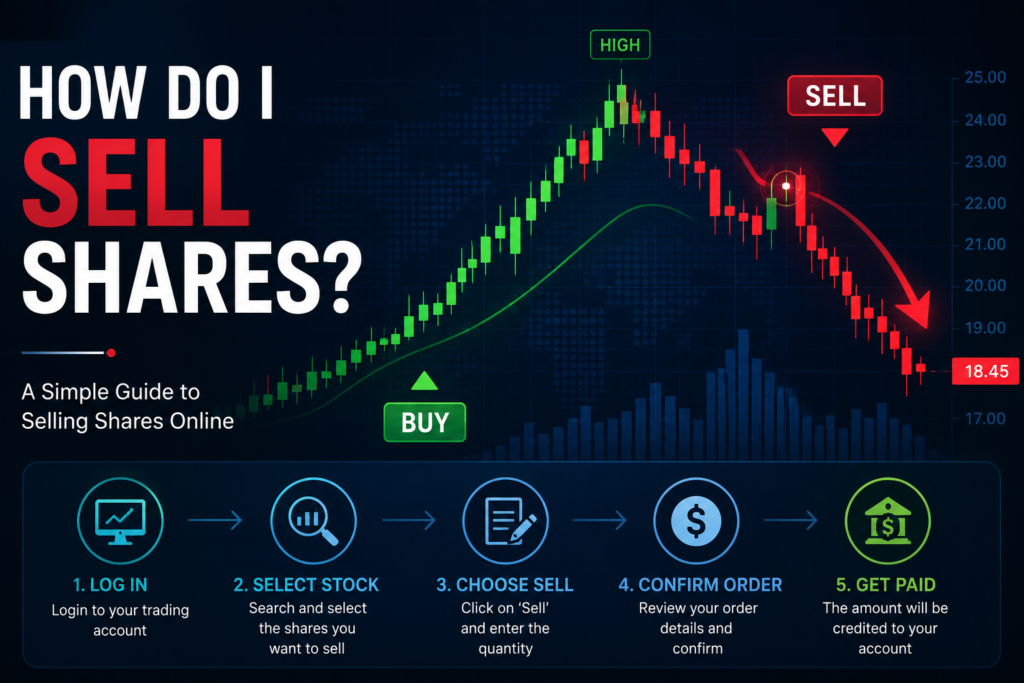
“How do I sell shares?” sounds like a simple question, and for a lot of people, it is. Log into your brokerage app, hit sell, done. But here’s the thing: not everyone asking this question actually has a brokerage account already set up. Some people inherited shares from a relative and have no idea where to even start. Others hold employee stock from a company that isn’t publicly traded. And some just have an old paper share certificate sitting in a drawer.
Most guides online only cover the first scenario, the simple “I already have a trading app” case. This one covers all of them, because the actual answer to “how do I sell shares” depends heavily on what kind of shares you’re holding and how you came to own them.
Step 1: Figure Out What Kind of Shares You Actually Have
Before anything else, you need to identify your situation. This single step determines everything else about the process.
Ask yourself:
- Do I already have an online brokerage account showing these shares?
- Did I inherit these shares, or receive them as a gift?
- Are these shares from an employer, in a company that isn’t publicly traded?
- Do I have a physical paper certificate instead of a digital record?
Quick takeaway: Don’t skip this step. Trying to sell shares through the wrong channel is the single biggest source of confusion and delay for first-time sellers.
Step 2: Selling Shares Through an Existing Broker Account
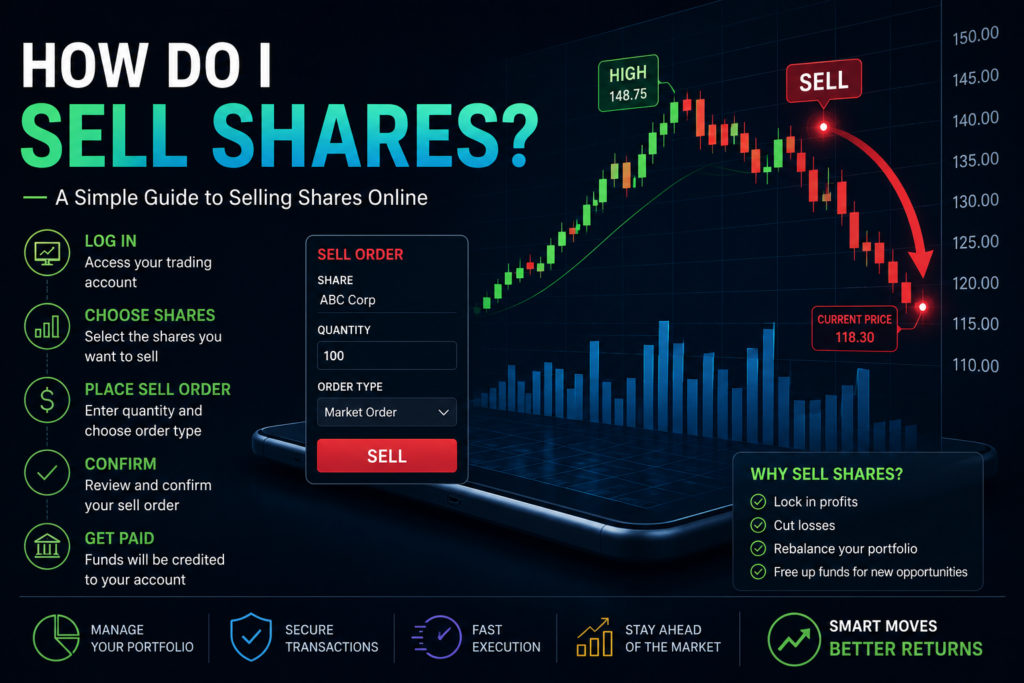
This is the most straightforward scenario, and the one most guides focus on. If your shares already show up in an app like a brokerage platform, here’s the general process:
- Log into your brokerage account
- Search for the stock or select it from your portfolio
- Choose “Sell” and enter the number of shares (or dollar amount, if fractional selling is supported)
- Select an order type: market order (sells immediately at current price) or limit order (sells only at a price you set)
- Review the order details, including any estimated fees
- Confirm and submit the order
Once submitted, most trades execute within seconds during market hours, though settlement (the cash actually landing in your account) typically takes one to two business days depending on the broker and market.
Quick takeaway: If you’re not in a rush, a limit order gives you control over the minimum price you’ll accept, which a market order does not.
Step 3: Selling Shares You Inherited or Received as a Gift
This is where most guides fall short, and it’s a genuinely common situation. If you’ve inherited shares, here’s what actually needs to happen before you can sell anything.
- Locate the original documentation, such as a holding statement, dividend statement, or share certificate
- Contact the share registry (the company that manages shareholder records for the stock) if you don’t have a broker account already linked
- Provide proof of identity and proof of inheritance, such as a death certificate or grant of probate, depending on your country’s requirements
- Transfer the shares into your name before selling, or use a specialized inherited-share sale service that handles both steps together
Quick takeaway: Don’t assume you need a full brokerage account just to sell a small inherited holding. Several services specialize specifically in one-time sales of inherited or gifted shares without requiring you to open a standard trading account.

Step 4: Selling Shares With No Broker Account and No App
If you have a physical, paper share certificate and no digital account at all, the process looks different from anything a typical “how to sell stock” guide describes.
Here’s what’s actually involved:
- Find the company’s share registry (this information is often printed on the certificate itself)
- Contact the registry to confirm your holding is still active and correctly recorded
- Complete an identity verification process, often requiring certified ID documents
- Choose to either transfer the shares to a broker first, or use a registry-affiliated sale service
- Wait for confirmation of sale and payment, which can take longer than a digital brokerage sale
Quick takeaway: Paper certificates are still valid, but selling them takes noticeably longer than selling shares already sitting in a digital account. Build in extra time if you’re working with an old certificate.
Step 5: Selling Private Company or Employee Shares
If your shares come from an employer in a company that hasn’t gone public, the process is fundamentally different from selling publicly traded stock, and this is a scenario almost entirely missing from generic “how do I sell shares” content.
Key things to check first:
- Vested vs. unvested shares — only vested shares are actually yours to sell
- Right of first refusal (ROFR) — many private companies retain the right to buy back shares before you sell to anyone else
- Transfer restrictions in your original equity agreement
- Whether the company is willing to facilitate a buyback directly
If a direct buyback isn’t available, secondary marketplaces exist specifically for private, venture-backed company shares, though these sales typically take longer, often 60 to 90 days, to close.
Quick takeaway: This is not tax or investment advice, but it’s worth repeating: always confirm your company’s specific transfer restrictions before assuming you’re free to sell private shares to just anyone.
Step 6: Understanding Fees and Taxes Before You Sell
Whichever scenario applies to you, fees and taxes affect your actual take-home amount, and this part is often underexplained.
Typical costs to expect:
- Broker commission, though many major brokers now charge zero commission on standard stock trades
- Currency conversion fees, if you’re selling shares listed in a different currency than your home currency
- Capital gains tax, which is usually not deducted automatically and must be declared separately in most countries
Quick takeaway: Keep a simple record of your purchase price (or the share’s value at the time you inherited or received it) and your final sale price. You’ll need both figures when it’s time to report any capital gains.
Step 7: Common Mistakes to Avoid When Selling Shares
A few mistakes come up again and again, regardless of which scenario applies to you.
- Selling in a panic during a market dip, without a clear underlying reason
- Forgetting to check settlement times before assuming funds are immediately withdrawable
- Not verifying the share registry or platform is legitimate, especially for inherited or paper-certificate sales
- Ignoring tax obligations until the reporting deadline arrives
- Assuming all private company shares are transferable without checking the actual equity agreement
Quick takeaway: Slow down before selling, regardless of your reason. A five-minute double-check on fees, taxes, and legitimacy prevents most of the regret people report after selling shares too quickly.
5. FAQs
Q1: How do I sell shares if I don’t have a broker account? You can contact the company’s share registry directly, or use a specialized service that handles one-time sales for people without an existing brokerage account, particularly common for inherited or paper-certificate shares.
Q2: How do I sell shares I inherited from a family member? You’ll typically need proof of inheritance, such as a death certificate or grant of probate, along with identity verification, before the shares can be transferred into your name or sold on your behalf.
Q3: How do I sell shares from an employer that isn’t publicly traded? Check whether your shares are vested, review any right of first refusal in your equity agreement, and see if the company offers a direct buyback or points you toward a private secondary marketplace.
Q4: How long does it take to sell shares and get the money? Digital brokerage sales usually settle within one to two business days. Paper certificates or inherited shares can take considerably longer due to identity verification and registry processing time.
Q5: Do I have to pay tax when I sell shares? In most countries, capital gains tax applies to profits from selling shares, and it typically isn’t deducted automatically. Keep records of your purchase and sale prices to report accurately.
Q6: What’s the difference between a market order and a limit order when selling shares? A market order sells immediately at the current price, while a limit order only sells once the share reaches a price you specify, giving you more control but no guarantee of immediate execution.
Final Thoughts
“How do I sell shares?” has a different answer depending on your exact situation, whether that’s a simple app-based sale, an inherited holding with no broker account, or private company stock with transfer restrictions. Identify your scenario first, then follow the specific steps that actually apply to you rather than a generic, one-size-fits-all process.
Take your time with the verification and documentation steps, especially for inherited or private shares. It’s genuinely worth the extra effort to avoid delays or mistakes later in the process.
For official guidance on capital gains reporting requirements, the U.S. Securities and Exchange Commission’s investor resources offer a reliable, government-run starting point.