If you are bankrupt, opening or keeping a bank account can feel complicated. The good news is that bankruptcy does not automatically mean you can never have a bank account.
However, your options can be more limited while you remain undischarged. Your existing account may be frozen, and some banks may refuse to provide a standard current account. A basic bank account can be a more realistic option because it provides essential banking services without an overdraft or other borrowing facilities.
This guide explains how bank accounts work during bankruptcy, what you can apply for, what happens to your existing account and what changes after discharge.
Key Takeaways
- You can potentially have a bank account while bankrupt, but the bank decides whether to provide or continue operating the account.
- Existing accounts are usually frozen when a bankruptcy order is made.
- A basic bank account may be suitable because it normally does not include an overdraft.
- You should tell a bank or building society that you are bankrupt when applying for a new account.
- A basic account can generally be used for wages, benefits, bills, transfers and debit-card spending.
- Standard current accounts and credit facilities may be harder to obtain until after discharge.
- If you are refused an account, alternatives can include another basic account provider, a credit union or a prepaid card account.
Can You Have a Bank Account If You Are Bankrupt?
Yes, potentially.
Being bankrupt does not create an absolute legal ban on operating a bank account. However, banks can make their own commercial decisions about whether they will open or continue an account for someone who is undischarged bankrupt.
GOV.UK guidance says that after a bankruptcy order, you can open a new bank account, but you must tell the bank or building society that you are bankrupt. The provider may then decide whether to allow you to operate the account.
This is why finding a suitable account is different from applying for an ordinary current account.
A basic account is often the more appropriate starting point.
What is a basic bank account?
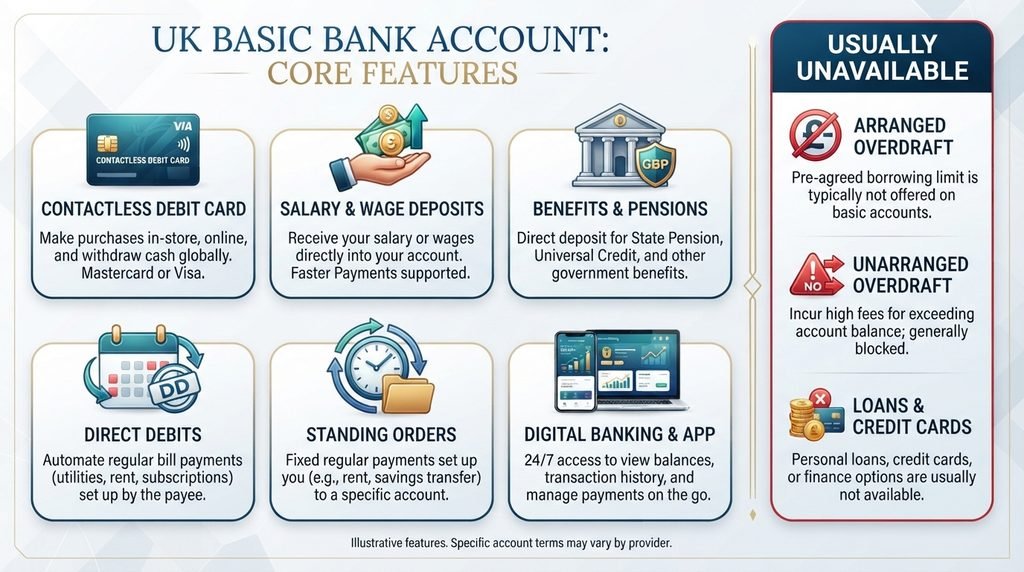
A basic bank account is designed to provide essential everyday banking without borrowing facilities.
Depending on the provider, it can allow you to:
- Receive wages or benefits
- Receive pension payments
- Pay household bills
- Set up Direct Debits
- Set up standing orders
- Make bank transfers
- Withdraw cash
- Use a debit card
- Manage your money through online or mobile banking
MoneyHelper says basic bank accounts can be available to people with poor credit histories, IVAs, DMPs, DROs and people who have been declared bankrupt.
What Happens to Your Existing Bank Account?
If you become bankrupt, your existing bank accounts will usually be frozen.
GOV.UK explains that the bank will normally freeze accounts when the bankruptcy order is made. Money in the account can form part of the bankruptcy estate, although the trustee may arrange for money needed for everyday living expenses to be released.
You should therefore not assume that you can continue using your existing debit card or account normally after the bankruptcy order.
Your bank will decide whether you can continue using the account after it has considered the situation.
Some banks may allow an existing basic account to remain open, while others may close it and require you to use another provider.
What about money in the account?
The treatment of money in an account can depend on the circumstances and whether the money forms part of the bankruptcy estate.
If you urgently need money for essential living expenses, the trustee can ask the bank to release funds. GOV.UK advises that the bank makes the final decision about releasing the money.
If you are unsure what you can access, speak to your Official Receiver, trustee or a qualified debt adviser before moving money around.
What Is a Basic Bank Account for Bankrupts?
A basic bank account is usually the most relevant type of account to investigate if you are struggling to qualify for a normal current account.
Unlike many standard current accounts, a basic account generally does not provide an overdraft.
That means you normally spend only money that is already available in the account.
MoneyHelper says basic bank accounts can be used for receiving payments, paying bills, cash withdrawals, transfers and debit-card payments.
The FCA also describes basic bank accounts as an important way of providing essential banking services to people who may otherwise struggle to access standard current accounts. In July 2026, the FCA announced action involving nine major UK banks and building societies to improve access to basic bank accounts.
Are basic bank accounts free?
The designated basic bank accounts offered by the major providers are designed to be fee-free for standard operations.
GOV.UK says the nine largest designated personal current-account providers are legally required to offer basic bank accounts. These include:
- Barclays
- Co-operative Bank
- HSBC UK
- Lloyds Banking Group, including Halifax and Bank of Scotland
- Nationwide Building Society
- NatWest Group, including Royal Bank of Scotland and Ulster Bank
- Santander UK
- TSB
- Virgin Money
However, this does not mean every bankrupt applicant will automatically be accepted. Banks still carry out eligibility and identity checks and can have account-specific rules.
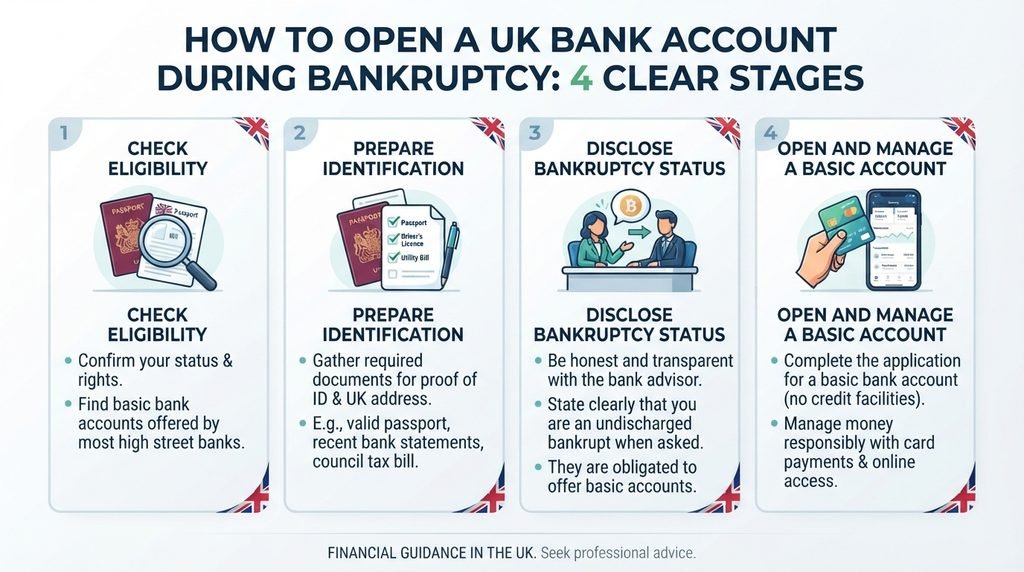
How to Open a Bank Account During Bankruptcy
If you need a new bank account while bankrupt, the following approach can make the process clearer.
1. Look for a basic bank account
Start by looking for accounts designed for people who may not qualify for a standard current account.
Do not automatically apply for several standard current accounts.
Instead, check whether the provider specifically offers a basic bank account and whether it accepts applicants who are currently bankrupt.
2. Check the bank’s eligibility rules
Read the provider’s current eligibility information before applying.
A bank may ask about:
- Your identity
- Your UK address
- Your financial circumstances
- Your bankruptcy status
- Your residency
- Other eligibility requirements
Remember that providers can change their application requirements.
3. Prepare your identification
Banks generally need to verify who you are and where you live.
Documents can include:
- Passport
- Driving licence
- Council tax bill
- Utility bill
- Bank statement
- Benefit documentation
- HMRC correspondence
The exact documents accepted vary by provider.
MoneyHelper notes that banks commonly require identification and address information when opening accounts.
4. Tell the bank about your bankruptcy
This is important.
GOV.UK states that if you open a new account after the bankruptcy order, you must tell the bank or building society that you are bankrupt.
Do not try to hide your bankruptcy to improve your chances of acceptance.
Providing incomplete or misleading information can create more serious problems.
5. Avoid overdrafts and credit facilities
An overdraft may not be appropriate while you are bankrupt.
A basic bank account generally does not provide one, which can help you avoid accidentally taking on new borrowing.
If you need any form of credit during bankruptcy, get appropriate debt advice first.
What Can You Use a Basic Bank Account For?
A basic account can cover many of the banking functions you need in everyday life.
For example, you can generally use it to:
| Banking need | Basic account |
|---|---|
| Receive salary | Usually |
| Receive benefits | Usually |
| Debit-card spending | Usually |
| Cash withdrawals | Usually |
| Bank transfers | Usually |
| Direct Debits | Usually |
| Standing orders | Usually |
| Online banking | Usually |
| Overdraft | Usually not |
| Borrowing facility | Usually not |
MoneyHelper confirms that basic accounts can be used for payments, cash withdrawals, transfers and regular payments such as Direct Debits and standing orders.
This makes them particularly useful if your main priority is managing income and essential household expenses, rather than accessing borrowing.
Can You Get a Debit Card If You Are Bankrupt?
A debit card may be available with a basic bank account.
A debit card normally allows you to spend money already available in your account and withdraw cash.
This is different from a credit card or overdraft because you are not being given a separate borrowing facility simply because you have the card.
However, the exact card and account features depend on the provider.
Check the account’s terms before applying.
Can You Get an Overdraft While Bankrupt?
An overdraft is generally not something you should expect from a basic bank account.
Basic accounts are specifically designed without overdraft facilities. This can be useful during bankruptcy because it reduces the risk of taking on additional borrowing.
If a bank offers you any form of credit while you are bankrupt, make sure you understand the relevant bankruptcy restrictions before accepting it.
If you are unsure, speak to your Official Receiver, trustee or a free debt adviser.
Why Might a Bank Refuse an Account?
A bank or building society can refuse an application in some circumstances.
Possible reasons can include:
- The bank does not accept your circumstances for that particular account.
- Your identity cannot be verified.
- Your address cannot be verified.
- The bank has concerns about fraud or money laundering.
- You have existing debts with the bank.
- You applied for a standard current account rather than a basic account.
- The provider has its own eligibility restrictions.
MoneyHelper says people can be refused a basic bank account for reasons including failed identity checks or concerns about unlawful or fraudulent use.
The important point is that a refusal for one account does not necessarily mean you cannot get any bank account.
Ask whether you were assessed for a basic bank account and consider another provider if appropriate.
What If You Owe Money to Your Existing Bank?
This is an important consideration.
Banks can have a right of set-off, which can allow them in certain circumstances to use money in one account to repay debts held with the same banking group.
StepChange explains that this can apply to debts such as overdrafts, loans and credit cards.
This is one reason people dealing with serious debt may consider a basic account with a bank where they do not owe money.
However, bankruptcy introduces additional legal considerations, so do not move money or close accounts simply based on general advice online.
Get advice specific to your circumstances.
What Happens to Your Bank Account After Bankruptcy Discharge?
Your options generally become broader after discharge.
For people in England and Wales, bankruptcy normally ends after 12 months if the relevant conditions are met, although certain restrictions or financial consequences can continue in some circumstances.
After discharge, you may be able to apply for ordinary current accounts again.
However, your credit history may still affect the products available to you.
For example, an account with an overdraft or other borrowing facility may have stricter eligibility requirements than a basic account.
So discharge does not necessarily mean that every financial product will immediately become available.
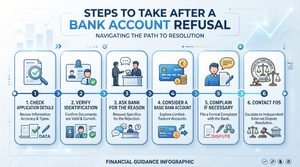
What If You Cannot Get a Bank Account?
If you have been Refused a Bank Account, there are several alternatives worth investigating.
Basic bank account
This should generally be one of the first options to consider if you are struggling with a standard current account.
Credit union account
A credit union may offer banking services to people who have difficulty accessing mainstream products.
Eligibility varies because credit unions generally have membership requirements.
Prepaid card account
A prepaid account can allow you to spend money and withdraw cash without providing traditional borrowing facilities.
MoneyHelper identifies credit unions and prepaid card accounts as possible alternatives where someone cannot obtain a basic bank account.
If you are completely unable to access banking services, free debt advice can also help you understand what options are available.
Common Mistakes to Avoid
Applying for multiple standard current accounts
If you know that bankruptcy makes you unlikely to qualify for a particular account, repeatedly applying may not be the best approach.
Research the account first.
Hiding your bankruptcy
Do not provide inaccurate information during an application.
If the bank asks about your bankruptcy status, answer honestly.
Applying for an overdraft
An overdraft is borrowing. A basic account without borrowing facilities may be more appropriate while you are bankrupt.
Ignoring your Official Receiver or trustee
If you have questions about money in an account or how your banking arrangements interact with bankruptcy, ask the relevant insolvency professional.
Assuming every bank has identical rules
Banks make their own decisions about individual applications.
One refusal does not necessarily mean every provider will reject you.
Using an account without checking its terms
Look at:
- Fees
- Debit-card availability
- Cash withdrawal arrangements
- Direct Debit support
- Online banking
- Payment limits
- Eligibility
- Any restrictions during bankruptcy
Can You Open a Bank Account Online While Bankrupt?
Possibly, but online availability does not guarantee acceptance.
Many UK banks allow account applications through websites or mobile apps. However, someone who is bankrupt may face different eligibility rules from a standard customer.
If an online application only offers you a standard current account, check whether the bank has a separate basic account route.
You may also need to provide additional information or complete identity checks.
If the online application rejects you, do not assume that you have no banking options.
Frequently Asked Questions
Can a bankrupt person have a bank account in the UK?
Yes. Bankruptcy does not automatically create a permanent ban on having a bank account. However, individual banks decide whether they will open or continue operating an account for an undischarged bankrupt.
What is the best bank account for bankrupts?
There is no single account that is automatically best for everyone. A basic bank account is often the most relevant option because it provides essential banking services without an overdraft.
Can I open a basic bank account after bankruptcy?
Yes, a basic account may be available. MoneyHelper specifically lists people who have been declared bankrupt among those who may qualify for basic bank accounts.
Can I get a debit card if I am bankrupt?
A basic account can normally include debit-card access, although the exact features depend on the provider.
Can I get an overdraft while bankrupt?
You should not expect an overdraft with a basic bank account. Basic accounts are generally designed without overdraft facilities.
Do I have to tell the bank I am bankrupt?
Yes. GOV.UK states that if you open a new account after the bankruptcy order, you must tell the bank or building society that you are bankrupt.
Will my existing bank account be closed?
It may be frozen and could subsequently be closed. The bank decides whether you can continue using it after the bankruptcy order.
Can I receive my salary into a basic bank account?
Yes. Basic accounts can generally be used to receive wages, benefits and other payments.
Can I pay bills from a basic bank account?
Yes. Basic accounts can generally support Direct Debits, standing orders and other payments.
How long does bankruptcy normally last?
For many people in England and Wales, discharge normally occurs after 12 months, although circumstances can affect the position.
What if every bank refuses my application?
Consider another basic bank account provider, a credit union or a prepaid card account. You can also seek free debt advice to understand your options.
Important UK Jurisdiction Note
Bankruptcy rules are not identical across every part of the UK.
The guidance discussed above is primarily relevant to England and Wales. Scotland has its own bankruptcy system, and Northern Ireland has separate insolvency rules.
If you live in Scotland or Northern Ireland, check the relevant government guidance before relying on England-and-Wales bankruptcy rules.
The Bottom Line
Finding a bank account for bankrupts can be more difficult than opening an ordinary current account, but bankruptcy does not necessarily leave you without banking facilities.
A basic bank account can provide the essential services you need, including receiving income, paying bills, making payments and using a debit card, without an overdraft. MoneyHelper confirms that people who have been declared bankrupt may be eligible for this type of account.
If you are currently bankrupt, tell the bank about your status and check its specific eligibility rules. GOV.UK confirms that you can potentially open a new account after the bankruptcy order, but the bank or building society decides whether it will allow you to operate it.
If one provider refuses your application, don’t assume that all providers will do the same. Basic bank accounts, credit unions and prepaid accounts may provide alternative ways to manage essential payments.
If your circumstances are complicated, particularly if you have money frozen in an existing account or debts with your bank, get advice from your Official Receiver, trustee or a free debt advice organisation before making major changes to your banking arrangements.