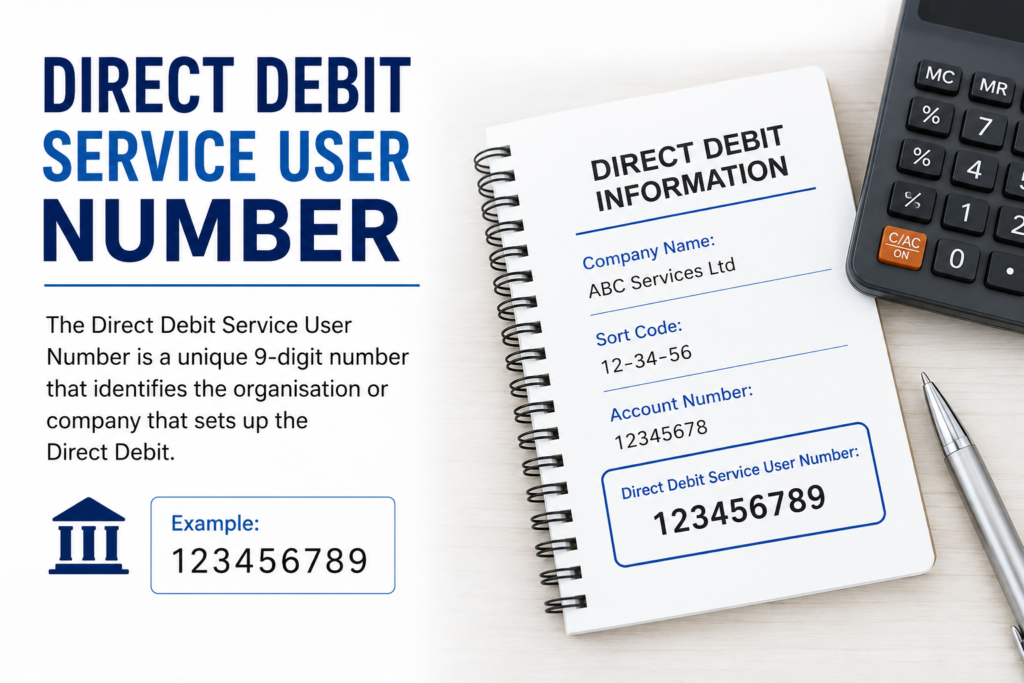
If your business is looking into collecting payments by Direct Debit, you’ll quickly run into three letters that seem to come up constantly: SUN. A direct debit service user number sounds like a small administrative detail, but it’s actually the single identifier that makes the entire UK Direct Debit system work, tracking every transaction, protecting customers, and determining who’s responsible if something goes wrong.
Here’s the thing worth knowing upfront: not every business can get their own direct debit service user number, and that’s not necessarily a bad thing. Understanding how the system actually works helps you choose the right path for your specific business, rather than assuming you need to apply directly with your bank.
What a Direct Debit Service User Number Actually Is
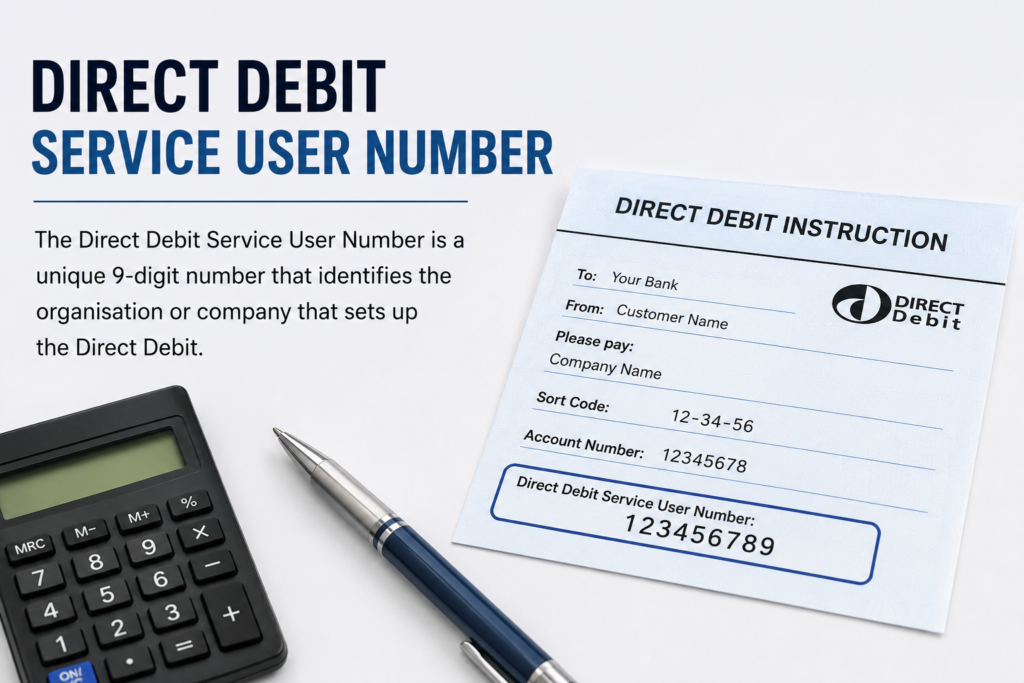
A direct debit service user number, or SUN, is a unique six-digit identifier assigned to an organisation that collects payments through the UK’s Bacs system. It’s used in every single communication with Bacs and gets recorded against every transaction processed under it.
Here’s what it’s actually used for in practice:
- Identifying your business on the payer’s bank statement, so customers recognise who collected the payment
- Tracking chargebacks, since if a customer disputes a payment under the Direct Debit Guarantee, the SUN identifies exactly which organisation is liable
- Enabling Bacs processing, since no direct debit collection can happen without a SUN attached to it, either your own or a third party’s
Quick takeaway: Even if you never apply for your own direct debit service user number, every Direct Debit payment your business collects is still processed under one, whether it’s yours or a bureau’s.
How to Get Your Own SUN
To obtain a direct debit service user number, your organisation needs to be sponsored by a Bacs participant, essentially a UK bank. Here’s the general process:
- Apply through your bank, who acts as your sponsor in the Bacs system
- Meet the bank’s eligibility criteria, which typically includes demonstrating management expertise, financial reserves, and a track record of reliability
- Provide documentation covering your business’s financial standing and intended use of the Bacs system
- Wait for review and approval, which generally takes between 2 and 10 weeks depending on the bank and complexity of your application
- Receive your six-digit number once approved, at which point you can begin processing Direct Debit collections directly
Quick takeaway: Start the application process well before you actually need to collect payments. A 2 to 10 week timeframe can catch businesses off guard if they assume approval will be quick.
The Eligibility Requirements Banks Actually Look For
Here’s something that surprises a lot of smaller businesses: getting your own direct debit service user number isn’t automatic, even if you’re a legitimate, established organisation.
Banks generally assess:
- Trading history, often expecting at least three years of established operation
- Turnover, with many banks setting a rough threshold around £1 million annually
- Ability to enforce scheme rules, including minimising submission errors and handling refunds correctly
- Financial reserves, sufficient to cover potential refunds required under the Direct Debit Guarantee
Quick takeaway: If your business doesn’t yet meet these thresholds, that doesn’t mean Direct Debit collection is off the table. It just means a third-party route is the more realistic option for now.
What If You Don’t Qualify for Your Own SUN?
This is where a lot of smaller and newer businesses actually operate, and it’s a completely normal, common setup rather than a compromise.
Two main third-party structures exist:
Facilities Management (Bureau)
A Direct Debit bureau sets up a SUN for each of its client merchants, though the bureau itself owns every one of these SUNs. Payments typically appear under a name like “Bureau re Client” before being passed into the bureau’s client account and onward to you.
Payment Institution
A payment institution collects payments under a single SUN it owns, on behalf of multiple clients, then passes the funds on to you, usually deducting a fee. These institutions operate under specific payment services regulation.
Quick takeaway: Using a third-party SUN generally means faster setup and no eligibility hurdles, but it also usually means the third party’s name, not yours, appears on your customer’s bank statement, which can occasionally cause confusion or unnecessary cancellations.
Direct vs Indirect Submission: Why It Matters
Here’s a distinction worth understanding clearly, since it affects both cost and control over your Direct Debit collections.
- Direct submitters own their own direct debit service user number and submit transactions to Bacs themselves, typically requiring dedicated Bacs-approved software or a Bacs-approved bureau relationship
- Indirect submitters rely entirely on a third party’s SUN, meaning the third party bears the compliance responsibility with Bacs directly
Quick takeaway: Direct access generally suits larger, established businesses with the internal capacity to manage compliance. Indirect access suits growing businesses that want to start collecting Direct Debit payments without navigating the full sponsorship process.
What Happens If Your Bank Withdraws Sponsorship?
This is a genuinely underreported scenario that more businesses are running into recently: banks can, and sometimes do, withdraw sponsorship of an existing direct debit service user number, even from businesses that have held one for years.
If this happens to your business:
- Your existing SUN may need to be migrated to a new sponsoring bank or bureau
- Existing Direct Debit Instructions can typically be transferred without requiring customers to resign up
- A Notice of Change is usually sent to affected customers to inform them of the change
- You may need to apply for a new SUN entirely, or move to a third-party bureau arrangement instead
Quick takeaway: If you rely on your own SUN, it’s worth having a contingency plan in mind. Losing sponsorship unexpectedly doesn’t have to disrupt your existing customer collections if the transition is managed properly.

How to Find Your Own Business’s SUN
If you already collect Direct Debit payments but aren’t sure whether you’re using your own SUN or a third party’s, there are a few practical ways to check.
- Check your Direct Debit setup documentation from your bank or bureau provider, which should reference your assigned SUN
- Contact your Bacs-approved software provider or bureau directly, since they’ll have this recorded against your account
- Ask your bank’s Bacs team, if you applied for sponsorship directly
Quick takeaway: Knowing your own SUN matters more than it might seem, particularly if you ever need to migrate providers or investigate a customer dispute under the Direct Debit Guarantee.
5. FAQs
Q1: What is a direct debit service user number? It’s a unique six-digit identifier assigned to a business collecting payments through the UK’s Bacs Direct Debit system, used in every transaction and communication with Bacs.
Q2: How long does it take to get a direct debit service user number? The process typically takes between 2 and 10 weeks, depending on your bank’s review process, required documentation, and how quickly compliance checks are completed.
Q3: Can a small business get its own SUN? It depends on the bank’s specific criteria, but many require an established trading history of around three years and a turnover threshold, often around £1 million, making a third-party route more common for smaller businesses.
Q4: What happens if I don’t have my own direct debit service user number? You can still collect Direct Debit payments indirectly through a bureau or payment institution’s SUN, without needing to meet direct sponsorship eligibility requirements yourself.
Q5: Can a bank take away a direct debit service user number? Yes, banks can withdraw sponsorship of an existing SUN, sometimes due to performance issues or changing bank policies, requiring the business to migrate to a new sponsor or bureau.
Q6: How is a direct debit service user number used in a payment dispute? If a customer disputes a payment under the Direct Debit Guarantee, the SUN attached to that transaction identifies exactly which organisation is responsible for resolving the chargeback.
Final Thoughts
A direct debit service user number is a small six-digit detail with an outsized role in how UK Direct Debit collections actually work behind the scenes. Whether your business qualifies for its own SUN or operates through a third-party bureau, understanding how the system identifies and tracks your transactions helps you make a more informed choice about which route genuinely fits your business.
Whichever path you take, keep your eligibility position and provider relationship under regular review, since sponsorship requirements and banking arrangements can and do change over time.