
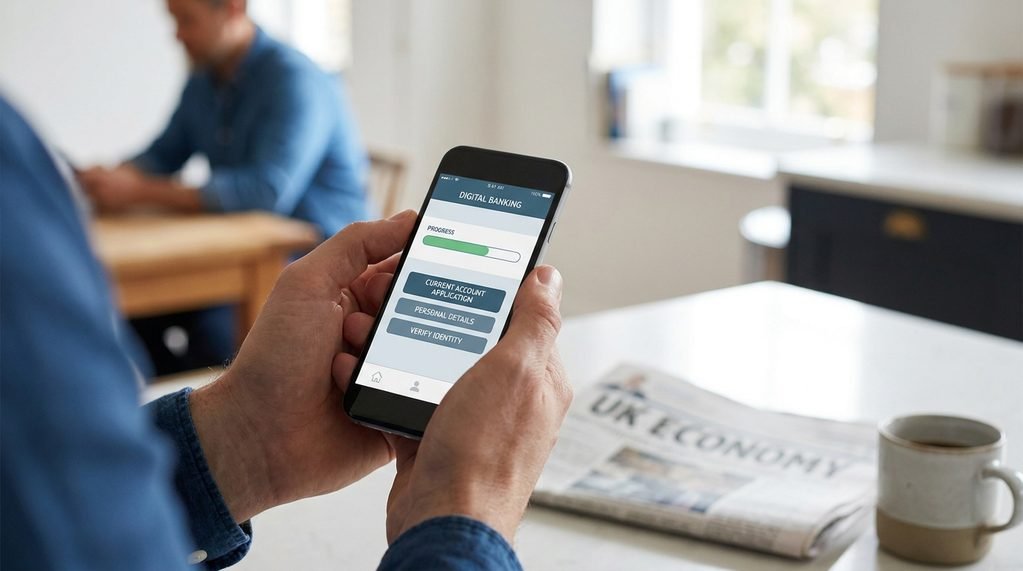
You can open a bank account online in the UK by choosing a suitable current account, completing an application, proving your identity and address, and passing the bank’s verification checks. Many banks allow applications through their website or mobile app without visiting a branch, although eligibility and required documents vary between providers.
Open a Bank Account Online UK: Complete Guide
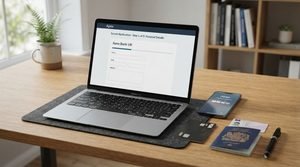
Opening a bank account online in the UK can be much quicker than visiting a branch. Most banks allow eligible customers to apply through a website or mobile app, provide identification digitally and complete identity checks remotely.
A current account can be used to receive your salary or benefits, pay bills, make card payments, set up Direct Debits and manage everyday spending. Most standard current accounts are free, although some accounts charge monthly fees for additional benefits.
If you’re planning to open an account online, the key is choosing the right type of account before starting the application. You should also have your identification and address information ready because banks need to verify who you are and, in many cases, where you live.
Can You Open a Bank Account Online in the UK?
Yes, many UK banks allow customers to open a current account online or through a mobile banking app.
For example, some major banks allow applications to be completed digitally, including identity verification using a smartphone camera. HSBC says eligible customers can apply through its app or online, while RBS states that its application can be completed without posting documents or visiting a branch.
The exact process depends on the provider. Some banks may ask you to upload a photo of your passport or driving licence, while others may verify your identity electronically.
What Do You Need to Open a Bank Account Online?
The exact requirements vary between banks, but you will normally need information that allows the bank to verify your identity and eligibility.
Common requirements include:
- Full name
- Date of birth
- Current residential address
- Mobile phone number
- Email address
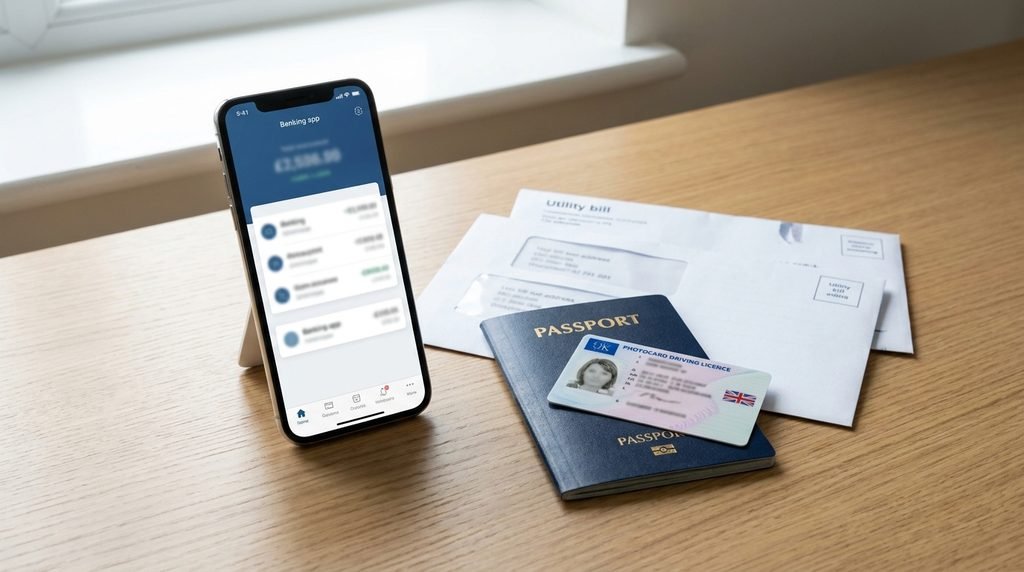
- Proof of identity
- Proof of address, if requested
- Information about your previous addresses
- Details about your income or employment for some accounts
- Immigration or residency information where applicable
MoneyHelper says banks generally need proof of identity and may ask for documents such as a passport and recent bill.
What ID Can You Use?
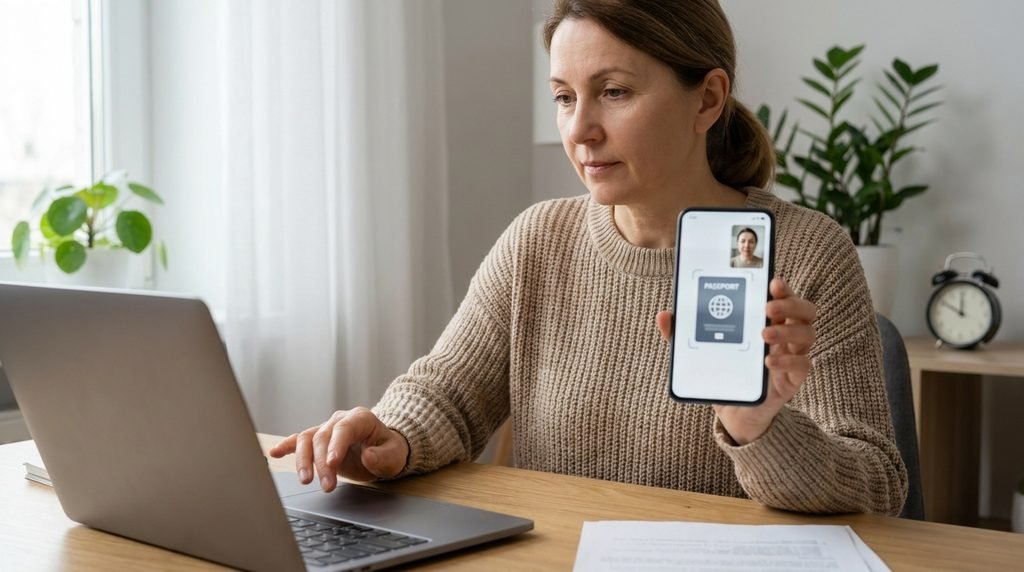
A passport or driving licence is commonly accepted as photographic identification. When applying online, a bank may ask you to take a photograph of the document and, in some cases, a selfie or live image for verification.
Some providers accept additional forms of identification, so it is worth checking the bank’s requirements before beginning an application.
Do You Need Proof of Address?
Often, yes.
Depending on the bank, acceptable documents can include:
- Recent utility bills
- Tenancy or rental documents
- Government correspondence
- Benefits or pension letters
- Other documents showing your name and address
Requirements differ between providers. If you have recently moved to the UK, some banks may accept alternative documents, such as a letter from an employer or university.
How to Open a Bank Account Online in the UK
The process is usually straightforward.
1. Choose the Type of Bank Account
First decide what you actually need.
A standard current account is suitable for everyday banking, including receiving wages, paying bills and using a debit card.
Other possibilities include:
- Basic bank accounts
- Packaged current accounts
- Student accounts
- Graduate accounts
- Joint accounts
- Business bank accounts
- Savings accounts
Don’t automatically choose an account because it offers a switching bonus or other promotion. Consider whether its everyday features and eligibility requirements suit you.
2. Compare Accounts
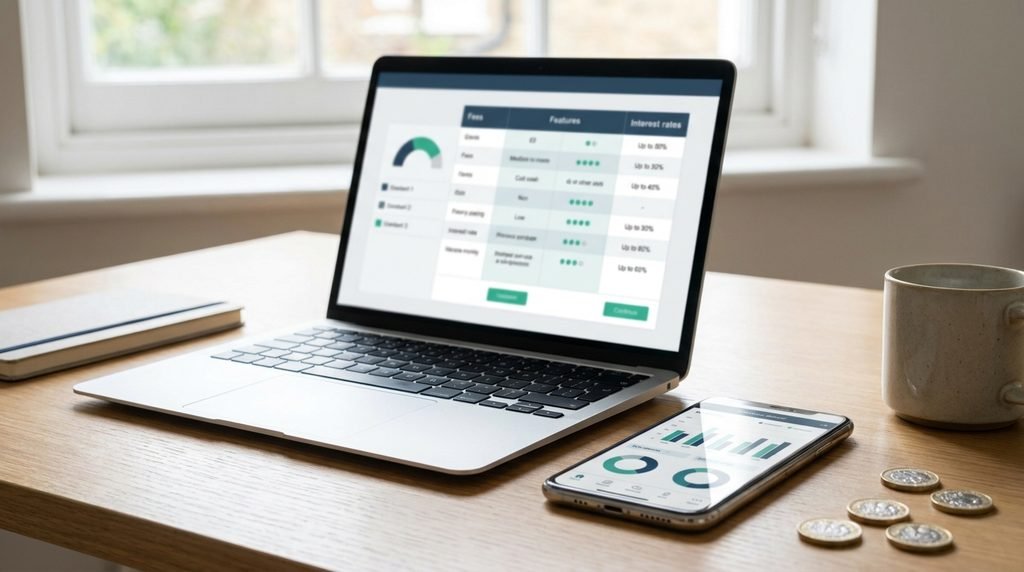
Compare accounts based on the features that matter to you.
Look at:
| Feature | What to check |
|---|---|
| Monthly fee | Is the account free or paid? |
| Minimum income | Does the bank require regular payments in? |
| Debit card | Check availability and usage conditions |
| Overdraft | Is one available and what does it cost? |
| Savings | Does the account provide linked savings options? |
| Cash access | Check ATM and branch availability |
| Mobile banking | Review app features and security |
| Overseas spending | Check foreign transaction and withdrawal fees |
| Switching offers | Check all qualifying conditions |
| FSCS protection | Confirm whether eligible deposits are protected |
MoneyHelper recommends checking account features, fees, eligibility criteria and the way you prefer to manage your banking before choosing an account.
3. Start the Online Application
Visit the bank’s official website or download its official mobile banking app.
You will normally need to enter personal information such as your name, address and date of birth.
Be careful when searching for a bank online. Avoid entering personal information through links from suspicious emails, social media advertisements or unexpected messages.
4. Complete the Identity Check
The bank will need to establish that you are the person applying for the account.
Online verification can involve:
- Uploading photographic ID
- Taking a photo of your identification
- Taking a selfie or live image
- Electronic identity checks
- Providing additional information if the automated check fails
For example, RBS says its online process can use a partner to match photographic ID and may require a camera-enabled device.
5. Wait for the Application Decision
Some applications can be processed quickly, while others require additional checks.
If the bank cannot verify your information automatically, it may ask you to provide additional documents or complete another verification step.
A delayed application does not necessarily mean you have been rejected.
6. Activate Your Account
Once approved, the bank will provide your account details and instructions for accessing online or mobile banking.
Depending on the provider, you may receive:
- Sort code
- Account number
- Debit card
- PIN or digital card access
- Mobile banking access
Follow the bank’s security instructions and set up strong authentication for your account.
How Long Does It Take to Open a Bank Account Online?
Many online applications can be completed within minutes, but the total time until the account is fully operational varies.
A straightforward application may be processed quickly when your identity can be verified automatically. If the bank needs additional documentation or manual checks, it can take longer.
Which? reports that online bank-account applications can sometimes take less than ten minutes, although the actual approval process depends on the provider and individual circumstances.
Can You Open a Bank Account Online Without Visiting a Branch?
Yes. Many banks provide fully digital application processes.
However, online availability does not mean every applicant will be able to complete every stage remotely. Some applications may require additional verification or support.
For example, RBS says its application can be completed online without posting information or visiting a branch.
If you have difficulty completing digital verification, contacting the bank or visiting a branch may provide an alternative.
Can You Open a UK Bank Account Without a UK Address?
This can be difficult because many standard current accounts require applicants to be UK residents and banks commonly need address information.
However, the rules are not identical across providers.
Some specialist or basic accounts may have different requirements, particularly for people who have recently arrived in the UK or have difficulty providing standard proof of address.
MoneyHelper notes that people without a fixed address may have options when applying for a basic bank account.
If you’re new to the UK, check the bank’s accepted documents before applying rather than assuming a standard utility bill is required.
Can You Open a Bank Account Online With Bad Credit?
Having a poor credit history does not automatically mean you cannot have a bank account.
A basic bank account may be an alternative if you cannot qualify for a standard current account.
Basic accounts generally provide essential banking services such as receiving money, making payments and using a debit card, but they normally do not provide an overdraft.
This distinction is important: a bank account application and a credit application are not the same thing. A standard current account may involve eligibility or credit checks, particularly where an overdraft is involved, while a basic account is designed for people who may not qualify for standard banking products.
What Is a Basic Bank Account?
A basic bank account is a fee-free account designed to provide essential banking services without offering borrowing facilities such as an overdraft.
It can typically allow you to:
- Receive your salary or benefits
- Pay bills
- Use a debit card
- Withdraw cash
- Make transfers
- Set up Direct Debits
- Manage your money through online or mobile banking
MoneyHelper says basic bank accounts can be useful for people with poor credit histories or other circumstances that make standard accounts harder to obtain.
In July 2026, the FCA also announced action involving nine major UK banks and building societies to improve access to basic bank accounts, including for people facing financial difficulty or having non-standard identification.
Can You Open a Bank Account Online as a New UK Resident?
Potentially, yes, but requirements vary.
If you have recently moved to the UK, a bank may ask for:
- Passport or other accepted ID
- Proof of UK address
- Immigration or residency information
- Employment or income details
- Previous address information
Some banks provide alternative documentation options for people who are new to the UK.
It is worth checking the provider’s eligibility criteria before applying because an application that does not meet the bank’s requirements may result in delays or rejection.
The FCA also explains that UK banks and building societies must consider immigration-status requirements when opening current accounts.
Is It Free to Open a Bank Account Online?
Opening an account itself is often free, but not every current account is fee-free.
Basic and standard current accounts can have no monthly maintenance fee, while packaged or premium accounts may charge a monthly fee in exchange for additional benefits.
Potential costs to check include:
- Monthly account fees
- Overdraft interest
- Overseas card charges
- Cash withdrawal fees
- Foreign exchange charges
- Fees for specific banking services
MoneyHelper notes that many current accounts are free to use, but charges can apply for certain services and transactions.
Is Money in an Online Bank Account Safe?
The important question is not simply whether a bank operates online. You should check who provides the account and whether eligible deposits are protected.
The Financial Services Compensation Scheme (FSCS) normally protects eligible deposits up to £120,000 per person, per banking group.
This is particularly important when comparing digital banks, building societies and other financial providers.
Before depositing a large amount, check the provider’s FSCS status and the applicable protection limits.
You can also check whether a financial firm is authorised using the FCA’s official information.
How to Choose the Right UK Bank Account
The best bank account is not necessarily the one offering the biggest introductory reward.
Consider your normal financial behaviour.
If You Mainly Need Everyday Banking
Look for:
- No monthly fee
- Reliable mobile banking
- Convenient cash access
- Direct Debit support
- A suitable debit card
- Useful customer support
If You Want an Overdraft
Pay close attention to the overdraft terms and cost.
An overdraft is borrowing, not free money. Compare the interest rate and eligibility requirements before relying on one.
If You Travel Frequently
Check:
- Foreign exchange rates
- Overseas card spending fees
- Cash withdrawal charges
- Availability of travel-related features
If You Have Limited Credit History
A basic bank account may be worth considering if you cannot qualify for a standard current account.
Online Bank Account vs Traditional Bank Account
| Feature | Online application | Branch application |
|---|---|---|
| Application | Website or app | In person |
| Convenience | Usually higher | Requires travel |
| Identity checks | Often digital | Usually completed with staff |
| Documents | May be uploaded | Can be presented physically |
| Branch support | Limited or unavailable | Available |
| Speed | Often faster | Can take longer |
| Best for | Straightforward applications | People needing face-to-face support |
Online banking is convenient, but branch access can still matter if you regularly deposit cash or prefer face-to-face assistance.
Common Mistakes When Opening a Bank Account Online
Choosing an Account Based Only on a Bonus
A switching incentive can look attractive, but check the qualifying conditions, minimum deposits, Direct Debit requirements and deadlines.
Ignoring Monthly Fees
A premium account may cost more over a year than the value of the benefits you actually use.
Applying for Several Accounts Without Checking Eligibility
Read the eligibility criteria first. Some applications can involve credit checks, depending on the account and circumstances.
Using Unofficial Links
Always start from the bank’s official website or official app.
Forgetting About Overseas Charges
If you regularly travel, foreign transaction and cash withdrawal fees can matter more than a small introductory reward.
Not Checking FSCS Protection
Before moving significant savings, confirm whether the provider and your eligible deposits fall within FSCS protection rules.
What Happens If a Bank Rejects Your Application?
A rejection does not necessarily mean you cannot open a bank account elsewhere.
Possible reasons can include:
- The bank could not verify your identity
- Your address information did not match
- You did not meet the account’s eligibility requirements
- The bank’s internal checks were unsuccessful
- You applied for an account that does not suit your circumstances
If you are struggling to obtain a standard current account, consider asking whether you qualify for a basic bank account.
The FCA’s recent work on basic accounts highlights that people with non-standard identification or difficult financial circumstances may need alternative routes to banking.
How to Protect Yourself When Opening an Account Online
Online banking is convenient, but security should be part of the process.
Follow these basic precautions:
- Use the bank’s official website or app.
- Never share your banking password or one-time security codes.
- Avoid opening banking links from unexpected emails or text messages.
- Use a strong, unique password where applicable.
- Keep your phone and banking app updated.
- Enable the security features offered by your bank.
- Check account notifications and transactions regularly.
- Contact your bank immediately if you notice suspicious activity.
The FCA explains that Strong Customer Authentication is designed to help confirm that the person accessing an account or making a payment is genuinely authorised to do so.
Key Takeaways
- You can open many UK bank accounts online without visiting a branch.
- A passport or driving licence is commonly used for identity verification.
- Banks may also request proof of address.
- Requirements differ between providers and account types.
- A basic bank account can be an option if you have poor credit or difficulty qualifying for a standard account.
- Compare fees, overdraft costs, overseas charges and account features before applying.
- Check FSCS protection before depositing significant amounts.
- Use only official banking websites and apps.
- If your online application fails, ask the bank about alternative verification or basic account options.
Frequently Asked Questions
Can I open a bank account online in the UK?
Yes. Many UK banks allow eligible customers to apply for current accounts through their websites or mobile apps. You will normally need to provide personal information and complete identity verification.
What is the easiest bank account to open online in the UK?
There is no single account that is easiest for everyone. The simplest application depends on your age, residency, identification, address, financial circumstances and the bank’s eligibility requirements.
Can I open a UK bank account without proof of address?
It depends on the provider and your circumstances. Standard current accounts commonly require address verification, but some banks and basic-account providers may accept alternative documents.
Can I open a bank account online without visiting a branch?
Often, yes. Several UK banks offer digital application processes, although some applicants may need additional assistance if automated verification cannot confirm their details.
How long does it take to open a bank account online?
The application itself can sometimes take only a few minutes. However, approval and account activation can take longer if additional identity or eligibility checks are required.
Can I open a UK bank account with bad credit?
Yes, potentially. A basic bank account may be available if you cannot qualify for a standard current account. Basic accounts generally provide essential banking services without an overdraft.
Do I need a passport to open a UK bank account?
Not necessarily. Many banks accept a driving licence or other approved identification. The documents accepted vary by provider.
Are online bank accounts safe in the UK?
Online banking can be secure when provided by an appropriately authorised financial institution and used with good security practices. Check the provider’s regulatory status and whether eligible deposits are protected by the FSCS.
Can a new UK resident open a bank account online?
Potentially. Banks may request identification, proof of address and immigration or residency information. Requirements differ between banks, so new UK residents should check eligibility before applying.
Conclusion
Opening a bank account online in the UK is usually a straightforward process when you choose an account that matches your circumstances and have the required information ready. Most applicants will need to verify their identity, and some will also need to provide proof of address or residency information.
Before applying, compare account fees, features, eligibility requirements, overdraft terms and FSCS protection. If a standard current account is unavailable, a basic bank account may provide a practical alternative.
For independent guidance and comparison, MoneyHelper provides information on choosing and comparing UK bank accounts, while the FCA provides regulatory and consumer information.




2 thoughts on “Open a Bank Account Online UK: Step-by-Step Guide (2026)”